
About This Book
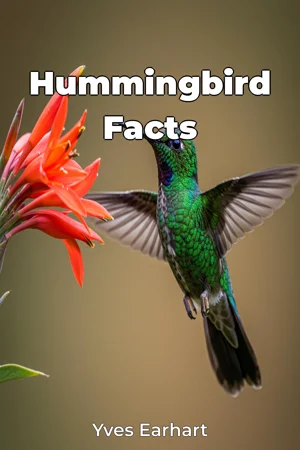
Have you ever paused to consider the delicate marvel of a hummingbird suspended mid-air, a blur of wings defying gravity? This book, "Hummingbird Facts," delves into the intricate biology and natural history of these tiny aviators, revealing the secrets behind their unique capabilities and challenging journeys. We will explore what allows them to hover with such precision, how they fuel their high-speed metabolism, and the impressive scale of their migratory feats. These topics are significant because they provide insight into extreme adaptation, energy management, and the limits of physiological endurance in the natural world, relevant to those interested in nature, ornithology, and the broader implications of biological processes. We begin by establishing the context of hummingbird evolution and their ecological niche. While hummingbirds are found exclusively in the Americas, their diversification and specialization within various ecosystems highlight the power of natural selection. We will then turn to a detailed examination of hummingbird flight. This involves a biomechanical analysis of their unique wing structure and musculature, contrasting their hovering flight with that of other birds. We present data from high-speed video analysis and aerodynamic modeling to explain how hummingbirds generate lift on both the upstroke and downstroke, allowing for their exceptional maneuverability. The book then investigates the hummingbird’s metabolic demands. Given their high wingbeat frequency and constant hovering, hummingbirds require an immense amount of energy. The primary argument here is that their specialized digestive system and metabolic pathways represent a pinnacle of evolutionary adaptation for energy acquisition and utilization. We will cover the biochemical processes involved in rapidly converting nectar into usable energy and how hummingbirds manage thermoregulation to prevent overheating. The book's structure follows a logical progression. After introducing the basics of hummingbird biology, we dedicate chapters to flight mechanics, metabolic physiology, and migratory behavior. We will explore the evolutionary pressures that have shaped these traits and their interdependencies. The culmination of the book focuses on the conservation challenges facing hummingbird populations due to habitat loss and climate change, and the practical implications of understanding their biology for effective conservation strategies. The information comes from a variety of sources, including peer-reviewed scientific articles, field studies, and original data collected on hummingbird behavior and physiology. Special attention is given to research that utilizes advanced technologies, such as radio telemetry to track migration patterns and respirometry to measure metabolic rates. This book connects to several interdisciplinary fields. First, aerospace engineering, where the principles of hummingbird flight can inspire novel aircraft designs. Second, exercise physiology, where the study of hummingbird metabolism offers parallels to understanding human endurance limits. Third, climate science, where tracking hummingbird migration patterns can provide insights into the impact of changing weather patterns on species distribution. What sets this book apart is its holistic approach, integrating biomechanics, physiology, and ecology to provide a complete picture of hummingbird life. We utilize a conversational yet scientific tone, making complex concepts accessible to a broad audience while maintaining accuracy and rigor. "Hummingbird Facts" is designed for nature enthusiasts, bird watchers, students of biology, and anyone curious about the wonders of the natural world. It offers a deep dive into the science behind these fascinating creatures, providing a valuable resource for both academic and general readers. As a work of non-fiction, we adhere to the standards of accuracy, objectivity, and transparency. While covering a broad range of topics related to hummingbird biology, the book intentionally limits its scope to factual information and avoids speculative claims. The knowledge gained from this book can be applied in practical ways, such as informing habitat restoration efforts, developing sustainable ecotourism practices, and promoting citizen science initiatives focused on hummingbird monitoring. While the fundamental principles of hummingbird flight and metabolism are well-established, there are ongoing debates regarding the specific mechanisms of nectar digestion and the energetic costs of different flight modes. We will address these debates by presenting different viewpoints and highlighting areas for future research.
Have you ever paused to consider the delicate marvel of a hummingbird suspended mid-air, a blur of wings defying gravity? This book, "Hummingbird Facts," delves into the intricate biology and natural history of these tiny aviators, revealing the secrets behind their unique capabilities and challenging journeys. We will explore what allows them to hover with such precision, how they fuel their high-speed metabolism, and the impressive scale of their migratory feats. These topics are significant because they provide insight into extreme adaptation, energy management, and the limits of physiological endurance in the natural world, relevant to those interested in nature, ornithology, and the broader implications of biological processes. We begin by establishing the context of hummingbird evolution and their ecological niche. While hummingbirds are found exclusively in the Americas, their diversification and specialization within various ecosystems highlight the power of natural selection. We will then turn to a detailed examination of hummingbird flight. This involves a biomechanical analysis of their unique wing structure and musculature, contrasting their hovering flight with that of other birds. We present data from high-speed video analysis and aerodynamic modeling to explain how hummingbirds generate lift on both the upstroke and downstroke, allowing for their exceptional maneuverability. The book then investigates the hummingbird’s metabolic demands. Given their high wingbeat frequency and constant hovering, hummingbirds require an immense amount of energy. The primary argument here is that their specialized digestive system and metabolic pathways represent a pinnacle of evolutionary adaptation for energy acquisition and utilization. We will cover the biochemical processes involved in rapidly converting nectar into usable energy and how hummingbirds manage thermoregulation to prevent overheating. The book's structure follows a logical progression. After introducing the basics of hummingbird biology, we dedicate chapters to flight mechanics, metabolic physiology, and migratory behavior. We will explore the evolutionary pressures that have shaped these traits and their interdependencies. The culmination of the book focuses on the conservation challenges facing hummingbird populations due to habitat loss and climate change, and the practical implications of understanding their biology for effective conservation strategies. The information comes from a variety of sources, including peer-reviewed scientific articles, field studies, and original data collected on hummingbird behavior and physiology. Special attention is given to research that utilizes advanced technologies, such as radio telemetry to track migration patterns and respirometry to measure metabolic rates. This book connects to several interdisciplinary fields. First, aerospace engineering, where the principles of hummingbird flight can inspire novel aircraft designs. Second, exercise physiology, where the study of hummingbird metabolism offers parallels to understanding human endurance limits. Third, climate science, where tracking hummingbird migration patterns can provide insights into the impact of changing weather patterns on species distribution. What sets this book apart is its holistic approach, integrating biomechanics, physiology, and ecology to provide a complete picture of hummingbird life. We utilize a conversational yet scientific tone, making complex concepts accessible to a broad audience while maintaining accuracy and rigor. "Hummingbird Facts" is designed for nature enthusiasts, bird watchers, students of biology, and anyone curious about the wonders of the natural world. It offers a deep dive into the science behind these fascinating creatures, providing a valuable resource for both academic and general readers. As a work of non-fiction, we adhere to the standards of accuracy, objectivity, and transparency. While covering a broad range of topics related to hummingbird biology, the book intentionally limits its scope to factual information and avoids speculative claims. The knowledge gained from this book can be applied in practical ways, such as informing habitat restoration efforts, developing sustainable ecotourism practices, and promoting citizen science initiatives focused on hummingbird monitoring. While the fundamental principles of hummingbird flight and metabolism are well-established, there are ongoing debates regarding the specific mechanisms of nectar digestion and the energetic costs of different flight modes. We will address these debates by presenting different viewpoints and highlighting areas for future research.
"Hummingbird Facts" explores the fascinating world of these tiny birds, delving into their unique biology and natural history. It reveals how hummingbirds achieve their extraordinary hovering flight, a feat made possible by their specialized wing structure and musculature, allowing lift on both upstrokes and downstrokes. The book also investigates their incredibly high metabolism, driven by a constant need for energy to fuel their rapid wingbeats. Their digestive system and metabolic pathways represent an evolutionary adaptation for efficient energy acquisition from nectar. The book progresses logically from hummingbird evolution and ecology to detailed analyses of flight mechanics, metabolic physiology, and migratory behavior. Understanding hummingbird migration patterns, for instance, offers insights into how changing weather impacts species distribution. It also examines the conservation challenges these creatures face due to habitat loss and climate change, emphasizing the importance of understanding their biology for effective conservation. What sets this book apart is its holistic approach, integrating biomechanics, physiology, and ecology to provide a complete picture of hummingbird life. Using a conversational yet scientific tone, this book is perfect for nature enthusiasts, bird watchers, and students interested in learning more about avian biology and extreme adaptation.
Book Details
ISBN
9788233970109
Publisher
Publifye AS
Your Licenses
You don't own any licenses for this book
Purchase a license below to unlock this book and download the EPUB.
Purchase License
Select a tier to unlock this book
Need bulk licensing?
Contact us for enterprise agreements.