
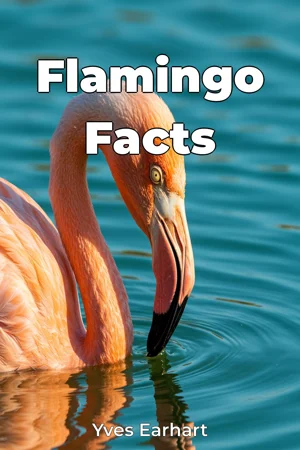
About This Book
Have you ever wondered about the secrets behind the flamingo's vibrant pink plumage and its seemingly effortless balancing act? "Flamingo Facts" delves into the captivating world of these remarkable birds, exploring the science behind their distinctive coloration, the biomechanics of their one-legged stance, and the intricacies of their specialized feeding habits. These seemingly simple observations open a window into broader ecological principles and evolutionary adaptations. Understanding flamingos provides insights into topics such as nutrient cycling in aquatic ecosystems and the ways in which animals evolve to thrive in unique and often challenging environments. This book aims to provide a comprehensive overview of flamingo biology, presenting a synthesis of current scientific knowledge about these iconic birds. Our central argument is that the flamingo's unique characteristics are not isolated traits but rather interconnected adaptations shaped by their environment and ecological niche. By examining these features in detail, we reveal the complex interplay between evolution, behavior, and ecology that defines the flamingo's existence. "Flamingo Facts" unfolds in a logical progression, beginning with an introduction to the flamingo family, its evolutionary history, and worldwide distribution. We explore the various species of flamingos, highlighting their similarities and differences. The book then delves into the science behind their pink coloration. A dedicated chapter examines the role of carotenoid pigments derived from their diet, explaining how these pigments are metabolized and deposited in their feathers, resulting in the iconic pink hue. We will present research findings on the specific types of algae and crustaceans that contribute to flamingo coloration. Next, we dissect the biomechanics of the flamingo's one-legged stance, presenting current theories about how they maintain balance with minimal muscular effort. Anatomical studies and observational data will support explanations of the skeletal structure and neurological mechanisms involved. A subsequent chapter will examine the flamingo's unique feeding habits, detailing the specialized filtering apparatus in their beaks and the techniques they use to extract small organisms from the water. The book culminates in a discussion of the conservation challenges facing flamingos and the efforts being made to protect these vulnerable populations. We explore the impact of habitat loss, pollution, and climate change on flamingo populations worldwide. The information presented in "Flamingo Facts" comes from a variety of sources, including peer-reviewed scientific publications, field studies, and expert interviews. We will present data from long-term monitoring programs and highlight recent advances in flamingo research. The book also draws connections to other fields such as chemistry, physics, and environmental science. The flamingo's pink coloration, for example, is a direct result of chemical processes occurring within their bodies, while the physics of balance plays a crucial role in their one-legged stance. Additionally, the book touches on conservation biology, highlighting the importance of protecting flamingo habitats and mitigating the threats they face. This book is written in a clear and accessible style, making it suitable for a wide audience, including students, nature enthusiasts, and anyone curious about the natural world. Although grounded in scientific principles, the information is presented in a way that is easy to understand, with diagrams, illustrations, and real-world examples to enhance comprehension. "Flamingo Facts" provides a deep dive into the world of flamingos, offering insights into their biology, behavior, and ecology. By focusing on a single species, the book illustrates broader principles of adaptation and conservation, promoting a deeper appreciation for the interconnectedness of life on Earth. While the book focuses primarily on the biological aspects of flamingos, it acknowledges the limitations of its scope and encourages readers to explore other facets of flamingo biology and conservation.
Have you ever wondered about the secrets behind the flamingo's vibrant pink plumage and its seemingly effortless balancing act? "Flamingo Facts" delves into the captivating world of these remarkable birds, exploring the science behind their distinctive coloration, the biomechanics of their one-legged stance, and the intricacies of their specialized feeding habits. These seemingly simple observations open a window into broader ecological principles and evolutionary adaptations. Understanding flamingos provides insights into topics such as nutrient cycling in aquatic ecosystems and the ways in which animals evolve to thrive in unique and often challenging environments. This book aims to provide a comprehensive overview of flamingo biology, presenting a synthesis of current scientific knowledge about these iconic birds. Our central argument is that the flamingo's unique characteristics are not isolated traits but rather interconnected adaptations shaped by their environment and ecological niche. By examining these features in detail, we reveal the complex interplay between evolution, behavior, and ecology that defines the flamingo's existence. "Flamingo Facts" unfolds in a logical progression, beginning with an introduction to the flamingo family, its evolutionary history, and worldwide distribution. We explore the various species of flamingos, highlighting their similarities and differences. The book then delves into the science behind their pink coloration. A dedicated chapter examines the role of carotenoid pigments derived from their diet, explaining how these pigments are metabolized and deposited in their feathers, resulting in the iconic pink hue. We will present research findings on the specific types of algae and crustaceans that contribute to flamingo coloration. Next, we dissect the biomechanics of the flamingo's one-legged stance, presenting current theories about how they maintain balance with minimal muscular effort. Anatomical studies and observational data will support explanations of the skeletal structure and neurological mechanisms involved. A subsequent chapter will examine the flamingo's unique feeding habits, detailing the specialized filtering apparatus in their beaks and the techniques they use to extract small organisms from the water. The book culminates in a discussion of the conservation challenges facing flamingos and the efforts being made to protect these vulnerable populations. We explore the impact of habitat loss, pollution, and climate change on flamingo populations worldwide. The information presented in "Flamingo Facts" comes from a variety of sources, including peer-reviewed scientific publications, field studies, and expert interviews. We will present data from long-term monitoring programs and highlight recent advances in flamingo research. The book also draws connections to other fields such as chemistry, physics, and environmental science. The flamingo's pink coloration, for example, is a direct result of chemical processes occurring within their bodies, while the physics of balance plays a crucial role in their one-legged stance. Additionally, the book touches on conservation biology, highlighting the importance of protecting flamingo habitats and mitigating the threats they face. This book is written in a clear and accessible style, making it suitable for a wide audience, including students, nature enthusiasts, and anyone curious about the natural world. Although grounded in scientific principles, the information is presented in a way that is easy to understand, with diagrams, illustrations, and real-world examples to enhance comprehension. "Flamingo Facts" provides a deep dive into the world of flamingos, offering insights into their biology, behavior, and ecology. By focusing on a single species, the book illustrates broader principles of adaptation and conservation, promoting a deeper appreciation for the interconnectedness of life on Earth. While the book focuses primarily on the biological aspects of flamingos, it acknowledges the limitations of its scope and encourages readers to explore other facets of flamingo biology and conservation.
"Flamingo Facts" explores the captivating biology of flamingos, revealing how their unique traits are interconnected adaptations shaped by their environment. These iconic birds offer insights into broader ecological principles, such as nutrient cycling in aquatic ecosystems and the evolution of specialized feeding habits. One intriguing fact is that a flamingo's vibrant pink hue comes from carotenoid pigments found in their diet of algae and crustaceans. Another fascinating aspect is their ability to stand on one leg for extended periods, a behavior linked to minimizing muscular effort. The book progresses logically, beginning with an introduction to the flamingo family and its evolutionary history. It then delves into the science behind their pink coloration, the biomechanics of their one-legged stance, and their specialized feeding habits. The book emphasizes the importance of conservation, addressing the challenges flamingos face due to habitat loss, pollution, and climate change. By focusing on a single species, "Flamingo Facts" illustrates broader principles of adaptation and conservation, making it a valuable resource for nature enthusiasts and anyone curious about the natural world.
Book Details
ISBN
9788233970093
Publisher
Publifye AS
Your Licenses
You don't own any licenses for this book
Purchase a license below to unlock this book and download the EPUB.
Purchase License
Select a tier to unlock this book
Need bulk licensing?
Contact us for enterprise agreements.