
About This Book
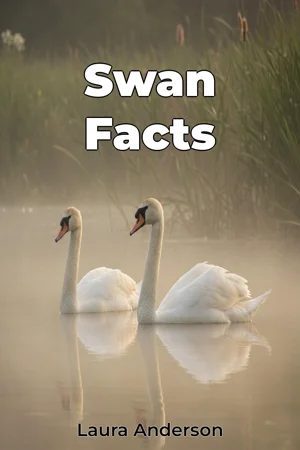
Have you ever paused to consider the lives of swans, those graceful birds often seen gliding across lakes? "Swan Facts" delves into the intricate world of these creatures, exploring not only their aesthetic elegance but also the biological and behavioral complexities that define their existence. This book will address the significance of swan migratory patterns and the profound nature of their lifelong pair bonds, demonstrating how these aspects contribute to our broader understanding of avian biology and ecological balance. Understanding swan migration is crucial for comprehending avian navigation and the impacts of climate change on migratory species. Likewise, investigating their pair bonds offers insights into animal behavior, social structures, and the evolutionary advantages of long-term relationships. "Swan Facts" will provide a comprehensive overview of these topics, contextualizing them within the broader scientific landscape. We begin by introducing the eight recognized swan species, detailing their physical characteristics and geographic distribution, as well as touching on historic human interactions. The book then transitions to an in-depth examination of their migratory behaviors, analyzing the routes they follow, the challenges they face, and the physiological adaptations that enable these journeys. Drawing on decades of tracking data and field observations, we present detailed maps and analyses of swan migratory patterns across continents. The core of "Swan Facts" revolves around the phenomenon of lifelong pair bonds in swans. This section presents findings from long-term studies that explore the genetic, hormonal, and environmental factors influencing mate selection and pair bond maintenance. Further chapters will delve into the intricacies of swan social behavior, examining their communication methods, territorial defense strategies, and parental care practices. We examine the frequency, causes, and consequences of divorce and mate replacement in swan populations, challenging some traditional assumptions about the permanence of swan pair bonds. "Swan Facts" integrates findings from ornithology, ecology, genetics, and animal behavior. It highlights the relevance of swan studies to broader scientific questions about animal cognition, social evolution, and conservation biology. A unique aspect of the book lies in its synthesis of diverse data sources, combining traditional field observations with cutting-edge genomic analysis. The book will appeal to bird enthusiasts, students of biology, and anyone interested in learning more about the natural world. Its accessible language and engaging narrative style make it suitable for a broad audience, while its rigorous scientific approach ensures its value to researchers and academics. The scope of "Swan Facts" is intentionally focused on the biological and behavioral aspects of swans, with less emphasis on folklore or cultural representations, although these are briefly introduced. While we acknowledge the importance of conservation efforts, the book primarily aims to provide a factual overview of swan biology rather than a prescriptive guide to conservation strategies. The information presented in "Swan Facts" has practical applications in wildlife management and conservation. By understanding swan migratory patterns, we can better protect their habitats and mitigate the risks posed by human activities. Insights into their social behavior can inform strategies for managing swan populations in both natural and captive environments. The book also addresses ongoing debates in the field, such as the relative importance of genetic versus environmental factors in shaping swan behavior and the impact of human disturbance on swan reproductive success. These complex issues are presented in a balanced and nuanced manner, encouraging readers to critically evaluate the available evidence and form their own informed opinions. "Swan Facts" delivers a comprehensive and engaging overview of avian biology through the lens of these remarkable birds.
Have you ever paused to consider the lives of swans, those graceful birds often seen gliding across lakes? "Swan Facts" delves into the intricate world of these creatures, exploring not only their aesthetic elegance but also the biological and behavioral complexities that define their existence. This book will address the significance of swan migratory patterns and the profound nature of their lifelong pair bonds, demonstrating how these aspects contribute to our broader understanding of avian biology and ecological balance. Understanding swan migration is crucial for comprehending avian navigation and the impacts of climate change on migratory species. Likewise, investigating their pair bonds offers insights into animal behavior, social structures, and the evolutionary advantages of long-term relationships. "Swan Facts" will provide a comprehensive overview of these topics, contextualizing them within the broader scientific landscape. We begin by introducing the eight recognized swan species, detailing their physical characteristics and geographic distribution, as well as touching on historic human interactions. The book then transitions to an in-depth examination of their migratory behaviors, analyzing the routes they follow, the challenges they face, and the physiological adaptations that enable these journeys. Drawing on decades of tracking data and field observations, we present detailed maps and analyses of swan migratory patterns across continents. The core of "Swan Facts" revolves around the phenomenon of lifelong pair bonds in swans. This section presents findings from long-term studies that explore the genetic, hormonal, and environmental factors influencing mate selection and pair bond maintenance. Further chapters will delve into the intricacies of swan social behavior, examining their communication methods, territorial defense strategies, and parental care practices. We examine the frequency, causes, and consequences of divorce and mate replacement in swan populations, challenging some traditional assumptions about the permanence of swan pair bonds. "Swan Facts" integrates findings from ornithology, ecology, genetics, and animal behavior. It highlights the relevance of swan studies to broader scientific questions about animal cognition, social evolution, and conservation biology. A unique aspect of the book lies in its synthesis of diverse data sources, combining traditional field observations with cutting-edge genomic analysis. The book will appeal to bird enthusiasts, students of biology, and anyone interested in learning more about the natural world. Its accessible language and engaging narrative style make it suitable for a broad audience, while its rigorous scientific approach ensures its value to researchers and academics. The scope of "Swan Facts" is intentionally focused on the biological and behavioral aspects of swans, with less emphasis on folklore or cultural representations, although these are briefly introduced. While we acknowledge the importance of conservation efforts, the book primarily aims to provide a factual overview of swan biology rather than a prescriptive guide to conservation strategies. The information presented in "Swan Facts" has practical applications in wildlife management and conservation. By understanding swan migratory patterns, we can better protect their habitats and mitigate the risks posed by human activities. Insights into their social behavior can inform strategies for managing swan populations in both natural and captive environments. The book also addresses ongoing debates in the field, such as the relative importance of genetic versus environmental factors in shaping swan behavior and the impact of human disturbance on swan reproductive success. These complex issues are presented in a balanced and nuanced manner, encouraging readers to critically evaluate the available evidence and form their own informed opinions. "Swan Facts" delivers a comprehensive and engaging overview of avian biology through the lens of these remarkable birds.
"Swan Facts" explores the captivating lives of swans, focusing on their biology and behavior within avian biology and ecology. The book examines the significance of swan migration, which is essential for understanding how these animals navigate and adapt to different environmental conditions. It also looks at the profound and complex nature of swan pair bonds, providing insights into animal behavior and the evolutionary advantages of long-term relationships. The book uniquely synthesizes data from ornithology, ecology, and genetics, presenting information relevant to broader scientific questions about animal cognition and social evolution. It progresses from introducing the eight swan species and their distribution to in-depth analyses of migratory behaviors and pair bonds. Findings from long-term studies reveal genetic, hormonal, and environmental factors influencing mate selection. This comprehensive overview appeals to bird enthusiasts and students of biology, offering an accessible yet rigorous exploration of swan behavior, wildlife management, and conservation biology. The text emphasizes the factual aspects of swan biology, providing a valuable resource for understanding these remarkable birds.
Book Details
ISBN
9788233970086
Publisher
Publifye AS
Your Licenses
You don't own any licenses for this book
Purchase a license below to unlock this book and download the EPUB.
Purchase License
Select a tier to unlock this book
Need bulk licensing?
Contact us for enterprise agreements.