
About This Book
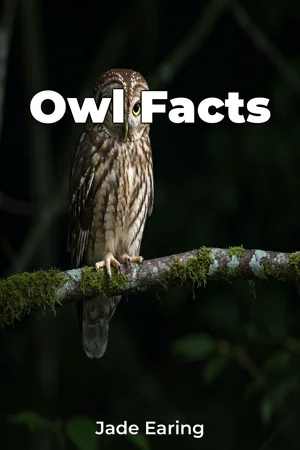
Have you ever wondered how an owl can fly so silently or see perfectly in the dark? "Owl Facts" delves into the captivating world of these nocturnal predators, exploring their unique adaptations, ecological roles, and the centuries of myths that have shaped our perceptions of them. This book is important because it offers a comprehensive, scientifically grounded understanding of owls, creatures often misunderstood and steeped in folklore. The book provides a broad overview of owl biology, ecology, and cultural significance. It begins by examining the evolutionary history of owls, tracing their lineage and diversification across different continents and habitats. We will explore the physical adaptations that make owls such effective hunters, focusing on two core areas: their silent flight mechanisms and their specialized vision. The science behind how owls minimize noise during flight, including feather structure and wing shape, will be thoroughly explained. The book will also detail the intricacies of owl vision, discussing the structure of their eyes, the function of the tapetum lucidum, and their ability to perceive depth and motion in low-light conditions. Beyond their biology, "Owl Facts" explores the ecological roles owls play in various ecosystems. The book examines owl diets, hunting strategies, and their impacts on prey populations. Different owl species and their specific adaptations to their environments will be considered, from the snowy owl of the Arctic to the elf owl of the desert. Furthermore, this book examines the myths and cultural beliefs surrounding owls. Representations of owls in mythology, literature, and art from various cultures will be analyzed, considering how these views have influenced conservation efforts and scientific study. Are owls symbols of wisdom or harbingers of doom? "Owl Facts" aims to separate fact from fiction. "Owl Facts" presents information using scientific literature, field studies, and data collected from owl research across the globe. The book connects ornithology with cultural anthropology and environmental science, highlighting how understanding owls requires interdisciplinary approaches. We adopt a factual, accessible writing style, aiming to clarify complex scientific details for a range of readers. This book is written for nature enthusiasts, students of biology, birdwatchers, and anyone curious about owls. It provides a solid foundation for understanding owl biology while addressing common misconceptions. The scope of "Owl Facts" is limited to covering the biological and cultural elements of owls. While touching on conservation issues, "Owl Facts" does not deeply explore specific conservation strategies. Readers can apply the knowledge gained from this book to better understand owl behavior in the wild, support citizen science initiatives, and engage in more informed discussions about wildlife conservation. While there are some debates about the best methods for owl conservation, this book focuses on providing objective information about their biology, ecology, and cultural significance.
Have you ever wondered how an owl can fly so silently or see perfectly in the dark? "Owl Facts" delves into the captivating world of these nocturnal predators, exploring their unique adaptations, ecological roles, and the centuries of myths that have shaped our perceptions of them. This book is important because it offers a comprehensive, scientifically grounded understanding of owls, creatures often misunderstood and steeped in folklore. The book provides a broad overview of owl biology, ecology, and cultural significance. It begins by examining the evolutionary history of owls, tracing their lineage and diversification across different continents and habitats. We will explore the physical adaptations that make owls such effective hunters, focusing on two core areas: their silent flight mechanisms and their specialized vision. The science behind how owls minimize noise during flight, including feather structure and wing shape, will be thoroughly explained. The book will also detail the intricacies of owl vision, discussing the structure of their eyes, the function of the tapetum lucidum, and their ability to perceive depth and motion in low-light conditions. Beyond their biology, "Owl Facts" explores the ecological roles owls play in various ecosystems. The book examines owl diets, hunting strategies, and their impacts on prey populations. Different owl species and their specific adaptations to their environments will be considered, from the snowy owl of the Arctic to the elf owl of the desert. Furthermore, this book examines the myths and cultural beliefs surrounding owls. Representations of owls in mythology, literature, and art from various cultures will be analyzed, considering how these views have influenced conservation efforts and scientific study. Are owls symbols of wisdom or harbingers of doom? "Owl Facts" aims to separate fact from fiction. "Owl Facts" presents information using scientific literature, field studies, and data collected from owl research across the globe. The book connects ornithology with cultural anthropology and environmental science, highlighting how understanding owls requires interdisciplinary approaches. We adopt a factual, accessible writing style, aiming to clarify complex scientific details for a range of readers. This book is written for nature enthusiasts, students of biology, birdwatchers, and anyone curious about owls. It provides a solid foundation for understanding owl biology while addressing common misconceptions. The scope of "Owl Facts" is limited to covering the biological and cultural elements of owls. While touching on conservation issues, "Owl Facts" does not deeply explore specific conservation strategies. Readers can apply the knowledge gained from this book to better understand owl behavior in the wild, support citizen science initiatives, and engage in more informed discussions about wildlife conservation. While there are some debates about the best methods for owl conservation, this book focuses on providing objective information about their biology, ecology, and cultural significance.
"Owl Facts" offers a comprehensive exploration into the world of owls, bridging science and culture to illuminate these fascinating nocturnal predators. The book begins by detailing the evolutionary history of owls and their diversification across various habitats. It then turns to their remarkable adaptations, such as their silent flight—achieved through specialized feather structures that minimize noise—and their exceptional vision, enhanced by features like the tapetum lucidum that aids low-light sight. The book further explores the ecological roles owls play, examining their diets, hunting strategies, and impact on prey populations, while highlighting how different species adapt to environments from the Arctic to the desert. It also delves into the myths and cultural beliefs surrounding owls, analyzing their representations in mythology, literature, and art, and considering how these views influence conservation efforts. By connecting ornithology with cultural anthropology, "Owl Facts" separates fact from fiction and emphasizes the importance of interdisciplinary approaches to understanding owls. Throughout its chapters, "Owl Facts" presents information using scientific literature and field studies, adopting a factual and accessible writing style to clarify complex scientific details. This approach ensures that nature enthusiasts, students of biology, and birdwatchers alike can gain a solid foundation in owl biology and ecology, while also addressing common misconceptions.
Book Details
ISBN
9788233970062
Publisher
Publifye AS
Your Licenses
You don't own any licenses for this book
Purchase a license below to unlock this book and download the EPUB.
Purchase License
Select a tier to unlock this book
Need bulk licensing?
Contact us for enterprise agreements.