
About This Book
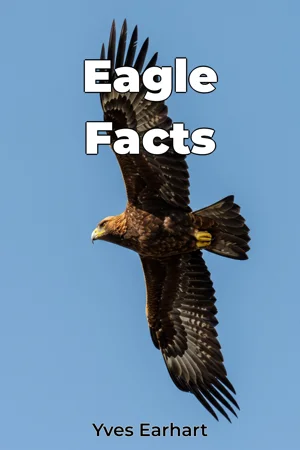
Have you ever wondered what it's like to possess vision so sharp you can spot prey miles away, or to command the skies with unparalleled hunting prowess? "Eagle Facts" unravels the captivating story of these majestic birds, delving into the core aspects of their biology, behavior, and ecological significance. This book aims to provide a detailed examination of eagles, exploring their evolutionary adaptations, hunting techniques, and their role as apex predators. The primary focus of "Eagle Facts" centers on three key areas: the unique sensory and physical adaptations that enable eagles to thrive; their complex hunting strategies and dietary habits; and their significance within diverse ecosystems. These topics are vital because they illuminate the evolutionary success of eagles and their crucial role in maintaining ecological balance. Understanding eagle behavior and biology allows for more informed conservation efforts, especially crucial given ongoing habitat loss and climate change impacts. Historically, eagles have been symbols of power and freedom across various cultures, often featured in mythology and heraldry. From a scientific perspective, their study contributes to broader understanding of avian biology, predator-prey relationships, and the effects of environmental toxins on wildlife populations. No prerequisite knowledge is required to appreciate the content, though a general interest in nature and wildlife will enhance the reading experience. The central argument of "Eagle Facts" is that the eagle's evolutionary journey has resulted in a creature perfectly adapted for its niche, and that their well-being reflects the health of the ecosystems they inhabit. This argument underscores the importance of eagle conservation as an indicator of environmental quality. The book is structured to build a comprehensive understanding of eagles. First, the book introduces their physical characteristics, including their skeletal structure, musculature, and sensory organs. Then, it develops into the discussion of their hunting behaviors, the variety of prey they capture and how they have adapted to different hunting environments. The book will also examine the social structures of eagles. It culminates by exploring conservation challenges and potential solutions. Practical applications discussed include how understanding eagle behavior informs land management and wildlife protection strategies. "Eagle Facts" will draw upon diverse sources, including field studies conducted by ornithologists, analyses of eagle populations across different geographic regions, and data from wildlife rehabilitation centers. The book will additionally cite peer-reviewed scientific publications and reports from conservation organizations. The information presented connects to several interdisciplinary fields, including ecology (understanding their role in food webs), environmental science (assessing the impacts of pollution and habitat loss), and zoology (studying their physiological and behavioral adaptations). These connections enrich the text by providing a more holistic view of eagles within a broader scientific context. This book stands out by presenting a comprehensive, scientifically rigorous examination of eagles. The tone is informative and accessible, designed to engage both amateur naturalists and seasoned biologists. The target audience includes nature enthusiasts, students studying biology or environmental science, birdwatchers, and anyone interested in wildlife conservation. This book provides valuable insights into the lives of eagles, enhancing appreciation for these magnificent birds and the challenges they face. As a work of non-fiction in the nature and biology genres, "Eagle Facts" emphasizes factual accuracy, clear explanations of scientific concepts and a systematic presentation of evidence. The scope of the book encompasses various eagle species across the globe, but it primarily focuses on those found in North America and Eurasia, due to the wealth of research available on these populations. While the book touches on genetic aspects of eagle evolution, it does not delve into complex molecular biology, thus maintaining a broader appeal. The knowledge gained from "Eagle Facts" can be applied practically to support eagle conservation efforts, inform responsible land development, and promote a greater awareness of human impacts on wildlife populations. While "Eagle Facts" primarily presents established scientific findings, it also touches on ongoing debates surrounding the use of pesticides and other contaminants. It acknowledges that scientific understanding of eagle behavior and ecology is constantly evolving.
Have you ever wondered what it's like to possess vision so sharp you can spot prey miles away, or to command the skies with unparalleled hunting prowess? "Eagle Facts" unravels the captivating story of these majestic birds, delving into the core aspects of their biology, behavior, and ecological significance. This book aims to provide a detailed examination of eagles, exploring their evolutionary adaptations, hunting techniques, and their role as apex predators. The primary focus of "Eagle Facts" centers on three key areas: the unique sensory and physical adaptations that enable eagles to thrive; their complex hunting strategies and dietary habits; and their significance within diverse ecosystems. These topics are vital because they illuminate the evolutionary success of eagles and their crucial role in maintaining ecological balance. Understanding eagle behavior and biology allows for more informed conservation efforts, especially crucial given ongoing habitat loss and climate change impacts. Historically, eagles have been symbols of power and freedom across various cultures, often featured in mythology and heraldry. From a scientific perspective, their study contributes to broader understanding of avian biology, predator-prey relationships, and the effects of environmental toxins on wildlife populations. No prerequisite knowledge is required to appreciate the content, though a general interest in nature and wildlife will enhance the reading experience. The central argument of "Eagle Facts" is that the eagle's evolutionary journey has resulted in a creature perfectly adapted for its niche, and that their well-being reflects the health of the ecosystems they inhabit. This argument underscores the importance of eagle conservation as an indicator of environmental quality. The book is structured to build a comprehensive understanding of eagles. First, the book introduces their physical characteristics, including their skeletal structure, musculature, and sensory organs. Then, it develops into the discussion of their hunting behaviors, the variety of prey they capture and how they have adapted to different hunting environments. The book will also examine the social structures of eagles. It culminates by exploring conservation challenges and potential solutions. Practical applications discussed include how understanding eagle behavior informs land management and wildlife protection strategies. "Eagle Facts" will draw upon diverse sources, including field studies conducted by ornithologists, analyses of eagle populations across different geographic regions, and data from wildlife rehabilitation centers. The book will additionally cite peer-reviewed scientific publications and reports from conservation organizations. The information presented connects to several interdisciplinary fields, including ecology (understanding their role in food webs), environmental science (assessing the impacts of pollution and habitat loss), and zoology (studying their physiological and behavioral adaptations). These connections enrich the text by providing a more holistic view of eagles within a broader scientific context. This book stands out by presenting a comprehensive, scientifically rigorous examination of eagles. The tone is informative and accessible, designed to engage both amateur naturalists and seasoned biologists. The target audience includes nature enthusiasts, students studying biology or environmental science, birdwatchers, and anyone interested in wildlife conservation. This book provides valuable insights into the lives of eagles, enhancing appreciation for these magnificent birds and the challenges they face. As a work of non-fiction in the nature and biology genres, "Eagle Facts" emphasizes factual accuracy, clear explanations of scientific concepts and a systematic presentation of evidence. The scope of the book encompasses various eagle species across the globe, but it primarily focuses on those found in North America and Eurasia, due to the wealth of research available on these populations. While the book touches on genetic aspects of eagle evolution, it does not delve into complex molecular biology, thus maintaining a broader appeal. The knowledge gained from "Eagle Facts" can be applied practically to support eagle conservation efforts, inform responsible land development, and promote a greater awareness of human impacts on wildlife populations. While "Eagle Facts" primarily presents established scientific findings, it also touches on ongoing debates surrounding the use of pesticides and other contaminants. It acknowledges that scientific understanding of eagle behavior and ecology is constantly evolving.
"Eagle Facts" offers an in-depth look into the world of eagles, majestic birds of prey, exploring their biology, behavior, and ecological significance. The book delves into the remarkable adaptations that make eagles apex predators, such as their extraordinary vision, enabling them to spot prey from miles away, and their powerful hunting techniques. Eagles play a crucial role in maintaining the balance of ecosystems, and their health often reflects the health of their environment. The book examines the physical characteristics of eagles, including their skeletal structure and sensory organs and progresses to their hunting behaviors and social structures. It further explores the conservation challenges these birds face, such as habitat loss, and potential solutions. The study of eagles contributes to a broader understanding of avian biology and predator-prey relationships, highlighting the importance of conservation in the face of environmental changes.
Book Details
ISBN
9788233970055
Publisher
Publifye AS
Your Licenses
You don't own any licenses for this book
Purchase a license below to unlock this book and download the EPUB.
Purchase License
Select a tier to unlock this book
Need bulk licensing?
Contact us for enterprise agreements.