
About This Book
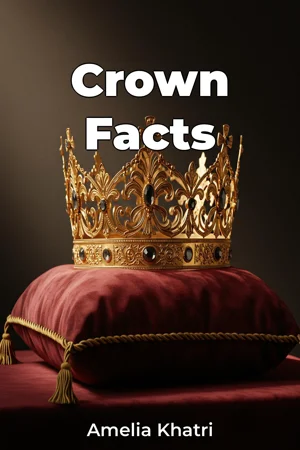
Have you ever considered the silent power held within a crown? "Crown Facts" delves into the fascinating world of royal headpieces, exploring not just their aesthetic beauty but their profound symbolism and the intricate history woven into their very fabric. This book is important because it illuminates how these objects, often perceived as mere symbols of wealth and power, actually represent complex narratives of national identity, cultural heritage, and the evolution of monarchy itself. We begin by establishing the historical context, tracing the origins of crowns from ancient civilizations through the medieval period and into the modern era. Rather than a simple chronicle, we examine the social, political, and religious forces that shaped their design and function. The heart of "Crown Facts" lies in understanding the key elements of crown design and their significance. We explore the meaning behind specific gemstones, metals, and shapes, revealing how these details were carefully chosen to communicate messages of authority, legitimacy, and divine right. Examples from various cultures around the globe will illustrate the diverse interpretations of these symbols. The book follows a structured approach: First, an introduction to the fundamental concepts of royal regalia and their historical roots. Second, a detailed examination of crowns from three distinct geographical regions: Europe, Asia, and Africa, highlighting the unique cultural influences and historical events that shaped their designs. This comparative analysis allows us to understand the universality of crown symbolism as well as its regional variations. Third, we investigate the modern role of crowns, their continued significance in contemporary monarchies, and their appearances in popular culture, and film. Our analysis relies on a combination of historical documents, including royal inventories, coronation records, and diplomatic correspondence. We also draw upon art historical analyses of crown designs and anthropological studies of cultural symbolism. We introduce an original database of crown designs from around the world, cataloging their key features and historical provenance. "Crown Facts" connects to several interdisciplinary fields. Its historical analysis intertwines with political science, offering insights into the dynamics of power and legitimacy. The study of crown design links to art history and material culture, revealing how aesthetic choices reflect broader cultural values. The analysis of symbolism connects to anthropology and semiotics, exploring the ways in which objects communicate meaning. Our unique approach centers on the idea that crowns are not static objects but rather dynamic symbols that evolve over time, reflecting changing political landscapes and cultural values. The book provides an accessible, fact-based explanation of crown history for general readers with an interest in history, culture, and royal families. The tone is informative and engaging, avoiding overly academic jargon while maintaining scholarly rigor. The book’s scope is broad, encompassing crowns from many countries and historical periods, but with an intentional limitation on exploring individual monarchs. It is not a biographical study, rather a thematic examination of crowns themselves. Readers interested in history, world history, or history world will find particular value in this book, as it offers a unique lens through which to understand broader historical trends. The information presented can be applied to understanding the symbolism present in many aspects of material culture. The ongoing debates surrounding the role of monarchy in the 21st century, will be addressed through the lens of crown symbolism.
Have you ever considered the silent power held within a crown? "Crown Facts" delves into the fascinating world of royal headpieces, exploring not just their aesthetic beauty but their profound symbolism and the intricate history woven into their very fabric. This book is important because it illuminates how these objects, often perceived as mere symbols of wealth and power, actually represent complex narratives of national identity, cultural heritage, and the evolution of monarchy itself. We begin by establishing the historical context, tracing the origins of crowns from ancient civilizations through the medieval period and into the modern era. Rather than a simple chronicle, we examine the social, political, and religious forces that shaped their design and function. The heart of "Crown Facts" lies in understanding the key elements of crown design and their significance. We explore the meaning behind specific gemstones, metals, and shapes, revealing how these details were carefully chosen to communicate messages of authority, legitimacy, and divine right. Examples from various cultures around the globe will illustrate the diverse interpretations of these symbols. The book follows a structured approach: First, an introduction to the fundamental concepts of royal regalia and their historical roots. Second, a detailed examination of crowns from three distinct geographical regions: Europe, Asia, and Africa, highlighting the unique cultural influences and historical events that shaped their designs. This comparative analysis allows us to understand the universality of crown symbolism as well as its regional variations. Third, we investigate the modern role of crowns, their continued significance in contemporary monarchies, and their appearances in popular culture, and film. Our analysis relies on a combination of historical documents, including royal inventories, coronation records, and diplomatic correspondence. We also draw upon art historical analyses of crown designs and anthropological studies of cultural symbolism. We introduce an original database of crown designs from around the world, cataloging their key features and historical provenance. "Crown Facts" connects to several interdisciplinary fields. Its historical analysis intertwines with political science, offering insights into the dynamics of power and legitimacy. The study of crown design links to art history and material culture, revealing how aesthetic choices reflect broader cultural values. The analysis of symbolism connects to anthropology and semiotics, exploring the ways in which objects communicate meaning. Our unique approach centers on the idea that crowns are not static objects but rather dynamic symbols that evolve over time, reflecting changing political landscapes and cultural values. The book provides an accessible, fact-based explanation of crown history for general readers with an interest in history, culture, and royal families. The tone is informative and engaging, avoiding overly academic jargon while maintaining scholarly rigor. The book’s scope is broad, encompassing crowns from many countries and historical periods, but with an intentional limitation on exploring individual monarchs. It is not a biographical study, rather a thematic examination of crowns themselves. Readers interested in history, world history, or history world will find particular value in this book, as it offers a unique lens through which to understand broader historical trends. The information presented can be applied to understanding the symbolism present in many aspects of material culture. The ongoing debates surrounding the role of monarchy in the 21st century, will be addressed through the lens of crown symbolism.
"Crown Facts" explores the rich history and symbolism embedded within royal headpieces, revealing how these objects represent national identity, cultural heritage, and the evolution of monarchy. More than mere symbols of wealth, crowns reflect intricate narratives shaped by social, political, and religious forces. For instance, the specific gemstones, metals, and shapes chosen for a crown were carefully selected to communicate authority, legitimacy, and even divine right, differing significantly across cultures. The book traces the origins of crowns from ancient civilizations to modern monarchies, examining their design and function through a structured approach. Beginning with an introduction to royal regalia, it progresses to a detailed analysis of crowns from Europe, Asia, and Africa, highlighting unique cultural influences. "Crown Facts" further investigates the modern role of crowns in contemporary society and popular culture, using historical documents, art historical analyses, and anthropological studies to reveal how these symbols have evolved over time. By connecting interdisciplinary fields like political science, art history, and anthropology, the book presents crowns as dynamic symbols reflecting changing political landscapes and cultural values. This thematic examination of crowns, rather than a biographical study of monarchs, offers readers interested in world history a unique lens to understand broader historical trends and the symbolism inherent in material culture.
Book Details
ISBN
9788233970048
Publisher
Publifye AS
Your Licenses
You don't own any licenses for this book
Purchase a license below to unlock this book and download the EPUB.
Purchase License
Select a tier to unlock this book
Need bulk licensing?
Contact us for enterprise agreements.