
About This Book
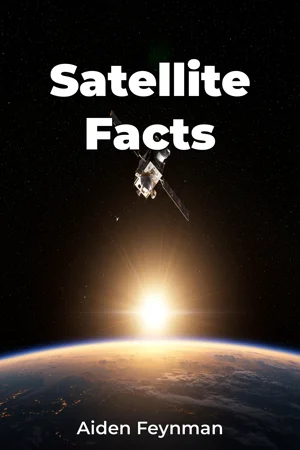
Have you ever wondered how your smartphone connects you to the other side of the world, or how weather forecasts can predict storms days in advance? The answer lies hundreds of miles above us, in the intricate network of satellites orbiting Earth. "Satellite Facts" unveils the complex world of these often-unseen technological marvels, exploring their multifaceted roles in communication, scientific discovery, and the ongoing quest for space exploration. This book delves into the science and technology that power these crucial components of modern life. We will examine three primary areas: the fundamental principles governing satellite orbits, the diverse applications of satellites in modern communication systems, and the evolving role of satellites in the exploration of our solar system and beyond. Understanding these topics is essential for anyone seeking to grasp the technological infrastructure underpinning our interconnected world and the future of space-based research. To fully appreciate the intricacies of satellite technology, we will provide a foundation in basic physics and orbital mechanics. While no prior expertise is required, a general understanding of scientific principles will enhance the reader's comprehension. We will also explore the historical context, from the launch of Sputnik to the development of modern satellite constellations, illustrating the rapid evolution of this technology. The central argument of "Satellite Facts" is that satellites are not merely tools for communication; they are integral to our understanding of Earth, our ability to navigate the globe, and our aspirations to explore the cosmos. They represent a convergence of scientific ingenuity and engineering prowess, continually pushing the boundaries of what is achievable. The book is structured to provide a comprehensive overview of satellite technology. First, we will introduce the fundamental principles of orbital mechanics, explaining the forces that govern satellite motion and the different types of orbits used for various applications. Next, we will explore the role of satellites in communication, detailing how they facilitate global telephone networks, television broadcasts, and internet access. This section will also address the challenges of signal transmission, bandwidth allocation, and the impact of satellite communication on global culture. Then, we will shift our focus to space exploration, examining how satellites are used to study Earth’s climate, monitor environmental changes, and search for new planets. We will conclude by considering the future of satellite technology, including the development of smaller, more efficient satellites, the potential for space-based manufacturing, and the ethical implications of increasing satellite deployment. The book's arguments are supported by a wealth of data derived from reputable sources, including NASA, ESA, and leading telecommunications companies. We will present detailed diagrams, photographs, and real-world case studies to illustrate the concepts discussed. In addition, we will analyze the data collected by Earth observation satellites, providing insights into climate change, deforestation, and other environmental challenges. "Satellite Facts" also draws connections to various other fields, including computer science (in relation to satellite software and data processing), political science (addressing issues of space law and international cooperation), and environmental science (examining the impact of satellites on monitoring Earth's resources). These interdisciplinary connections enhance the book's argument by demonstrating the broad relevance of satellite technology. This book offers a comprehensive and accessible exploration of satellite technology, emphasizing practical applications and avoiding overly technical jargon. The tone is informative and engaging, making complex concepts understandable to a broad audience. "Satellite Facts" is aimed at anyone with an interest in science, technology, and space exploration. This includes students, educators, science enthusiasts, and professionals working in related fields. It will be valuable to those seeking a comprehensive understanding of satellite technology and its impact on our world. As a work of non-fiction, "Satellite Facts" adheres to the genre’s conventions of accuracy, objectivity, and clear presentation of information. The book includes detailed citations and references to ensure the credibility of its arguments. The scope of "Satellite Facts" is limited to the scientific and technological aspects of satellites, focusing on their orbital mechanics, communication capabilities, and role in space exploration. We do not delve extensively into the political or economic implications of satellite technology, although these aspects are touched upon where relevant. The information presented has real-world applications for educators seeking to enhance their science curriculum, for professionals developing new satellite technologies, and for anyone interested in understanding the technology that shapes our modern world. Understanding satellite technology may empower those interested in careers related to space or telecommunications to pursue their goals. Finally, we address the ongoing debate surrounding space debris and the potential for collisions between satellites, offering a balanced perspective on the challenges and potential solutions to this growing problem.
Have you ever wondered how your smartphone connects you to the other side of the world, or how weather forecasts can predict storms days in advance? The answer lies hundreds of miles above us, in the intricate network of satellites orbiting Earth. "Satellite Facts" unveils the complex world of these often-unseen technological marvels, exploring their multifaceted roles in communication, scientific discovery, and the ongoing quest for space exploration. This book delves into the science and technology that power these crucial components of modern life. We will examine three primary areas: the fundamental principles governing satellite orbits, the diverse applications of satellites in modern communication systems, and the evolving role of satellites in the exploration of our solar system and beyond. Understanding these topics is essential for anyone seeking to grasp the technological infrastructure underpinning our interconnected world and the future of space-based research. To fully appreciate the intricacies of satellite technology, we will provide a foundation in basic physics and orbital mechanics. While no prior expertise is required, a general understanding of scientific principles will enhance the reader's comprehension. We will also explore the historical context, from the launch of Sputnik to the development of modern satellite constellations, illustrating the rapid evolution of this technology. The central argument of "Satellite Facts" is that satellites are not merely tools for communication; they are integral to our understanding of Earth, our ability to navigate the globe, and our aspirations to explore the cosmos. They represent a convergence of scientific ingenuity and engineering prowess, continually pushing the boundaries of what is achievable. The book is structured to provide a comprehensive overview of satellite technology. First, we will introduce the fundamental principles of orbital mechanics, explaining the forces that govern satellite motion and the different types of orbits used for various applications. Next, we will explore the role of satellites in communication, detailing how they facilitate global telephone networks, television broadcasts, and internet access. This section will also address the challenges of signal transmission, bandwidth allocation, and the impact of satellite communication on global culture. Then, we will shift our focus to space exploration, examining how satellites are used to study Earth’s climate, monitor environmental changes, and search for new planets. We will conclude by considering the future of satellite technology, including the development of smaller, more efficient satellites, the potential for space-based manufacturing, and the ethical implications of increasing satellite deployment. The book's arguments are supported by a wealth of data derived from reputable sources, including NASA, ESA, and leading telecommunications companies. We will present detailed diagrams, photographs, and real-world case studies to illustrate the concepts discussed. In addition, we will analyze the data collected by Earth observation satellites, providing insights into climate change, deforestation, and other environmental challenges. "Satellite Facts" also draws connections to various other fields, including computer science (in relation to satellite software and data processing), political science (addressing issues of space law and international cooperation), and environmental science (examining the impact of satellites on monitoring Earth's resources). These interdisciplinary connections enhance the book's argument by demonstrating the broad relevance of satellite technology. This book offers a comprehensive and accessible exploration of satellite technology, emphasizing practical applications and avoiding overly technical jargon. The tone is informative and engaging, making complex concepts understandable to a broad audience. "Satellite Facts" is aimed at anyone with an interest in science, technology, and space exploration. This includes students, educators, science enthusiasts, and professionals working in related fields. It will be valuable to those seeking a comprehensive understanding of satellite technology and its impact on our world. As a work of non-fiction, "Satellite Facts" adheres to the genre’s conventions of accuracy, objectivity, and clear presentation of information. The book includes detailed citations and references to ensure the credibility of its arguments. The scope of "Satellite Facts" is limited to the scientific and technological aspects of satellites, focusing on their orbital mechanics, communication capabilities, and role in space exploration. We do not delve extensively into the political or economic implications of satellite technology, although these aspects are touched upon where relevant. The information presented has real-world applications for educators seeking to enhance their science curriculum, for professionals developing new satellite technologies, and for anyone interested in understanding the technology that shapes our modern world. Understanding satellite technology may empower those interested in careers related to space or telecommunications to pursue their goals. Finally, we address the ongoing debate surrounding space debris and the potential for collisions between satellites, offering a balanced perspective on the challenges and potential solutions to this growing problem.
Satellites, often unseen technological marvels, are integral to modern life, facilitating everything from global communication to scientific discovery. "Satellite Facts" explores the multifaceted roles of these devices in space exploration, examining their impact on our interconnected world. Delving into the science and technology behind satellites, the book highlights intriguing facts, such as how they enable precise weather forecasts and connect smartphones across vast distances. Did you know satellites also play a crucial role in monitoring climate change and deforestation? This book offers a comprehensive overview, starting with the fundamental principles of orbital mechanics before progressing to the diverse applications of satellites in communication and space exploration. It reveals how signals are transmitted, bandwidth is allocated, and the impact of satellite communication on global culture. Readers will gain insights into how satellites contribute to our understanding of Earth and the cosmos, addressing even the challenges of space debris. By presenting information in an accessible manner, "Satellite Facts" aims to demystify satellite technology for a broad audience interested in technology and science.
Book Details
ISBN
9788233969998
Publisher
Publifye AS
Your Licenses
You don't own any licenses for this book
Purchase a license below to unlock this book and download the EPUB.
Purchase License
Select a tier to unlock this book
Need bulk licensing?
Contact us for enterprise agreements.