
About This Book
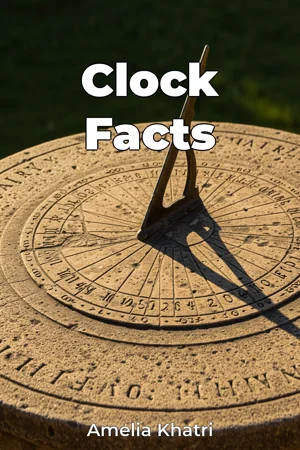
Have you ever stopped to consider how deeply time shapes our lives, dictating our schedules, influencing our economies, and even defining our understanding of the universe? "Clock Facts" delves into the fascinating history and profound implications of timekeeping, from the earliest human attempts to measure the passage of days to the cutting-edge precision of modern atomic clocks. This book explores three core themes: the evolution of timekeeping devices, the impact of standardized time on society, and the scientific principles underlying our most accurate clocks. These topics are vital because understanding the history of timekeeping reveals not only our technological progress but also how our perception of time itself has evolved, profoundly shaping our social structures and scientific endeavors. To fully appreciate the intricacies of timekeeping, we will first establish a historical context, examining ancient civilizations and their methods for tracking time using sundials, water clocks, and celestial observations. No prior specialized knowledge is required; we'll build from fundamental concepts, ensuring accessibility for all readers. "Clock Facts" argues that the quest for more accurate time measurement has been a driving force behind scientific and technological advancement throughout history. This pursuit has not simply been about refining our ability to measure time; it has fundamentally reshaped our understanding of physics, enabled global communication and navigation, and transformed the organization of modern life. The book is structured to provide a comprehensive overview of the subject. It begins with an introduction to the earliest timekeeping methods, gradually progressing through mechanical clocks, quartz oscillators, and finally, atomic clocks. Key sections include: * The Ancient World: Examining early methods like sundials, obelisks, and water clocks, and their limitations. * The Mechanical Era: Chronicling the invention of mechanical clocks and their impact on daily life. * The Rise of Precision: Covering the development of quartz clocks, pendulum clocks, and the eventual advent of atomic timekeeping. * Time Today and Tomorrow: Detailing how atomic clocks work, their role in global infrastructure and scientific research, and discussing concepts like time dilation. The evidence presented in "Clock Facts" draws from a wide range of historical records, original scientific papers, and contemporary analyses of timekeeping technology. We will analyze the specifications of various clock types with information sourced from standards organizations and historical archives. This book sits at the intersection of science and history, examining the historical context of scientific advancements related to time measurement. It also touches upon elements of sociology by considering how standardized time has shaped modern social structures and economics through its influence on trade and communication. "Clock Facts" offers a unique perspective by connecting the evolution of timekeeping technology to broader cultural and scientific shifts. It highlights the constant push for greater precision and how that drive has influenced scientific discovery. Written in a clear, accessible style, "Clock Facts" is aimed at a broad audience, including science enthusiasts, history buffs, and anyone curious about the technology that governs much of modern life. It offers a valuable resource for understanding the role of timekeeping in shaping our world. Its focus on factual accuracy and historical context aligns with the expectations of the non-fiction genre. The scope of the book is intentionally limited to the development and impact of physical timekeeping devices, rather than philosophical discussions about the nature of time itself. While the book is detailed, it avoids unnecessary mathematical complexity, focusing instead on conceptual understanding. The knowledge gained from "Clock Facts" has direct real-world applications. Understanding the principles behind GPS technology, for example, requires familiarity with atomic clocks and relativistic effects. The book also provides valuable historical perspective on the technologies we rely on daily. While the fundamental principles of atomic timekeeping are well-established, there are ongoing debates about the optimal ways to distribute time signals and synchronize global networks. "Clock Facts" will address these issues, providing a balanced overview of current research and discussions.
Have you ever stopped to consider how deeply time shapes our lives, dictating our schedules, influencing our economies, and even defining our understanding of the universe? "Clock Facts" delves into the fascinating history and profound implications of timekeeping, from the earliest human attempts to measure the passage of days to the cutting-edge precision of modern atomic clocks. This book explores three core themes: the evolution of timekeeping devices, the impact of standardized time on society, and the scientific principles underlying our most accurate clocks. These topics are vital because understanding the history of timekeeping reveals not only our technological progress but also how our perception of time itself has evolved, profoundly shaping our social structures and scientific endeavors. To fully appreciate the intricacies of timekeeping, we will first establish a historical context, examining ancient civilizations and their methods for tracking time using sundials, water clocks, and celestial observations. No prior specialized knowledge is required; we'll build from fundamental concepts, ensuring accessibility for all readers. "Clock Facts" argues that the quest for more accurate time measurement has been a driving force behind scientific and technological advancement throughout history. This pursuit has not simply been about refining our ability to measure time; it has fundamentally reshaped our understanding of physics, enabled global communication and navigation, and transformed the organization of modern life. The book is structured to provide a comprehensive overview of the subject. It begins with an introduction to the earliest timekeeping methods, gradually progressing through mechanical clocks, quartz oscillators, and finally, atomic clocks. Key sections include: * The Ancient World: Examining early methods like sundials, obelisks, and water clocks, and their limitations. * The Mechanical Era: Chronicling the invention of mechanical clocks and their impact on daily life. * The Rise of Precision: Covering the development of quartz clocks, pendulum clocks, and the eventual advent of atomic timekeeping. * Time Today and Tomorrow: Detailing how atomic clocks work, their role in global infrastructure and scientific research, and discussing concepts like time dilation. The evidence presented in "Clock Facts" draws from a wide range of historical records, original scientific papers, and contemporary analyses of timekeeping technology. We will analyze the specifications of various clock types with information sourced from standards organizations and historical archives. This book sits at the intersection of science and history, examining the historical context of scientific advancements related to time measurement. It also touches upon elements of sociology by considering how standardized time has shaped modern social structures and economics through its influence on trade and communication. "Clock Facts" offers a unique perspective by connecting the evolution of timekeeping technology to broader cultural and scientific shifts. It highlights the constant push for greater precision and how that drive has influenced scientific discovery. Written in a clear, accessible style, "Clock Facts" is aimed at a broad audience, including science enthusiasts, history buffs, and anyone curious about the technology that governs much of modern life. It offers a valuable resource for understanding the role of timekeeping in shaping our world. Its focus on factual accuracy and historical context aligns with the expectations of the non-fiction genre. The scope of the book is intentionally limited to the development and impact of physical timekeeping devices, rather than philosophical discussions about the nature of time itself. While the book is detailed, it avoids unnecessary mathematical complexity, focusing instead on conceptual understanding. The knowledge gained from "Clock Facts" has direct real-world applications. Understanding the principles behind GPS technology, for example, requires familiarity with atomic clocks and relativistic effects. The book also provides valuable historical perspective on the technologies we rely on daily. While the fundamental principles of atomic timekeeping are well-established, there are ongoing debates about the optimal ways to distribute time signals and synchronize global networks. "Clock Facts" will address these issues, providing a balanced overview of current research and discussions.
"Clock Facts" explores the captivating story of timekeeping, tracing its evolution from ancient sundials and water clocks to the atomic clocks that underpin modern technology. The book highlights how the quest for more accurate time measurement has driven scientific and technological progress, fundamentally reshaping our understanding of physics and enabling global communication. Did you know that early timekeeping devices like obelisks and sundials, while rudimentary, were crucial for agricultural planning and religious observances in ancient civilizations? The book progresses chronologically, starting with the earliest methods and moving through mechanical and quartz clocks before delving into the intricacies of atomic timekeeping. The book further examines the profound impact of standardized time on society, influencing everything from trade and communication to the organization of daily life. The development of mechanical clocks in the medieval era, for example, revolutionized urban life by introducing a more structured and synchronized schedule. "Clock Facts" uniquely connects the evolution of timekeeping technology to broader cultural and scientific shifts, revealing how our perception and measurement of time have profoundly shaped our world. The book emphasizes factual accuracy and historical context, making complex concepts accessible to a broad audience interested in science and history.
Book Details
ISBN
9788233969929
Publisher
Publifye AS
Your Licenses
You don't own any licenses for this book
Purchase a license below to unlock this book and download the EPUB.
Purchase License
Select a tier to unlock this book
Need bulk licensing?
Contact us for enterprise agreements.