
About This Book
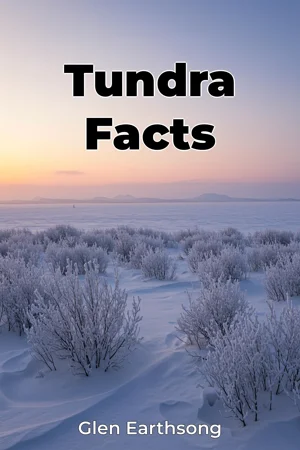
Have you ever wondered how life persists in a world of ice and snow, where the sun barely rises above the horizon for months on end? "Tundra Facts" unveils the secrets of the tundra biome, a landscape defined by its extreme conditions and the remarkable adaptations of its inhabitants. This book explores the delicate balance of this fragile ecosystem, offering a comprehensive look at the science, geography, and natural history of one of Earth's most challenging environments. This book centers on the scientific understanding of tundra ecosystems, examining its key components: the abiotic factors that shape the environment, the biotic communities that thrive within it, and the intricate relationships between them. Secondly, the book delves into the geographical distribution of tundra regions across the globe. This includes comparing and contrasting the characteristics of arctic, alpine, and even Antarctic tundra environments. Finally, the book investigates the diverse animal life that has adapted to survive in these harsh conditions, from the migratory routes of caribou to the insulating feathers of the Arctic tern. These topics are vital because understanding the tundra is crucial for comprehending global climate patterns and the impact of climate change on vulnerable ecosystems. The knowledge presented builds on fundamental concepts in ecology, geography, and zoology. A basic understanding of these principles will enhance the reader’s appreciation of the complex interdependencies that characterize tundra ecosystems. The central argument of "Tundra Facts" emphasizes the interconnectedness of all aspects of the tundra environment and the increasing vulnerability of this ecosystem to human activities. The book will demonstrate that the delicate balance of the tundra is under threat and that preserving this unique environment is vital for global ecological health. The book begins by introducing the fundamental characteristics of the tundra, defining its different types, and explaining the key factors that contribute to its unique climate. It then moves to a detailed exploration of the plant life of the tundra, highlighting the adaptations that allow species like lichens, mosses, and dwarf shrubs to survive. Following this, animal life is examined. This includes case studies of specific species and their roles within the tundra ecosystem. The book culminates with a discussion of the impact of climate change and human activities on the tundra, offering potential strategies for conservation and sustainable management. The evidence presented is drawn from scientific research, ecological studies, and geographical surveys. This includes data on temperature patterns, precipitation levels, permafrost conditions, and species populations, all compiled from reputable scientific sources. Additionally, the book incorporates insights from field research conducted by leading scientists and researchers working in tundra regions. The book connects to other fields, such as climate science and conservation biology. The study of the tundra provides valuable insights into global climate patterns and the effects of climate change on sensitive ecosystems. Furthermore, the book draws upon conservation biology to discuss strategies for protecting and managing tundra environments in the face of increasing threats. "Tundra Facts" offers a comprehensive and accessible overview of the tundra biome, making complex scientific information understandable to a broad audience. It presents the information in a factual and clear manner, avoiding sensationalism and prioritizing accuracy. This book is targeted at students, educators, nature enthusiasts, and anyone interested in learning more about Earth’s diverse ecosystems. It will be valuable to readers seeking a solid understanding of the tundra biome, its importance, and the challenges it faces. As a non-fiction work within the genres of 'Ecosystems & Habitats, Earth Sciences, and Geography', "Tundra Facts" adheres to the conventions of accuracy, objectivity, and thorough research. The scope of the book is limited to the tundra biome, focusing on its characteristics, inhabitants, and the challenges it faces. Real-world applications of the information include understanding the ecological significance of permafrost thaw, predicting the impact of climate change on migratory species, and promoting sustainable tourism practices in tundra regions. While the book touches upon the science, it acknowledges that there are debates about the most effective approaches to tundra conservation, and it presents a balanced perspective on these issues.
Have you ever wondered how life persists in a world of ice and snow, where the sun barely rises above the horizon for months on end? "Tundra Facts" unveils the secrets of the tundra biome, a landscape defined by its extreme conditions and the remarkable adaptations of its inhabitants. This book explores the delicate balance of this fragile ecosystem, offering a comprehensive look at the science, geography, and natural history of one of Earth's most challenging environments. This book centers on the scientific understanding of tundra ecosystems, examining its key components: the abiotic factors that shape the environment, the biotic communities that thrive within it, and the intricate relationships between them. Secondly, the book delves into the geographical distribution of tundra regions across the globe. This includes comparing and contrasting the characteristics of arctic, alpine, and even Antarctic tundra environments. Finally, the book investigates the diverse animal life that has adapted to survive in these harsh conditions, from the migratory routes of caribou to the insulating feathers of the Arctic tern. These topics are vital because understanding the tundra is crucial for comprehending global climate patterns and the impact of climate change on vulnerable ecosystems. The knowledge presented builds on fundamental concepts in ecology, geography, and zoology. A basic understanding of these principles will enhance the reader’s appreciation of the complex interdependencies that characterize tundra ecosystems. The central argument of "Tundra Facts" emphasizes the interconnectedness of all aspects of the tundra environment and the increasing vulnerability of this ecosystem to human activities. The book will demonstrate that the delicate balance of the tundra is under threat and that preserving this unique environment is vital for global ecological health. The book begins by introducing the fundamental characteristics of the tundra, defining its different types, and explaining the key factors that contribute to its unique climate. It then moves to a detailed exploration of the plant life of the tundra, highlighting the adaptations that allow species like lichens, mosses, and dwarf shrubs to survive. Following this, animal life is examined. This includes case studies of specific species and their roles within the tundra ecosystem. The book culminates with a discussion of the impact of climate change and human activities on the tundra, offering potential strategies for conservation and sustainable management. The evidence presented is drawn from scientific research, ecological studies, and geographical surveys. This includes data on temperature patterns, precipitation levels, permafrost conditions, and species populations, all compiled from reputable scientific sources. Additionally, the book incorporates insights from field research conducted by leading scientists and researchers working in tundra regions. The book connects to other fields, such as climate science and conservation biology. The study of the tundra provides valuable insights into global climate patterns and the effects of climate change on sensitive ecosystems. Furthermore, the book draws upon conservation biology to discuss strategies for protecting and managing tundra environments in the face of increasing threats. "Tundra Facts" offers a comprehensive and accessible overview of the tundra biome, making complex scientific information understandable to a broad audience. It presents the information in a factual and clear manner, avoiding sensationalism and prioritizing accuracy. This book is targeted at students, educators, nature enthusiasts, and anyone interested in learning more about Earth’s diverse ecosystems. It will be valuable to readers seeking a solid understanding of the tundra biome, its importance, and the challenges it faces. As a non-fiction work within the genres of 'Ecosystems & Habitats, Earth Sciences, and Geography', "Tundra Facts" adheres to the conventions of accuracy, objectivity, and thorough research. The scope of the book is limited to the tundra biome, focusing on its characteristics, inhabitants, and the challenges it faces. Real-world applications of the information include understanding the ecological significance of permafrost thaw, predicting the impact of climate change on migratory species, and promoting sustainable tourism practices in tundra regions. While the book touches upon the science, it acknowledges that there are debates about the most effective approaches to tundra conservation, and it presents a balanced perspective on these issues.
The tundra, a realm of ice and snow, is the central theme of *Tundra Facts*, which explores this unique biome's ecosystems and habitats. It reveals how life adapts in such extreme conditions, examining the delicate balance between abiotic factors like permafrost and biotic communities. Did you know that both Arctic and alpine environments share similar tundra characteristics, despite their different locations? Or that certain animal species have developed extraordinary adaptations to survive the long, dark winters? This book uniquely presents a comprehensive view of the tundra's geography, earth science, and natural history. It progresses systematically, beginning with the fundamental characteristics of the tundra and its various types. It then explores plant and animal life, including case studies of specific species and their roles. Finally, it culminates in a discussion of climate change, conservation, and sustainable management. The book emphasizes the vulnerability of tundra ecosystems to climate change and human activities. By drawing on scientific research and ecological studies, the book highlights the interconnectedness of the tundra environment. Understanding the impact on migratory species and ecological significance of permafrost thaw, are key to conservation efforts.
Book Details
ISBN
9788233969844
Publisher
Publifye AS
Your Licenses
You don't own any licenses for this book
Purchase a license below to unlock this book and download the EPUB.
Purchase License
Select a tier to unlock this book
Need bulk licensing?
Contact us for enterprise agreements.