
About This Book
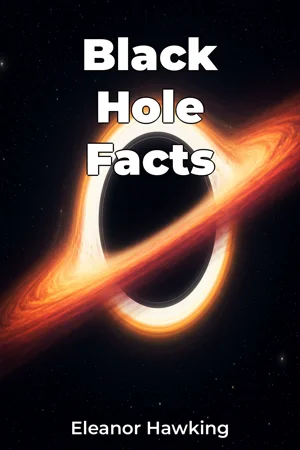
Have you ever wondered what happens when gravity becomes so intense that not even light can escape? "Black Hole Facts" delves into the enigmatic world of black holes, cosmic entities that challenge our understanding of space, time, and the fundamental laws of Physics. This book explores their formation, properties, and profound effects on the universe. This book aims to provide a comprehensive, accessible, and fact-based exploration of black holes, explaining their significance in astrophysics and cosmology. It will discuss the formation of black holes from the collapse of massive stars, supermassive black holes residing at the centers of galaxies, and even the theoretical possibility of microscopic black holes. The book will show that understanding black holes is crucial for developing a complete picture of the universe's evolution and the nature of gravity itself. The book starts by laying the groundwork with an overview of Einstein's theory of general relativity, the cornerstone of our current understanding of gravity. It then journeys through the life cycle of stars, explaining how some reach their final stage as black holes. The book will explore the key concepts like the event horizon, singularity, and the different types of black holes. The core argument is that black holes are not cosmic vacuum cleaners but complex astrophysical objects that play a pivotal role in shaping galaxies and influencing their environments. The book is structured into three major sections. Beginning with the theoretical foundations of black holes, drawing upon the work of key figures like Schwarzschild and Oppenheimer, it then moves onto observational evidence, drawing from data collected from telescopes and gravitational wave observatories such as LIGO and Virgo. Finally, the book culminates with a discussion of current research frontiers, including the information paradox and the quest for a theory of quantum gravity. The evidence presented within this book will be based on a synthesis of peer-reviewed research papers, observational data from astronomical surveys, and theoretical models developed by leading physicists. We will also draw on data from missions such as the Event Horizon Telescope, which provided the first-ever image of a black hole's shadow. The book will also consider the role of simulations in predicting black hole behavior and interpreting observational data. "Black Hole Facts" connects to other fields such as cosmology, particle physics, and mathematics. Black holes are crucial for understanding the large-scale structure of the universe and the formation of galaxies. The book will discuss how black holes serve as laboratories for testing extreme conditions of matter and energy and relate to debates about the fundamental nature of space and time. This book offers a unique approach by combining rigorous scientific explanations with accessible language, making complex concepts understandable to a broad audience. The tone is informative and engaging, aiming to spark curiosity and inspire further exploration of the subject. This book is targeted towards science enthusiasts, undergraduate students, and anyone with a general interest in astrophysics and cosmology. It provides a valuable resource for those seeking a deeper understanding of black holes without requiring advanced mathematical knowledge. The book focuses on the established science of black holes, acknowledging the ongoing debates in the scientific community. While the book will aim to be as comprehensive as possible, it will not delve into speculative topics such as wormholes. The information presented in this book can be applied in various ways. For example, understanding gravitational lensing can help interpret astronomical images, while knowledge of black hole dynamics can inform research in astrophysics. The book will also touch on the ethical considerations of potential future technologies related to black holes. The book will address the black hole information paradox and the ongoing attempts to reconcile general relativity with quantum mechanics, highlighting the debates and uncertainties that remain at the forefront of research.
Have you ever wondered what happens when gravity becomes so intense that not even light can escape? "Black Hole Facts" delves into the enigmatic world of black holes, cosmic entities that challenge our understanding of space, time, and the fundamental laws of Physics. This book explores their formation, properties, and profound effects on the universe. This book aims to provide a comprehensive, accessible, and fact-based exploration of black holes, explaining their significance in astrophysics and cosmology. It will discuss the formation of black holes from the collapse of massive stars, supermassive black holes residing at the centers of galaxies, and even the theoretical possibility of microscopic black holes. The book will show that understanding black holes is crucial for developing a complete picture of the universe's evolution and the nature of gravity itself. The book starts by laying the groundwork with an overview of Einstein's theory of general relativity, the cornerstone of our current understanding of gravity. It then journeys through the life cycle of stars, explaining how some reach their final stage as black holes. The book will explore the key concepts like the event horizon, singularity, and the different types of black holes. The core argument is that black holes are not cosmic vacuum cleaners but complex astrophysical objects that play a pivotal role in shaping galaxies and influencing their environments. The book is structured into three major sections. Beginning with the theoretical foundations of black holes, drawing upon the work of key figures like Schwarzschild and Oppenheimer, it then moves onto observational evidence, drawing from data collected from telescopes and gravitational wave observatories such as LIGO and Virgo. Finally, the book culminates with a discussion of current research frontiers, including the information paradox and the quest for a theory of quantum gravity. The evidence presented within this book will be based on a synthesis of peer-reviewed research papers, observational data from astronomical surveys, and theoretical models developed by leading physicists. We will also draw on data from missions such as the Event Horizon Telescope, which provided the first-ever image of a black hole's shadow. The book will also consider the role of simulations in predicting black hole behavior and interpreting observational data. "Black Hole Facts" connects to other fields such as cosmology, particle physics, and mathematics. Black holes are crucial for understanding the large-scale structure of the universe and the formation of galaxies. The book will discuss how black holes serve as laboratories for testing extreme conditions of matter and energy and relate to debates about the fundamental nature of space and time. This book offers a unique approach by combining rigorous scientific explanations with accessible language, making complex concepts understandable to a broad audience. The tone is informative and engaging, aiming to spark curiosity and inspire further exploration of the subject. This book is targeted towards science enthusiasts, undergraduate students, and anyone with a general interest in astrophysics and cosmology. It provides a valuable resource for those seeking a deeper understanding of black holes without requiring advanced mathematical knowledge. The book focuses on the established science of black holes, acknowledging the ongoing debates in the scientific community. While the book will aim to be as comprehensive as possible, it will not delve into speculative topics such as wormholes. The information presented in this book can be applied in various ways. For example, understanding gravitational lensing can help interpret astronomical images, while knowledge of black hole dynamics can inform research in astrophysics. The book will also touch on the ethical considerations of potential future technologies related to black holes. The book will address the black hole information paradox and the ongoing attempts to reconcile general relativity with quantum mechanics, highlighting the debates and uncertainties that remain at the forefront of research.
"Black Hole Facts" explores the fascinating realm of black holes, those cosmic enigmas where gravity's grip is so immense that not even light can escape. It investigates their formation from stellar collapse, their mind-bending properties like the event horizon and singularity, and their significant influence on galaxy formation and our understanding of space-time. Did you know supermassive black holes reside at the centers of most galaxies, playing a pivotal role in their evolution? Or that the study of gravitational waves offers a new window into understanding black hole mergers? This book uniquely combines scientific rigor with accessible language, making complex concepts understandable for a broad audience interested in Physics and Science. Starting with Einstein's theory of general relativity, it progresses through the life cycle of stars and various types of black holes. The book then discusses observational evidence from telescopes and gravitational wave observatories, culminating in a discussion of current research frontiers such as the information paradox and quantum gravity.
Book Details
ISBN
9788233969783
Publisher
Publifye AS
Your Licenses
You don't own any licenses for this book
Purchase a license below to unlock this book and download the EPUB.
Purchase License
Select a tier to unlock this book
Need bulk licensing?
Contact us for enterprise agreements.