
About This Book
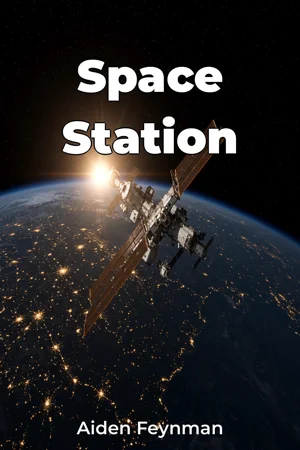
Have you ever wondered what it truly takes to live and work hundreds of miles above Earth, hurtling through space at incredible speeds? "Space Station" offers an in-depth exploration of the International Space Station (ISS), examining not only the daily lives of the astronauts aboard but also the crucial role the station plays in shaping the future of space exploration. This book delves into the technology that makes habitation possible in the harsh environment of space and investigates the significant scientific contributions made through research conducted on the ISS. This book argues that the ISS is more than just a laboratory in orbit; it is a vital stepping stone for humanity’s expansion into the cosmos. It serves as a testbed for technologies and procedures essential for longer-duration missions, such as a journey to Mars. Understanding the challenges and successes of the ISS program is critical for anyone interested in the next chapter of space exploration. "Space Station" begins by providing essential context about the history of human spaceflight, tracing the evolution from early rockets to the ambitious project of assembling a permanent station in orbit. It introduces the international collaboration that makes the ISS possible, highlighting the contributions of various space agencies and the geopolitical dynamics involved. The core of the book is structured around three major themes. First, it explores the technical marvels of the ISS, explaining how life support systems, power generation, and communications technologies function in the vacuum of space. Detailed diagrams and explanations demystify the complex engineering that sustains human life on the station. Second, the book chronicles the daily life of astronauts, detailing their routines for eating, sleeping, exercising, and conducting experiments. It also addresses the psychological and physical challenges of long-duration spaceflight, including the effects of microgravity on the human body. Third, "Space Station" highlights the groundbreaking research conducted on the ISS, covering diverse fields such as medicine, materials science, and astrophysics. It examines how these experiments contribute to our understanding of the universe and benefit life on Earth. The book draws upon a variety of sources, including NASA reports, firsthand accounts from astronauts, and peer-reviewed scientific articles, to support its arguments. Unique data sets collected from experiments conducted on the ISS are presented to illustrate the findings and their implications. "Space Station" connects to several other fields of study. It intersects with engineering, particularly in the design and operation of complex systems. It also has connections to biology and medicine, specifically in understanding the impact of spaceflight on the human body. Furthermore, it relates to political science and international relations, given the collaborative nature of the ISS program. The approach taken by "Space Station" is to present complex technical information in an accessible and engaging manner, making it understandable for a broad audience. The writing style is factual and objective, focusing on clarity and accuracy. The target audience includes space enthusiasts, students studying science and technology, and anyone curious about the future of space exploration. This book offers valuable insights into the practical realities of living and working in space and the potential for future missions. As a work of non-fiction in the genres of technology and science, "Space Station" adheres to the conventions of accuracy, objectivity, and thorough research. It aims to provide a comprehensive overview of the ISS program, acknowledging that the field of space exploration is constantly evolving and new discoveries are continually being made. While focusing on the accomplishments and potential of the ISS, the book also acknowledges the challenges and limitations of the program, including the high costs and the ongoing debates about the optimal allocation of resources for space exploration. Ultimately, "Space Station" argues that the ISS is a crucial investment in the future, providing invaluable knowledge and experience that will pave the way for humanity's continued exploration of the universe.
Have you ever wondered what it truly takes to live and work hundreds of miles above Earth, hurtling through space at incredible speeds? "Space Station" offers an in-depth exploration of the International Space Station (ISS), examining not only the daily lives of the astronauts aboard but also the crucial role the station plays in shaping the future of space exploration. This book delves into the technology that makes habitation possible in the harsh environment of space and investigates the significant scientific contributions made through research conducted on the ISS. This book argues that the ISS is more than just a laboratory in orbit; it is a vital stepping stone for humanity’s expansion into the cosmos. It serves as a testbed for technologies and procedures essential for longer-duration missions, such as a journey to Mars. Understanding the challenges and successes of the ISS program is critical for anyone interested in the next chapter of space exploration. "Space Station" begins by providing essential context about the history of human spaceflight, tracing the evolution from early rockets to the ambitious project of assembling a permanent station in orbit. It introduces the international collaboration that makes the ISS possible, highlighting the contributions of various space agencies and the geopolitical dynamics involved. The core of the book is structured around three major themes. First, it explores the technical marvels of the ISS, explaining how life support systems, power generation, and communications technologies function in the vacuum of space. Detailed diagrams and explanations demystify the complex engineering that sustains human life on the station. Second, the book chronicles the daily life of astronauts, detailing their routines for eating, sleeping, exercising, and conducting experiments. It also addresses the psychological and physical challenges of long-duration spaceflight, including the effects of microgravity on the human body. Third, "Space Station" highlights the groundbreaking research conducted on the ISS, covering diverse fields such as medicine, materials science, and astrophysics. It examines how these experiments contribute to our understanding of the universe and benefit life on Earth. The book draws upon a variety of sources, including NASA reports, firsthand accounts from astronauts, and peer-reviewed scientific articles, to support its arguments. Unique data sets collected from experiments conducted on the ISS are presented to illustrate the findings and their implications. "Space Station" connects to several other fields of study. It intersects with engineering, particularly in the design and operation of complex systems. It also has connections to biology and medicine, specifically in understanding the impact of spaceflight on the human body. Furthermore, it relates to political science and international relations, given the collaborative nature of the ISS program. The approach taken by "Space Station" is to present complex technical information in an accessible and engaging manner, making it understandable for a broad audience. The writing style is factual and objective, focusing on clarity and accuracy. The target audience includes space enthusiasts, students studying science and technology, and anyone curious about the future of space exploration. This book offers valuable insights into the practical realities of living and working in space and the potential for future missions. As a work of non-fiction in the genres of technology and science, "Space Station" adheres to the conventions of accuracy, objectivity, and thorough research. It aims to provide a comprehensive overview of the ISS program, acknowledging that the field of space exploration is constantly evolving and new discoveries are continually being made. While focusing on the accomplishments and potential of the ISS, the book also acknowledges the challenges and limitations of the program, including the high costs and the ongoing debates about the optimal allocation of resources for space exploration. Ultimately, "Space Station" argues that the ISS is a crucial investment in the future, providing invaluable knowledge and experience that will pave the way for humanity's continued exploration of the universe.
"Space Station" explores the International Space Station (ISS) as a vital hub for space exploration, scientific research, and a stepping stone for future missions. The book details the daily lives of astronauts, the technological marvels that enable survival in space, and the significant scientific contributions made through microgravity experiments. For instance, research on the ISS has provided insights into how the human body adapts to long-duration spaceflight, vital for planning missions to Mars. The book begins with the history of human spaceflight and the international collaboration behind the ISS, then delves into the technical aspects of life support systems and power generation. It further examines the routines and challenges faced by astronauts, including the psychological impact of isolation. Finally, "Space Station" highlights groundbreaking research in medicine, materials science, and astrophysics, demonstrating how these experiments benefit both our understanding of the universe and life back on Earth, making it a crucial resource for anyone interested in technology and science.
Book Details
ISBN
9788233969752
Publisher
Publifye AS
Your Licenses
You don't own any licenses for this book
Purchase a license below to unlock this book and download the EPUB.
Purchase License
Select a tier to unlock this book
Need bulk licensing?
Contact us for enterprise agreements.