
About This Book
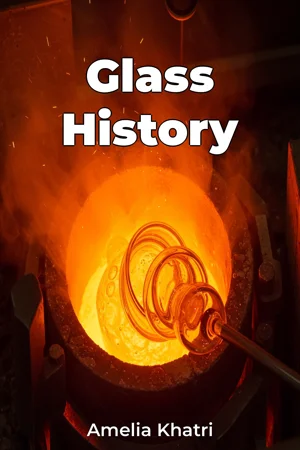
Have you ever considered the profound impact of a seemingly simple material like glass on the trajectory of human civilization? This book, "Glass History," delves into the captivating story of glass, exploring its origins, its transformative influence on societies, and the scientific principles that underpin its remarkable strength. This exploration matters because glass, far from being a mere transparent barrier, has acted as a catalyst for scientific discovery, artistic expression, and economic development. Understanding its history and properties provides valuable insights into technological innovation, cultural exchange, and the very nature of materials science. We begin by tracing the earliest evidence of glassmaking, revealing its likely emergence in Mesopotamia and Egypt around 3500 BCE. The book contextualizes this initial discovery within the Bronze Age, highlighting the role of trade routes and technological diffusion in spreading glassmaking techniques westward. No prior scientific or historical knowledge is required; we will build understanding from the ground up. The central argument of "Glass History" posits that glass, due to its unique combination of properties – transparency, moldability, and chemical inertness – has served as both a mirror reflecting societal progress and a lens magnifying our ability to understand the world. Its development has consistently driven advancements across diverse fields, from astronomy and medicine to architecture and art. The book is structured to guide you through this fascinating history. First, we introduce the fundamental concepts of glass science, including its atomic structure, the process of vitrification, and the factors that influence its strength and durability. Then, we proceed chronologically, with chapters dedicated to the evolution of glassmaking in antiquity, its role in the Roman Empire, its resurgence during the Renaissance, and its transformation through the Industrial Revolution. Major points include the Venetian glassmaking monopoly, the invention of the telescope and microscope, and the development of various glass types, such as borosilicate and tempered glass. The culmination is a discussion of modern glass applications, including fiber optics, smart glass, and sustainable glass production. "Glass History" relies on a wide range of evidence, drawing from archaeological findings, historical texts, scientific studies, and museum collections. We'll explore original recipes for glassmaking from ancient sources and analyze the chemical composition of historical glass artifacts. We also incorporate cutting-edge research in materials science to explain the properties of glass at a molecular level. The book connects to other fields, such as archaeology, art history, and materials engineering. By examining glass artifacts, for example, we can learn about ancient trade routes, artistic styles, and technological capabilities. The science of glass also has strong ties to chemistry and physics, informing our understanding of materials and their behavior under different conditions. The unique perspective of "Glass History" lies in its interdisciplinary approach. It combines historical narratives with scientific explanations, providing a holistic view of glass from its ancient origins to its modern applications. This approach highlights the interplay between technological innovation, societal needs, and scientific understanding. The tone is informative and engaging, aiming to make complex scientific concepts accessible to a broad audience while maintaining historical accuracy. The writing style blends narrative storytelling with clear explanations of technical concepts, ensuring a compelling reading experience for both science enthusiasts and history buffs. The target audience includes students, researchers, history enthusiasts, and anyone curious about the materials that have shaped our world. Readers interested in science, technology, or history will find this book valuable. As a history and science book, "Glass History" adheres to the conventions of both genres, offering a balanced mix of historical accounts and scientific explanations, supported by evidence and presented in a coherent narrative. The scope of the book is broad covering the major developments in glass history from its origins to the present day. While it focuses primarily on the history and science of glass production and usage, it does not delve into the specifics of glass art techniques or the intricacies of specific glass manufacturing processes. These topics could each warrant their own books. The information in "Glass History" has numerous real-world applications. It can enhance understanding of materials science principles, inform sustainable design practices, and inspire innovation in glass-related industries. Readers may also gain a new appreciation for the glass objects that surround them every day. The book addresses ongoing debates in the field, such as the precise origins of glassmaking and the environmental impact of glass production. By presenting different perspectives and analyzing the available evidence, it encourages critical thinking and informed decision-making.
Have you ever considered the profound impact of a seemingly simple material like glass on the trajectory of human civilization? This book, "Glass History," delves into the captivating story of glass, exploring its origins, its transformative influence on societies, and the scientific principles that underpin its remarkable strength. This exploration matters because glass, far from being a mere transparent barrier, has acted as a catalyst for scientific discovery, artistic expression, and economic development. Understanding its history and properties provides valuable insights into technological innovation, cultural exchange, and the very nature of materials science. We begin by tracing the earliest evidence of glassmaking, revealing its likely emergence in Mesopotamia and Egypt around 3500 BCE. The book contextualizes this initial discovery within the Bronze Age, highlighting the role of trade routes and technological diffusion in spreading glassmaking techniques westward. No prior scientific or historical knowledge is required; we will build understanding from the ground up. The central argument of "Glass History" posits that glass, due to its unique combination of properties – transparency, moldability, and chemical inertness – has served as both a mirror reflecting societal progress and a lens magnifying our ability to understand the world. Its development has consistently driven advancements across diverse fields, from astronomy and medicine to architecture and art. The book is structured to guide you through this fascinating history. First, we introduce the fundamental concepts of glass science, including its atomic structure, the process of vitrification, and the factors that influence its strength and durability. Then, we proceed chronologically, with chapters dedicated to the evolution of glassmaking in antiquity, its role in the Roman Empire, its resurgence during the Renaissance, and its transformation through the Industrial Revolution. Major points include the Venetian glassmaking monopoly, the invention of the telescope and microscope, and the development of various glass types, such as borosilicate and tempered glass. The culmination is a discussion of modern glass applications, including fiber optics, smart glass, and sustainable glass production. "Glass History" relies on a wide range of evidence, drawing from archaeological findings, historical texts, scientific studies, and museum collections. We'll explore original recipes for glassmaking from ancient sources and analyze the chemical composition of historical glass artifacts. We also incorporate cutting-edge research in materials science to explain the properties of glass at a molecular level. The book connects to other fields, such as archaeology, art history, and materials engineering. By examining glass artifacts, for example, we can learn about ancient trade routes, artistic styles, and technological capabilities. The science of glass also has strong ties to chemistry and physics, informing our understanding of materials and their behavior under different conditions. The unique perspective of "Glass History" lies in its interdisciplinary approach. It combines historical narratives with scientific explanations, providing a holistic view of glass from its ancient origins to its modern applications. This approach highlights the interplay between technological innovation, societal needs, and scientific understanding. The tone is informative and engaging, aiming to make complex scientific concepts accessible to a broad audience while maintaining historical accuracy. The writing style blends narrative storytelling with clear explanations of technical concepts, ensuring a compelling reading experience for both science enthusiasts and history buffs. The target audience includes students, researchers, history enthusiasts, and anyone curious about the materials that have shaped our world. Readers interested in science, technology, or history will find this book valuable. As a history and science book, "Glass History" adheres to the conventions of both genres, offering a balanced mix of historical accounts and scientific explanations, supported by evidence and presented in a coherent narrative. The scope of the book is broad covering the major developments in glass history from its origins to the present day. While it focuses primarily on the history and science of glass production and usage, it does not delve into the specifics of glass art techniques or the intricacies of specific glass manufacturing processes. These topics could each warrant their own books. The information in "Glass History" has numerous real-world applications. It can enhance understanding of materials science principles, inform sustainable design practices, and inspire innovation in glass-related industries. Readers may also gain a new appreciation for the glass objects that surround them every day. The book addresses ongoing debates in the field, such as the precise origins of glassmaking and the environmental impact of glass production. By presenting different perspectives and analyzing the available evidence, it encourages critical thinking and informed decision-making.
"Glass History" explores the remarkable story of glass, a material that has profoundly shaped civilization. From its likely origins in Mesopotamia and Egypt around 3500 BCE, glass has driven advancements in science, art, and technology. Its unique properties – transparency, moldability, and chemical inertness – have made it invaluable across diverse fields, acting as both a mirror reflecting societal progress and a lens magnifying our understanding of the world. The book begins by introducing fundamental concepts of glass science, such as its atomic structure and vitrification. It then progresses chronologically, detailing glassmaking's evolution from antiquity through the Roman Empire, the Renaissance, and the Industrial Revolution. Major milestones include the Venetian glassmaking monopoly and the invention of the telescope and microscope. By drawing on archaeological findings, historical texts, and scientific studies, "Glass History" connects glass to broader themes in archaeology, art history, and materials engineering. This book uniquely combines historical narratives with scientific explanations, offering a holistic view of glass's journey from ancient origins to modern applications like fiber optics and smart glass. Readers will gain insights into how technological innovation, societal needs, and scientific understanding have intertwined to make glass the transformative material it is today, while also addressing ongoing debates in the field.
Book Details
ISBN
9788233969721
Publisher
Publifye AS
Your Licenses
You don't own any licenses for this book
Purchase a license below to unlock this book and download the EPUB.
Purchase License
Select a tier to unlock this book
Need bulk licensing?
Contact us for enterprise agreements.