
About This Book
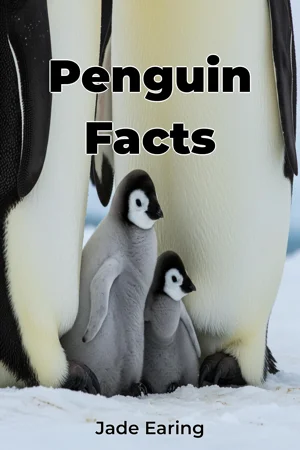
Have you ever wondered how a bird could not only survive but thrive in some of the coldest places on Earth? "Penguin Facts" delves into the compelling world of penguins, exploring the remarkable adaptations that allow these flightless birds to endure extreme cold, their exceptional deep-diving capabilities, and their fascinating and often complex parenting strategies. This book unveils the intricacies of penguin life, providing a comprehensive understanding of their biology, behavior, and ecological significance. Penguins present a captivating case study in adaptation. Understanding how they've evolved to thrive in harsh environments offers insights into the broader principles of natural selection and the limits of physiological endurance. Furthermore, their deep-diving skills challenge our understanding of avian physiology and underwater locomotion. Finally, their intricate parenting behaviors, from cooperative incubation to chick-rearing strategies, provide valuable context for understanding social behavior and family dynamics in the animal kingdom. This book begins by establishing the environmental context in which penguins evolved, discussing the geological history of the Antarctic and other regions where penguins reside. Readers will gain a foundational understanding of the climate, geography, and available resources that have shaped penguin evolution. Crucially, no prior expert knowledge is required; the book explains all necessary scientific concepts in an accessible manner. The central argument of "Penguin Facts" is that penguins are a testament to the power of natural selection, showcasing a suite of interconnected adaptations that allow them to flourish in challenging environments. This argument is vital because it underscores the importance of biodiversity and adaptation and highlights the vulnerability of these specialized creatures in the face of climate change. The book is structured to provide a logical progression of knowledge. It starts by introducing the penguin family, exploring their evolutionary history and taxonomic classification. It then moves into a detailed analysis of their physiological adaptations to cold, including their dense plumage, blubber layers, and specialized circulatory systems. The subsequent section concentrates on their deep-diving capabilities, examining their respiratory systems, blood chemistry adaptations, and underwater navigation skills. A dedicated portion of the book explores penguin social behaviors, with a focus on their complex courtship rituals and parenting strategies. The book will culminate in a discussion of the conservation challenges facing penguins today, including the impacts of climate change, pollution, and overfishing. The evidence presented in "Penguin Facts" is drawn from a wide range of scientific sources, including peer-reviewed research papers, field studies, and data from long-term monitoring programs. It also includes insights from penguin biologists and conservationists. The book emphasizes empirical data and scientific rigor in its presentation. "Penguin Facts" connects to several other fields of study. It is closely linked to climate science, as penguin populations serve as indicators of environmental change. It also has ties to marine biology, as penguins play a key role in marine ecosystems. Furthermore, there are connections to animal behavior and evolutionary biology. These interdisciplinary connections enrich the book's argument, demonstrating the interconnectedness of scientific knowledge. This book offers a unique perspective by integrating physiological, behavioral, and ecological data to provide a holistic understanding of penguin life. The writing style is factual and informative, aiming to convey complex scientific information in a manner accessible to a broad audience. The tone is engaging, reflecting the author's enthusiasm for the subject matter. "Penguin Facts" is intended for anyone interested in wildlife, natural history, or science. It would appeal to students, educators, and general readers who want to learn more about these fascinating creatures. As a work of non-fiction, "Penguin Facts" adheres to the conventions of accuracy, objectivity, and thoroughness. All information is carefully researched and presented in a balanced manner. The scope of the book is intentionally broad, covering all aspects of penguin biology and behavior. However, it focuses primarily on the most well-studied penguin species. The information presented in "Penguin Facts" has practical applications for conservation efforts, as a better understanding of penguin biology is crucial for developing effective conservation strategies. It also informs our understanding of climate change impacts on polar ecosystems. While this book aims to deliver facts, it also acknowledges that there are ongoing debates about the best strategies for penguin conservation and the most effective ways to mitigate climate change. These debates are presented fairly.
Have you ever wondered how a bird could not only survive but thrive in some of the coldest places on Earth? "Penguin Facts" delves into the compelling world of penguins, exploring the remarkable adaptations that allow these flightless birds to endure extreme cold, their exceptional deep-diving capabilities, and their fascinating and often complex parenting strategies. This book unveils the intricacies of penguin life, providing a comprehensive understanding of their biology, behavior, and ecological significance. Penguins present a captivating case study in adaptation. Understanding how they've evolved to thrive in harsh environments offers insights into the broader principles of natural selection and the limits of physiological endurance. Furthermore, their deep-diving skills challenge our understanding of avian physiology and underwater locomotion. Finally, their intricate parenting behaviors, from cooperative incubation to chick-rearing strategies, provide valuable context for understanding social behavior and family dynamics in the animal kingdom. This book begins by establishing the environmental context in which penguins evolved, discussing the geological history of the Antarctic and other regions where penguins reside. Readers will gain a foundational understanding of the climate, geography, and available resources that have shaped penguin evolution. Crucially, no prior expert knowledge is required; the book explains all necessary scientific concepts in an accessible manner. The central argument of "Penguin Facts" is that penguins are a testament to the power of natural selection, showcasing a suite of interconnected adaptations that allow them to flourish in challenging environments. This argument is vital because it underscores the importance of biodiversity and adaptation and highlights the vulnerability of these specialized creatures in the face of climate change. The book is structured to provide a logical progression of knowledge. It starts by introducing the penguin family, exploring their evolutionary history and taxonomic classification. It then moves into a detailed analysis of their physiological adaptations to cold, including their dense plumage, blubber layers, and specialized circulatory systems. The subsequent section concentrates on their deep-diving capabilities, examining their respiratory systems, blood chemistry adaptations, and underwater navigation skills. A dedicated portion of the book explores penguin social behaviors, with a focus on their complex courtship rituals and parenting strategies. The book will culminate in a discussion of the conservation challenges facing penguins today, including the impacts of climate change, pollution, and overfishing. The evidence presented in "Penguin Facts" is drawn from a wide range of scientific sources, including peer-reviewed research papers, field studies, and data from long-term monitoring programs. It also includes insights from penguin biologists and conservationists. The book emphasizes empirical data and scientific rigor in its presentation. "Penguin Facts" connects to several other fields of study. It is closely linked to climate science, as penguin populations serve as indicators of environmental change. It also has ties to marine biology, as penguins play a key role in marine ecosystems. Furthermore, there are connections to animal behavior and evolutionary biology. These interdisciplinary connections enrich the book's argument, demonstrating the interconnectedness of scientific knowledge. This book offers a unique perspective by integrating physiological, behavioral, and ecological data to provide a holistic understanding of penguin life. The writing style is factual and informative, aiming to convey complex scientific information in a manner accessible to a broad audience. The tone is engaging, reflecting the author's enthusiasm for the subject matter. "Penguin Facts" is intended for anyone interested in wildlife, natural history, or science. It would appeal to students, educators, and general readers who want to learn more about these fascinating creatures. As a work of non-fiction, "Penguin Facts" adheres to the conventions of accuracy, objectivity, and thoroughness. All information is carefully researched and presented in a balanced manner. The scope of the book is intentionally broad, covering all aspects of penguin biology and behavior. However, it focuses primarily on the most well-studied penguin species. The information presented in "Penguin Facts" has practical applications for conservation efforts, as a better understanding of penguin biology is crucial for developing effective conservation strategies. It also informs our understanding of climate change impacts on polar ecosystems. While this book aims to deliver facts, it also acknowledges that there are ongoing debates about the best strategies for penguin conservation and the most effective ways to mitigate climate change. These debates are presented fairly.
"Penguin Facts" explores the captivating lives of penguins, flightless birds uniquely adapted to thrive in extreme environments. Delving into their biology, behavior, and ecological significance, the book reveals how penguins have evolved remarkable adaptations. For example, their dense plumage and specialized circulatory systems allow them to endure frigid temperatures. The book further examines their deep-diving capabilities, challenging our understanding of avian physiology and underwater locomotion, and highlights their intricate parenting strategies, showcasing cooperative incubation and chick-rearing. The book begins by establishing the environmental context of penguin evolution, discussing the Antarctic's geological history and climate. Progressing through chapters, it explores penguin taxonomy, physiological adaptations, deep-diving skills, and social behaviors, culminating in a discussion of conservation challenges. By integrating physiological, behavioral, and ecological data, "Penguin Facts" provides a unique, holistic understanding of penguin life, emphasizing their vulnerability to climate change and the importance of conservation efforts.
Book Details
ISBN
9788233969691
Publisher
Publifye AS
Your Licenses
You don't own any licenses for this book
Purchase a license below to unlock this book and download the EPUB.
Purchase License
Select a tier to unlock this book
Need bulk licensing?
Contact us for enterprise agreements.