
About This Book
Have you ever wondered why kangaroos hop instead of run, or how these iconic creatures thrive in the harsh Australian desert? "Kangaroo Facts" delves into the fascinating world of kangaroos, exploring their unique locomotion, survival strategies, and unusual reproductive cycle. This book is important because it sheds light on the biological adaptations that have allowed kangaroos to flourish in some of the world's most challenging environments, offering valuable insights into evolutionary biology and animal behavior. This examination of kangaroos draws upon decades of scientific research in zoology, ecology, and reproductive biology to provide a comprehensive and accessible overview. It presents kangaroo biology, behavior, and ecology and explains their role in the Australian ecosystem. "Kangaroo Facts" is structured to guide the reader through a complete portrait of these marsupials. It begins with an introduction to the different species of kangaroos, their evolutionary history, and their current distribution across Australia. The book then examines in detail the biomechanics of hopping, exploring the energy efficiency of this mode of locomotion and the anatomical adaptations that make it possible. Subsequent sections delve into the kangaroos' remarkable ability to survive in arid and semi-arid environments, focusing on their water conservation strategies, dietary adaptations, and social behavior. A significant portion of the book is dedicated to the kangaroo's reproductive cycle, including delayed implantation, pouch development, and lactation. The book supports its arguments with evidence from field studies, laboratory experiments, and comparative anatomical analyses. It references data from long-term ecological monitoring programs and physiological studies that have tracked kangaroo populations and individual behavior over many years. Figures and diagrams illustrate key concepts, such as muscle arrangement, energy expenditure during hopping, and the stages of embryonic development. "Kangaroo Facts" also connects to other fields of study, including engineering (examining the bio-inspired design of hopping robots), climate science (understanding the impact of climate change on kangaroo populations), and veterinary medicine (addressing health issues and conservation efforts). These interdisciplinary connections enrich the book by showing the broader implications of kangaroo biology and conservation. This book distinguishes itself by presenting a holistic view of kangaroo biology, integrating physiological, ecological, and behavioral perspectives. Its writing style will be accessible to a broad audience, avoiding jargon and providing clear explanations of complex concepts. The target audience includes students, educators, wildlife enthusiasts, and anyone interested in learning more about these creatures. It is valuable to those seeking to understand the science behind kangaroo biology, to those interested in Australian wildlife, and to anyone curious about the natural world. As a work of non-fiction in the Nature, Science, and Biology genres, "Kangaroo Facts" strives to provide accurate, up-to-date information, presenting scientific findings in an engaging and accessible manner. The book's scope is limited to the biology, behavior, and ecology of kangaroos, with a focus on the most well-studied species. While it acknowledges the broader context of Australian ecosystems, it does not delve into the details of other native species or environmental issues beyond their direct impact on kangaroos. The information in "Kangaroo Facts" can be applied to inform conservation efforts, improve wildlife management practices, and educate the public about the importance of biodiversity. For example, understanding kangaroo behavior can help mitigate human-wildlife conflict, while knowledge of their reproductive biology can inform captive breeding programs. While the basic facts of kangaroo biology are well-established, there are ongoing debates about the impact of hunting on kangaroo populations and the effectiveness of different conservation strategies. These debates are addressed in the book, presenting different viewpoints and evaluating the evidence.
Have you ever wondered why kangaroos hop instead of run, or how these iconic creatures thrive in the harsh Australian desert? "Kangaroo Facts" delves into the fascinating world of kangaroos, exploring their unique locomotion, survival strategies, and unusual reproductive cycle. This book is important because it sheds light on the biological adaptations that have allowed kangaroos to flourish in some of the world's most challenging environments, offering valuable insights into evolutionary biology and animal behavior. This examination of kangaroos draws upon decades of scientific research in zoology, ecology, and reproductive biology to provide a comprehensive and accessible overview. It presents kangaroo biology, behavior, and ecology and explains their role in the Australian ecosystem. "Kangaroo Facts" is structured to guide the reader through a complete portrait of these marsupials. It begins with an introduction to the different species of kangaroos, their evolutionary history, and their current distribution across Australia. The book then examines in detail the biomechanics of hopping, exploring the energy efficiency of this mode of locomotion and the anatomical adaptations that make it possible. Subsequent sections delve into the kangaroos' remarkable ability to survive in arid and semi-arid environments, focusing on their water conservation strategies, dietary adaptations, and social behavior. A significant portion of the book is dedicated to the kangaroo's reproductive cycle, including delayed implantation, pouch development, and lactation. The book supports its arguments with evidence from field studies, laboratory experiments, and comparative anatomical analyses. It references data from long-term ecological monitoring programs and physiological studies that have tracked kangaroo populations and individual behavior over many years. Figures and diagrams illustrate key concepts, such as muscle arrangement, energy expenditure during hopping, and the stages of embryonic development. "Kangaroo Facts" also connects to other fields of study, including engineering (examining the bio-inspired design of hopping robots), climate science (understanding the impact of climate change on kangaroo populations), and veterinary medicine (addressing health issues and conservation efforts). These interdisciplinary connections enrich the book by showing the broader implications of kangaroo biology and conservation. This book distinguishes itself by presenting a holistic view of kangaroo biology, integrating physiological, ecological, and behavioral perspectives. Its writing style will be accessible to a broad audience, avoiding jargon and providing clear explanations of complex concepts. The target audience includes students, educators, wildlife enthusiasts, and anyone interested in learning more about these creatures. It is valuable to those seeking to understand the science behind kangaroo biology, to those interested in Australian wildlife, and to anyone curious about the natural world. As a work of non-fiction in the Nature, Science, and Biology genres, "Kangaroo Facts" strives to provide accurate, up-to-date information, presenting scientific findings in an engaging and accessible manner. The book's scope is limited to the biology, behavior, and ecology of kangaroos, with a focus on the most well-studied species. While it acknowledges the broader context of Australian ecosystems, it does not delve into the details of other native species or environmental issues beyond their direct impact on kangaroos. The information in "Kangaroo Facts" can be applied to inform conservation efforts, improve wildlife management practices, and educate the public about the importance of biodiversity. For example, understanding kangaroo behavior can help mitigate human-wildlife conflict, while knowledge of their reproductive biology can inform captive breeding programs. While the basic facts of kangaroo biology are well-established, there are ongoing debates about the impact of hunting on kangaroo populations and the effectiveness of different conservation strategies. These debates are addressed in the book, presenting different viewpoints and evaluating the evidence.
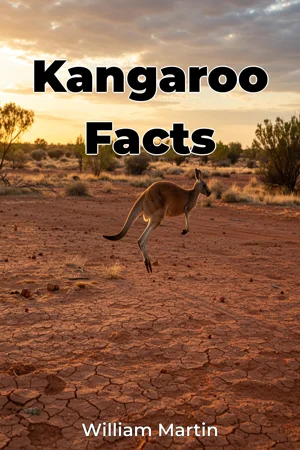
"Kangaroo Facts" explores the fascinating lives of kangaroos, those iconic marsupials of Australian wildlife, and their remarkable adaptations to survive in some of the world's harshest environments. This book examines the unique biology, behavior, and ecology of kangaroos, focusing on their evolutionary history and current distribution. Readers will discover the intricacies of their hopping locomotion, a highly energy-efficient method of movement, and their unusual reproductive cycle, which includes delayed implantation and pouch development. The book progresses through the different aspects of kangaroo life chapter by chapter, beginning with an introduction to the species and expanding on their unique adaptations. It supports its arguments with field studies, lab experiments, and comparative anatomical analyses. It presents a holistic view of kangaroo biology, integrating physiological, ecological, and behavioral perspectives, and connects to other fields of study, like engineering and climate science, to show the broader implications of kangaroo biology and conservation.
Book Details
ISBN
9788233969684
Publisher
Publifye AS
Your Licenses
You don't own any licenses for this book
Purchase a license below to unlock this book and download the EPUB.
Purchase License
Select a tier to unlock this book
Need bulk licensing?
Contact us for enterprise agreements.