
About This Book
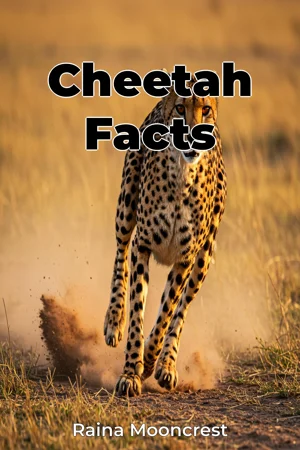
Have you ever wondered what makes the cheetah the fastest land animal on Earth, capable of reaching speeds of up to 75 miles per hour? "Cheetah Facts" delves into the science and biology behind this remarkable feline, exploring the anatomical adaptations, hunting strategies, and conservation challenges facing these iconic predators. This book aims to provide a concrete understanding of the cheetah's unique place in the natural world, highlighting its evolutionary adaptations for speed and its role in maintaining ecosystem balance. The book focuses primarily on three key areas: the biomechanics of cheetah locomotion, the ecological strategies employed during hunting, and an overview of current conservation efforts. Understanding these aspects is crucial for appreciating the cheetah's evolutionary success, the challenges it faces in a changing world, and the necessity for informed conservation strategies. We begin by grounding the reader in the existing scientific literature on feline anatomy and physiology, laying the groundwork for a deeper understanding of the cheetah's specialized adaptations. The book then pivots to explore the historical context of cheetah evolution, tracing its lineage and the environmental pressures that shaped its unique characteristics. The central argument throughout "Cheetah Facts" is that the cheetah's survival hinges on a delicate balance between its highly specialized hunting adaptations and the increasingly fragmented and altered landscapes it inhabits. Understanding this balance is paramount for effective conservation planning and ensuring the long-term survival of the species. The book is structured into three major sections, each building upon the previous one. First, we introduce the fundamental principles of cheetah biology, covering topics such as skeletal structure, muscular physiology, and cardiovascular function. The second section delves into the intricacies of cheetah hunting behavior, analyzing pursuit strategies, prey selection, and the energetic costs associated with high-speed chases. The final section examines the current state of cheetah populations worldwide, highlighting the major threats they face, such as habitat loss, human-wildlife conflict, and climate change. This section also explores various conservation initiatives and their effectiveness. To support our arguments, "Cheetah Facts" draws upon a wide range of scientific data, including peer-reviewed research articles, field studies, and data from wildlife monitoring programs. We also incorporate data on cheetah physiology gathered through non-invasive methods, such as remote sensing and behavioral observation. This book also makes interdisciplinary connections. The study of cheetah locomotion intersects with the fields of engineering and robotics, offering insights into the design of high-speed vehicles and agile robots. The analysis of cheetah hunting strategies connects with the field of behavioral ecology, providing a model for understanding predator-prey dynamics. Finally, the discussion of cheetah conservation aligns with the field of environmental science, offering a case study for examining the challenges of biodiversity conservation in a changing world. "Cheetah Facts" offers a scientific perspective on cheetahs, presenting complex information in an accessible and engaging manner. We use clear and concise language accompanied by informative diagrams and illustrations to enhance understanding. The primary audience is anyone with an interest in wildlife, biology, or conservation, including students, researchers, and general readers seeking accurate information about these impressive cats. The book will offer the reader some biological insight into the cheetah, its behavior and the prevailing factors influencing its current status. As a non-fiction science book, "Cheetah Facts" adheres to the highest standards of accuracy and objectivity. We present information in a balanced and impartial manner, acknowledging the limitations of current knowledge and the ongoing debates within the scientific community. The scope of the book is limited to the biological and ecological aspects of cheetahs, with a focus on their adaptations for speed and hunting. While we touch upon the social and political dimensions of conservation, we do not delve into these topics in detail. The information presented in "Cheetah Facts" has practical applications for wildlife managers, conservationists, and anyone interested in supporting cheetah conservation efforts. By understanding the biological challenges facing cheetahs, readers can make informed decisions about how to protect these animals and their habitats. While there is a general consensus on the basic biology of cheetahs, debates persist regarding the most effective conservation strategies. The book will address these debates, presenting different perspectives and evaluating the evidence supporting each one.
Have you ever wondered what makes the cheetah the fastest land animal on Earth, capable of reaching speeds of up to 75 miles per hour? "Cheetah Facts" delves into the science and biology behind this remarkable feline, exploring the anatomical adaptations, hunting strategies, and conservation challenges facing these iconic predators. This book aims to provide a concrete understanding of the cheetah's unique place in the natural world, highlighting its evolutionary adaptations for speed and its role in maintaining ecosystem balance. The book focuses primarily on three key areas: the biomechanics of cheetah locomotion, the ecological strategies employed during hunting, and an overview of current conservation efforts. Understanding these aspects is crucial for appreciating the cheetah's evolutionary success, the challenges it faces in a changing world, and the necessity for informed conservation strategies. We begin by grounding the reader in the existing scientific literature on feline anatomy and physiology, laying the groundwork for a deeper understanding of the cheetah's specialized adaptations. The book then pivots to explore the historical context of cheetah evolution, tracing its lineage and the environmental pressures that shaped its unique characteristics. The central argument throughout "Cheetah Facts" is that the cheetah's survival hinges on a delicate balance between its highly specialized hunting adaptations and the increasingly fragmented and altered landscapes it inhabits. Understanding this balance is paramount for effective conservation planning and ensuring the long-term survival of the species. The book is structured into three major sections, each building upon the previous one. First, we introduce the fundamental principles of cheetah biology, covering topics such as skeletal structure, muscular physiology, and cardiovascular function. The second section delves into the intricacies of cheetah hunting behavior, analyzing pursuit strategies, prey selection, and the energetic costs associated with high-speed chases. The final section examines the current state of cheetah populations worldwide, highlighting the major threats they face, such as habitat loss, human-wildlife conflict, and climate change. This section also explores various conservation initiatives and their effectiveness. To support our arguments, "Cheetah Facts" draws upon a wide range of scientific data, including peer-reviewed research articles, field studies, and data from wildlife monitoring programs. We also incorporate data on cheetah physiology gathered through non-invasive methods, such as remote sensing and behavioral observation. This book also makes interdisciplinary connections. The study of cheetah locomotion intersects with the fields of engineering and robotics, offering insights into the design of high-speed vehicles and agile robots. The analysis of cheetah hunting strategies connects with the field of behavioral ecology, providing a model for understanding predator-prey dynamics. Finally, the discussion of cheetah conservation aligns with the field of environmental science, offering a case study for examining the challenges of biodiversity conservation in a changing world. "Cheetah Facts" offers a scientific perspective on cheetahs, presenting complex information in an accessible and engaging manner. We use clear and concise language accompanied by informative diagrams and illustrations to enhance understanding. The primary audience is anyone with an interest in wildlife, biology, or conservation, including students, researchers, and general readers seeking accurate information about these impressive cats. The book will offer the reader some biological insight into the cheetah, its behavior and the prevailing factors influencing its current status. As a non-fiction science book, "Cheetah Facts" adheres to the highest standards of accuracy and objectivity. We present information in a balanced and impartial manner, acknowledging the limitations of current knowledge and the ongoing debates within the scientific community. The scope of the book is limited to the biological and ecological aspects of cheetahs, with a focus on their adaptations for speed and hunting. While we touch upon the social and political dimensions of conservation, we do not delve into these topics in detail. The information presented in "Cheetah Facts" has practical applications for wildlife managers, conservationists, and anyone interested in supporting cheetah conservation efforts. By understanding the biological challenges facing cheetahs, readers can make informed decisions about how to protect these animals and their habitats. While there is a general consensus on the basic biology of cheetahs, debates persist regarding the most effective conservation strategies. The book will address these debates, presenting different perspectives and evaluating the evidence supporting each one.
"Cheetah Facts" explores the science behind the cheetah's incredible speed and unique biology. It delves into how these animals evolved to become the fastest land mammals, reaching speeds of up to 75 miles per hour, and their role as predators within their ecosystems. The book highlights the critical balance between the cheetah's specialized hunting adaptations and the increasing challenges they face due to habitat loss and other environmental changes, noting that their survival depends on this balance. This exploration of cheetah biology and ecology is presented in three key sections. First, the book lays the groundwork with feline anatomy and physiology, then moves into hunting behavior, including pursuit strategies and prey selection. Finally, it examines the current state of cheetah populations and ongoing conservation efforts. The presentation of information is intended to be both accessible and engaging, utilizing clear language, diagrams, and illustrations.
Book Details
ISBN
9788233969653
Publisher
Publifye AS
Your Licenses
You don't own any licenses for this book
Purchase a license below to unlock this book and download the EPUB.
Purchase License
Select a tier to unlock this book
Need bulk licensing?
Contact us for enterprise agreements.