
About This Book
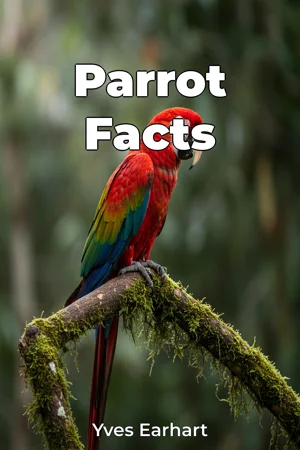
Have you ever wondered what goes on inside the mind of a parrot? "Parrot Facts" delves into the fascinating world of these avian wonders, exploring not only their remarkable ability to mimic human speech but also their surprising intelligence and problem-solving capabilities. This exploration is crucial because understanding parrot cognition can provide insights into the evolution of intelligence and communication across species, with implications for both animal behavior and our understanding of the human brain. This book will examine three primary areas: the mechanisms behind parrots' vocal mimicry, the extent of their cognitive abilities, and the evolutionary factors that may have driven these traits. We will provide a detailed look at the physical structures that enable parrots to imitate speech, as well as the neurological processes involved in learning and producing these sounds. Throughout history, parrots have been viewed with a mixture of fascination and misunderstanding. "Parrot Facts" seeks to present a scientific perspective, drawing on the latest research in avian biology, cognitive science, and zoology to provide a complete and evidence-based overview. The central argument of this book is that parrots possess a unique combination of cognitive and communicative skills that challenge traditional views of animal intelligence. We demonstrate that their abilities extend far beyond mere imitation, suggesting a level of cognitive processing previously thought to be exclusive to mammals. "Parrot Facts" is structured to guide the reader through a logical progression of ideas. The introduction establishes the basic biological characteristics of parrots and their global distribution. Next, the book explores the physiological aspects of vocal learning in parrots, including the structure of the syrinx and the brain regions associated with vocal imitation. It then moves into an examination of parrot cognition, presenting case studies and research findings related to problem-solving, memory, and social learning. Finally, the book culminates in a discussion of the evolutionary pressures that may have favored the development of these traits, as well as the implications of this research for conservation efforts. The evidence presented in "Parrot Facts" includes data from a variety of sources, such as laboratory experiments, field studies, and neuroimaging research. We will present detailed analyses of parrot behavior, supported by statistical data and comparative analyses with other bird species. This includes a synthesis of existing literature and the incorporation of new findings to provide a comprehensive picture of parrot intelligence. This book connects to several other fields of study. Linguistics provides a framework for understanding the structure and function of parrot vocalizations. Evolutionary biology offers insights into the selective pressures that may have shaped parrot cognition. Finally, conservation biology underscores the importance of understanding parrot behavior in order to protect these intelligent creatures and their habitats. "Parrot Facts" distinguishes itself by taking a multidisciplinary approach to the study of parrot intelligence. It moves beyond anecdotal observations to provide a rigorous and scientifically grounded explanation of parrot behavior. The book's tone is informative and accessible, aimed at both scientists and general readers with an interest in animal behavior. The intended audience for "Parrot Facts" includes students and researchers in biology, psychology, and animal behavior, as well as bird enthusiasts and anyone curious about the natural world. This book is valuable because it offers an up-to-date and evidence-based overview of parrot intelligence, challenging common misconceptions and inspiring a deeper appreciation for these remarkable birds. As a work of non-fiction in the natural sciences, "Parrot Facts" adheres to the conventions of scientific rigor and accuracy. It avoids anthropomorphism and relies on empirical evidence to support its claims. The scope of the book is focused specifically on the cognitive and communicative abilities of parrots, with less emphasis on other aspects of their biology, such as their diet or social behavior. The information presented in "Parrot Facts" has numerous real-world applications. It can inform conservation efforts by providing a better understanding of parrot behavior and ecology. It can also guide the development of educational programs aimed at promoting responsible parrot ownership and care. While the extent of parrot intelligence is now accepted, debates remain within the scientific community regarding the underlying mechanisms and the degree to which parrot cognition resembles that of mammals. "Parrot Facts" addresses these debates by presenting a balanced view of the current state of research and highlighting areas for future investigation.
Have you ever wondered what goes on inside the mind of a parrot? "Parrot Facts" delves into the fascinating world of these avian wonders, exploring not only their remarkable ability to mimic human speech but also their surprising intelligence and problem-solving capabilities. This exploration is crucial because understanding parrot cognition can provide insights into the evolution of intelligence and communication across species, with implications for both animal behavior and our understanding of the human brain. This book will examine three primary areas: the mechanisms behind parrots' vocal mimicry, the extent of their cognitive abilities, and the evolutionary factors that may have driven these traits. We will provide a detailed look at the physical structures that enable parrots to imitate speech, as well as the neurological processes involved in learning and producing these sounds. Throughout history, parrots have been viewed with a mixture of fascination and misunderstanding. "Parrot Facts" seeks to present a scientific perspective, drawing on the latest research in avian biology, cognitive science, and zoology to provide a complete and evidence-based overview. The central argument of this book is that parrots possess a unique combination of cognitive and communicative skills that challenge traditional views of animal intelligence. We demonstrate that their abilities extend far beyond mere imitation, suggesting a level of cognitive processing previously thought to be exclusive to mammals. "Parrot Facts" is structured to guide the reader through a logical progression of ideas. The introduction establishes the basic biological characteristics of parrots and their global distribution. Next, the book explores the physiological aspects of vocal learning in parrots, including the structure of the syrinx and the brain regions associated with vocal imitation. It then moves into an examination of parrot cognition, presenting case studies and research findings related to problem-solving, memory, and social learning. Finally, the book culminates in a discussion of the evolutionary pressures that may have favored the development of these traits, as well as the implications of this research for conservation efforts. The evidence presented in "Parrot Facts" includes data from a variety of sources, such as laboratory experiments, field studies, and neuroimaging research. We will present detailed analyses of parrot behavior, supported by statistical data and comparative analyses with other bird species. This includes a synthesis of existing literature and the incorporation of new findings to provide a comprehensive picture of parrot intelligence. This book connects to several other fields of study. Linguistics provides a framework for understanding the structure and function of parrot vocalizations. Evolutionary biology offers insights into the selective pressures that may have shaped parrot cognition. Finally, conservation biology underscores the importance of understanding parrot behavior in order to protect these intelligent creatures and their habitats. "Parrot Facts" distinguishes itself by taking a multidisciplinary approach to the study of parrot intelligence. It moves beyond anecdotal observations to provide a rigorous and scientifically grounded explanation of parrot behavior. The book's tone is informative and accessible, aimed at both scientists and general readers with an interest in animal behavior. The intended audience for "Parrot Facts" includes students and researchers in biology, psychology, and animal behavior, as well as bird enthusiasts and anyone curious about the natural world. This book is valuable because it offers an up-to-date and evidence-based overview of parrot intelligence, challenging common misconceptions and inspiring a deeper appreciation for these remarkable birds. As a work of non-fiction in the natural sciences, "Parrot Facts" adheres to the conventions of scientific rigor and accuracy. It avoids anthropomorphism and relies on empirical evidence to support its claims. The scope of the book is focused specifically on the cognitive and communicative abilities of parrots, with less emphasis on other aspects of their biology, such as their diet or social behavior. The information presented in "Parrot Facts" has numerous real-world applications. It can inform conservation efforts by providing a better understanding of parrot behavior and ecology. It can also guide the development of educational programs aimed at promoting responsible parrot ownership and care. While the extent of parrot intelligence is now accepted, debates remain within the scientific community regarding the underlying mechanisms and the degree to which parrot cognition resembles that of mammals. "Parrot Facts" addresses these debates by presenting a balanced view of the current state of research and highlighting areas for future investigation.
"Parrot Facts" unveils the complex cognitive world of parrots, exploring their remarkable vocal mimicry and surprising problem-solving skills. These avian creatures possess unique cognitive abilities, challenging traditional views of animal intelligence. One intriguing fact is their capacity for social learning, mirroring behaviors they observe. Furthermore, parrots' syrinx and specific brain regions enable them to imitate speech, offering valuable insights into the evolution of communication. The book takes a scientific approach, drawing from avian biology, cognitive science, and zoology to present an evidence-based overview. It presents detailed analyses of parrot behavior, supported by statistical data and comparative analyses with other bird species. The structure of "Parrot Facts" guides readers through a logical progression, beginning with basic biological characteristics and distribution, then exploring vocal learning and cognitive abilities, and culminating in a discussion of evolutionary pressures. This book distinguishes itself through its multidisciplinary lens, going beyond anecdotes to provide a rigorous explanation of parrot behavior. By examining mechanisms behind vocal imitation, the extent of cognitive skills, and evolutionary factors, "Parrot Facts" offers a deeper appreciation for these intelligent birds and their place in the natural world.
Book Details
ISBN
9788233969646
Publisher
Publifye AS
Your Licenses
You don't own any licenses for this book
Purchase a license below to unlock this book and download the EPUB.
Purchase License
Select a tier to unlock this book
Need bulk licensing?
Contact us for enterprise agreements.