
About This Book
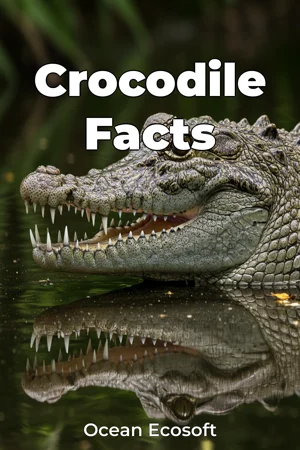
Imagine an apex predator, virtually unchanged for millions of years, possessing a bite force that dwarfs every other living creature. How has the crocodile not only survived but thrived through countless environmental shifts and mass extinctions? "Crocodile Facts" delves into the evolutionary history, biological adaptations, and ecological roles of these ancient reptiles, offering a comprehensive understanding of their remarkable success. This book explores three crucial aspects of the crocodilian lineage: its deep evolutionary roots, the physiological mechanisms behind its formidable bite, and its intricate interactions within diverse ecosystems. Understanding these topics is vital for appreciating the resilience of life on Earth and for informing conservation efforts aimed at protecting these often-misunderstood creatures and their habitats. The narrative unfolds against the backdrop of geological time, tracing the crocodilian lineage from its origins in the age of dinosaurs to its current distribution across tropical and subtropical regions. No prior expertise is required, but a basic understanding of biological concepts like natural selection and adaptation will enhance the reader's experience. The central argument of "Crocodile Facts" is that the crocodile’s evolutionary success stems from a unique combination of physiological adaptations, behavioral strategies, and ecological flexibility developed over millions of years. By examining these factors, the book challenges common misconceptions about crocodiles and demonstrates their crucial role in maintaining ecosystem health. The book begins by introducing the crocodilian family tree, clarifying the relationships between crocodiles, alligators, caimans, and gharials. It then develops the argument in three major sections. First, the book examines, anatomically and biomechanically, the unparalleled bite force of crocodiles, exploring the skull structure, musculature, and sensory systems that contribute to this predatory advantage. Second, it analyzes the physiological adaptations that allow crocodiles to survive in diverse and often harsh environments, including their cardiovascular system, osmoregulatory mechanisms, and thermoregulation strategies. Third, the book investigates the ecological roles crocodiles play as keystone predators, habitat engineers, and nutrient cyclers, assessing their impact on aquatic ecosystems and beyond. The book culminates in a discussion of the conservation challenges facing crocodilians today, highlighting the importance of understanding their biology and ecology for effective management strategies. The book draws upon a wealth of scientific data, including anatomical studies, biomechanical analyses, physiological experiments, ecological surveys, and paleontological records. It also incorporates findings from field research conducted in various crocodilian habitats around the world. The study of crocodiles naturally connects to diverse scientific disciplines such as paleontology (understanding their ancient origins), biomechanics (analyzing their bite force), and ecology (assessing their role in ecosystems). Furthermore, the book touches upon conservation biology, exploring how human activities impact crocodilian populations and how conservation efforts can mitigate these threats. "Crocodile Facts" offers a unique perspective by integrating physiological and ecological data to explain the evolutionary success of crocodiles. It moves beyond simple descriptions of crocodilian behavior to provide a mechanistic understanding of their adaptations and their ecological roles. The book adopts a fact-based, scientific tone suitable for a generally educated audience. This book is targeted towards anyone interested in natural history, zoology, or conservation biology. It will appeal to students, researchers, and general readers who want to learn more about these fascinating creatures. As a non-fiction science book, "Crocodile Facts" prioritizes accuracy, clarity, and evidence-based analysis. It avoids speculative claims and presents information in a manner consistent with established scientific principles. The scope of the book is limited to the biology and ecology of extant crocodilians, with a focus on their evolutionary history, physiological adaptations, and ecological roles. It does not delve into specific aspects of crocodilian behavior or conservation management in great detail, except where they directly relate to the main argument. The information presented in "Crocodile Facts" has numerous real-world applications. Understanding crocodilian biology is essential for developing effective conservation strategies, mitigating human-wildlife conflict, and managing crocodilian populations sustainably. While the evolutionary relationships among crocodilians are generally well-established, ongoing debates exist regarding the precise timing and mechanisms of specific adaptations. The book addresses these controversies by presenting different perspectives and evaluating the available evidence.
Imagine an apex predator, virtually unchanged for millions of years, possessing a bite force that dwarfs every other living creature. How has the crocodile not only survived but thrived through countless environmental shifts and mass extinctions? "Crocodile Facts" delves into the evolutionary history, biological adaptations, and ecological roles of these ancient reptiles, offering a comprehensive understanding of their remarkable success. This book explores three crucial aspects of the crocodilian lineage: its deep evolutionary roots, the physiological mechanisms behind its formidable bite, and its intricate interactions within diverse ecosystems. Understanding these topics is vital for appreciating the resilience of life on Earth and for informing conservation efforts aimed at protecting these often-misunderstood creatures and their habitats. The narrative unfolds against the backdrop of geological time, tracing the crocodilian lineage from its origins in the age of dinosaurs to its current distribution across tropical and subtropical regions. No prior expertise is required, but a basic understanding of biological concepts like natural selection and adaptation will enhance the reader's experience. The central argument of "Crocodile Facts" is that the crocodile’s evolutionary success stems from a unique combination of physiological adaptations, behavioral strategies, and ecological flexibility developed over millions of years. By examining these factors, the book challenges common misconceptions about crocodiles and demonstrates their crucial role in maintaining ecosystem health. The book begins by introducing the crocodilian family tree, clarifying the relationships between crocodiles, alligators, caimans, and gharials. It then develops the argument in three major sections. First, the book examines, anatomically and biomechanically, the unparalleled bite force of crocodiles, exploring the skull structure, musculature, and sensory systems that contribute to this predatory advantage. Second, it analyzes the physiological adaptations that allow crocodiles to survive in diverse and often harsh environments, including their cardiovascular system, osmoregulatory mechanisms, and thermoregulation strategies. Third, the book investigates the ecological roles crocodiles play as keystone predators, habitat engineers, and nutrient cyclers, assessing their impact on aquatic ecosystems and beyond. The book culminates in a discussion of the conservation challenges facing crocodilians today, highlighting the importance of understanding their biology and ecology for effective management strategies. The book draws upon a wealth of scientific data, including anatomical studies, biomechanical analyses, physiological experiments, ecological surveys, and paleontological records. It also incorporates findings from field research conducted in various crocodilian habitats around the world. The study of crocodiles naturally connects to diverse scientific disciplines such as paleontology (understanding their ancient origins), biomechanics (analyzing their bite force), and ecology (assessing their role in ecosystems). Furthermore, the book touches upon conservation biology, exploring how human activities impact crocodilian populations and how conservation efforts can mitigate these threats. "Crocodile Facts" offers a unique perspective by integrating physiological and ecological data to explain the evolutionary success of crocodiles. It moves beyond simple descriptions of crocodilian behavior to provide a mechanistic understanding of their adaptations and their ecological roles. The book adopts a fact-based, scientific tone suitable for a generally educated audience. This book is targeted towards anyone interested in natural history, zoology, or conservation biology. It will appeal to students, researchers, and general readers who want to learn more about these fascinating creatures. As a non-fiction science book, "Crocodile Facts" prioritizes accuracy, clarity, and evidence-based analysis. It avoids speculative claims and presents information in a manner consistent with established scientific principles. The scope of the book is limited to the biology and ecology of extant crocodilians, with a focus on their evolutionary history, physiological adaptations, and ecological roles. It does not delve into specific aspects of crocodilian behavior or conservation management in great detail, except where they directly relate to the main argument. The information presented in "Crocodile Facts" has numerous real-world applications. Understanding crocodilian biology is essential for developing effective conservation strategies, mitigating human-wildlife conflict, and managing crocodilian populations sustainably. While the evolutionary relationships among crocodilians are generally well-established, ongoing debates exist regarding the precise timing and mechanisms of specific adaptations. The book addresses these controversies by presenting different perspectives and evaluating the available evidence.
Crocodiles, ancient reptiles virtually unchanged for millions of years, are the focus of "Crocodile Facts," which explores their evolutionary history, biological adaptations, and pivotal roles in ecosystems. These apex predators possess a bite force unmatched in the animal kingdom, a testament to their biomechanics and evolutionary success. The book examines how they've not only survived but thrived through environmental shifts, highlighting their importance as keystone predators and habitat engineers. The book adopts a scientific approach, tracing the crocodilian lineage from the age of dinosaurs to their current distribution. It begins by clarifying the relationships between crocodiles, alligators, caimans, and gharials, then delves into the unique physiological adaptations that allow crocodiles to survive in diverse environments. It also investigates their ecological roles as keystone predators, habitat engineers, and nutrient cyclers, assessing their impact on aquatic ecosystems. This comprehensive approach offers a unique perspective, integrating physiological and ecological data to explain the evolutionary success of crocodiles. "Crocodile Facts" progresses by first examining the evolutionary roots of crocodilians, then analyzing the physiological mechanisms behind their formidable bite, and finally investigating their intricate interactions within diverse ecosystems. Understanding the natural history of these creatures is vital for conservation efforts, particularly given the conservation challenges they face today.
Book Details
ISBN
9788233969622
Publisher
Publifye AS
Your Licenses
You don't own any licenses for this book
Purchase a license below to unlock this book and download the EPUB.
Purchase License
Select a tier to unlock this book
Need bulk licensing?
Contact us for enterprise agreements.