
About This Book
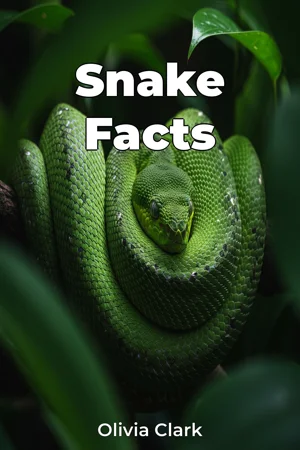
How does nature equip a predator with the tools to both kill and survive? "Snake Facts" delves into the intricate world of venomous snakes, exploring their diverse hunting strategies, sophisticated sensory mechanisms, and the very nature of their venom. This book is a comprehensive exploration of these often-misunderstood creatures, providing insights into their biology, behavior, and ecological significance. The importance of understanding venomous snakes extends beyond simple curiosity. By examining their venom composition and delivery systems, we can gain valuable knowledge for developing antivenoms and other medical treatments. Furthermore, understanding their hunting strategies and sensory abilities allows for better conservation efforts and mitigation of human-snake conflict. The book places snakes within a broader context of evolutionary biology and ecological balance. “Snake Facts” presents a detailed account of the biology of venomous snakes, focusing on the evolution and function of venom, their varied hunting techniques adapted to different environments, and the sensory systems they use to perceive the world. We argue that the success of venomous snakes lies in the intricate integration of these three key elements: venom, hunting strategy, and sensory perception. Their survival is not merely a matter of chance, but the result of millions of years of evolutionary refinement. The book is structured into three major sections. The first introduces the diversity of venomous snakes, their global distribution, and the evolutionary origins of venom. It lays the groundwork by explaining the basic biology of snakes, including their anatomy and physiology. The second section explores the different types of venom, their biochemical composition, and their effects on prey. It details the delivery mechanisms, from fangs to spitting, and how snakes have adapted their venom for specific prey and environments. The third section investigates the sensory world of snakes, focusing on their use of infrared vision, vibration detection, and chemoreception to locate and capture prey. It culminates in a discussion of the ecological roles of venomous snakes and the challenges they face in a rapidly changing world. The evidence presented in "Snake Facts" draws upon a wide range of scientific research, including field studies, laboratory experiments, and genomic analyses. It integrates data from herpetology, biochemistry, evolutionary biology, and ecology to provide a comprehensive understanding of venomous snakes. This book also connects to diverse fields such as medicine, pharmacology, and conservation biology. The study of snake venom has led to the development of various drugs, and understanding snake behavior is crucial for effective conservation strategies. Furthermore, the book touches upon the cultural significance of snakes in different societies, acknowledging their role in mythology and folklore. "Snake Facts" offers a unique perspective by integrating the latest scientific findings with accessible explanations. It avoids sensationalism and focuses on providing a balanced and objective account of these fascinating creatures. Written in a clear and engaging style, "Snake Facts" is aimed at a broad audience, including students, researchers, and anyone interested in learning more about venomous snakes. The book is valuable to readers seeking a comprehensive and up-to-date resource on the subject. As a work of non-fiction, "Snake Facts" adheres to the highest standards of accuracy and objectivity. The scope of the book is limited to venomous snakes, excluding non-venomous species, and the information presented is based on current scientific understanding. The information presented in "Snake Facts" can be applied in various real-world contexts, including wildlife conservation, public health, and scientific research. It is a valuable resource for anyone seeking to understand and appreciate the complex world of venomous snakes. While "Snake Facts" aims to present a comprehensive overview, it also acknowledges the ongoing debates and controversies surrounding certain aspects of snake biology, such as the precise evolutionary origins of venom and the ethical considerations of venom research..
How does nature equip a predator with the tools to both kill and survive? "Snake Facts" delves into the intricate world of venomous snakes, exploring their diverse hunting strategies, sophisticated sensory mechanisms, and the very nature of their venom. This book is a comprehensive exploration of these often-misunderstood creatures, providing insights into their biology, behavior, and ecological significance. The importance of understanding venomous snakes extends beyond simple curiosity. By examining their venom composition and delivery systems, we can gain valuable knowledge for developing antivenoms and other medical treatments. Furthermore, understanding their hunting strategies and sensory abilities allows for better conservation efforts and mitigation of human-snake conflict. The book places snakes within a broader context of evolutionary biology and ecological balance. “Snake Facts” presents a detailed account of the biology of venomous snakes, focusing on the evolution and function of venom, their varied hunting techniques adapted to different environments, and the sensory systems they use to perceive the world. We argue that the success of venomous snakes lies in the intricate integration of these three key elements: venom, hunting strategy, and sensory perception. Their survival is not merely a matter of chance, but the result of millions of years of evolutionary refinement. The book is structured into three major sections. The first introduces the diversity of venomous snakes, their global distribution, and the evolutionary origins of venom. It lays the groundwork by explaining the basic biology of snakes, including their anatomy and physiology. The second section explores the different types of venom, their biochemical composition, and their effects on prey. It details the delivery mechanisms, from fangs to spitting, and how snakes have adapted their venom for specific prey and environments. The third section investigates the sensory world of snakes, focusing on their use of infrared vision, vibration detection, and chemoreception to locate and capture prey. It culminates in a discussion of the ecological roles of venomous snakes and the challenges they face in a rapidly changing world. The evidence presented in "Snake Facts" draws upon a wide range of scientific research, including field studies, laboratory experiments, and genomic analyses. It integrates data from herpetology, biochemistry, evolutionary biology, and ecology to provide a comprehensive understanding of venomous snakes. This book also connects to diverse fields such as medicine, pharmacology, and conservation biology. The study of snake venom has led to the development of various drugs, and understanding snake behavior is crucial for effective conservation strategies. Furthermore, the book touches upon the cultural significance of snakes in different societies, acknowledging their role in mythology and folklore. "Snake Facts" offers a unique perspective by integrating the latest scientific findings with accessible explanations. It avoids sensationalism and focuses on providing a balanced and objective account of these fascinating creatures. Written in a clear and engaging style, "Snake Facts" is aimed at a broad audience, including students, researchers, and anyone interested in learning more about venomous snakes. The book is valuable to readers seeking a comprehensive and up-to-date resource on the subject. As a work of non-fiction, "Snake Facts" adheres to the highest standards of accuracy and objectivity. The scope of the book is limited to venomous snakes, excluding non-venomous species, and the information presented is based on current scientific understanding. The information presented in "Snake Facts" can be applied in various real-world contexts, including wildlife conservation, public health, and scientific research. It is a valuable resource for anyone seeking to understand and appreciate the complex world of venomous snakes. While "Snake Facts" aims to present a comprehensive overview, it also acknowledges the ongoing debates and controversies surrounding certain aspects of snake biology, such as the precise evolutionary origins of venom and the ethical considerations of venom research..
"Snake Facts" offers a comprehensive look into the world of venomous snakes, exploring their hunting strategies, sensory mechanisms, and the evolution of venom. These creatures possess sophisticated adaptations, like infrared vision for detecting prey and varied venom compositions tailored for specific environments. The book provides insights into snake biology, behavior, and ecological significance. The book uniquely integrates scientific findings with accessible explanations, avoiding sensationalism while presenting a balanced account. Did you know that snake venom has contributed to the development of various drugs? Or that understanding snake behavior is vital for effective conservation? "Snake Facts" emphasizes the intricate relationship between venom, hunting strategies, and sensory perception in the snakes' survival. The book progresses through three sections, beginning with an introduction to the diversity and evolution of venomous snakes. It then delves into the biochemical composition and delivery systems of venom, followed by an exploration of their sensory capabilities, including vibration detection and chemoreception. It culminates in a discussion of their ecological roles and conservation challenges.
Book Details
ISBN
9788233969608
Publisher
Publifye AS
Your Licenses
You don't own any licenses for this book
Purchase a license below to unlock this book and download the EPUB.
Purchase License
Select a tier to unlock this book
Need bulk licensing?
Contact us for enterprise agreements.