
About This Book
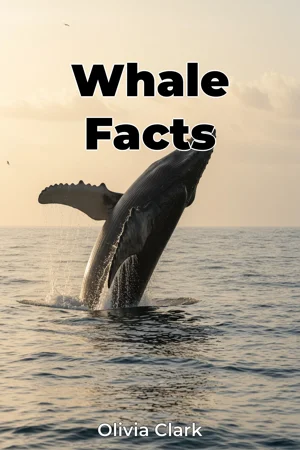
Did you know that some whales undertake annual migrations spanning thousands of miles, navigating with precision across vast, seemingly featureless oceans? "Whale Facts" delves into the complex lives of these marine mammals, exploring their global migrations, sophisticated intelligence, and specialized adaptations for survival in the deep sea. Understanding these aspects of whale biology is crucial not only for appreciating the natural world but also for informing conservation efforts in an era of increasing environmental change. This book provides a comprehensive overview of whale biology, addressing key areas such as migratory patterns, cognitive abilities, and physiological adaptations to deep-sea environments. We aim to present a current understanding of whale behavior and biology, synthesizing findings from diverse fields of study. The central argument of "Whale Facts" is that the intricate interplay between whale behavior, intelligence, and physiology demonstrates a remarkable evolutionary success story. The book is structured to guide the reader through various aspects of whale biology. It begins by introducing the evolutionary history of whales and their diversification into baleen and toothed whales. Subsequent chapters examine whale migrations, detailing how whales navigate, the purposes of these long journeys (breeding, feeding), and the threats they face along the way. We also examine the cognitive abilities of whales, highlighting the growing body of research on whale communication, social structures, and problem-solving skills. The book then explores their deep-sea survival adaptations, detailing the physiological mechanisms that allow whales to withstand extreme pressure, conserve oxygen, and navigate in low-light conditions. Later chapters address the conservation threats facing whales, including climate change, pollution, and entanglement in fishing gear. The findings culminate in a discussion of conservation strategies, emphasizing marine protected areas and international collaborations. The evidence presented includes a synthesis of published scientific literature, including studies in behavioral ecology, physiology, and genetics. Data collected from satellite tagging, acoustic monitoring, and photo identification are showcased to illustrate whale migrations, communication, and population dynamics. The book integrates interdisciplinary approaches, drawing from oceanography, climate science, and environmental policy to provide a holistic perspective on whale biology and conservation. For example, understanding the impact of ocean currents and temperature changes on prey distribution is essential to understanding whale migratory patterns, connecting oceanography to whale ecology. Similarly, understanding the role of international agreements and environmental regulations is critical for effective whale conservation, connecting biology to policy. "Whale Facts" employs a fact-based and accessible writing style, presenting complex scientific information in a clear and engaging manner. The book is designed for anyone with an interest in marine biology, wildlife conservation, or natural history. It will appeal to students, educators, researchers, and general readers alike. The scope of the book is limited to biological and ecological aspects of whales, with less emphasis on cultural or economic dimensions. While recognizing human impacts on whale populations, the focus remains on understanding the animals themselves. Understanding whale migrations, intelligence, and deep-sea adaptations has practical implications for conservation planning and management. This knowledge informs the creation of marine protected areas, the development of strategies to mitigate ship strikes and entanglement, and the regulation of whaling activities. The book also acknowledges ongoing debates regarding the role of whales in marine ecosystems and the effectiveness of different conservation strategies. "Whale Facts" aims to contribute to a deeper understanding of these remarkable creatures and to promote informed conservation efforts.
Did you know that some whales undertake annual migrations spanning thousands of miles, navigating with precision across vast, seemingly featureless oceans? "Whale Facts" delves into the complex lives of these marine mammals, exploring their global migrations, sophisticated intelligence, and specialized adaptations for survival in the deep sea. Understanding these aspects of whale biology is crucial not only for appreciating the natural world but also for informing conservation efforts in an era of increasing environmental change. This book provides a comprehensive overview of whale biology, addressing key areas such as migratory patterns, cognitive abilities, and physiological adaptations to deep-sea environments. We aim to present a current understanding of whale behavior and biology, synthesizing findings from diverse fields of study. The central argument of "Whale Facts" is that the intricate interplay between whale behavior, intelligence, and physiology demonstrates a remarkable evolutionary success story. The book is structured to guide the reader through various aspects of whale biology. It begins by introducing the evolutionary history of whales and their diversification into baleen and toothed whales. Subsequent chapters examine whale migrations, detailing how whales navigate, the purposes of these long journeys (breeding, feeding), and the threats they face along the way. We also examine the cognitive abilities of whales, highlighting the growing body of research on whale communication, social structures, and problem-solving skills. The book then explores their deep-sea survival adaptations, detailing the physiological mechanisms that allow whales to withstand extreme pressure, conserve oxygen, and navigate in low-light conditions. Later chapters address the conservation threats facing whales, including climate change, pollution, and entanglement in fishing gear. The findings culminate in a discussion of conservation strategies, emphasizing marine protected areas and international collaborations. The evidence presented includes a synthesis of published scientific literature, including studies in behavioral ecology, physiology, and genetics. Data collected from satellite tagging, acoustic monitoring, and photo identification are showcased to illustrate whale migrations, communication, and population dynamics. The book integrates interdisciplinary approaches, drawing from oceanography, climate science, and environmental policy to provide a holistic perspective on whale biology and conservation. For example, understanding the impact of ocean currents and temperature changes on prey distribution is essential to understanding whale migratory patterns, connecting oceanography to whale ecology. Similarly, understanding the role of international agreements and environmental regulations is critical for effective whale conservation, connecting biology to policy. "Whale Facts" employs a fact-based and accessible writing style, presenting complex scientific information in a clear and engaging manner. The book is designed for anyone with an interest in marine biology, wildlife conservation, or natural history. It will appeal to students, educators, researchers, and general readers alike. The scope of the book is limited to biological and ecological aspects of whales, with less emphasis on cultural or economic dimensions. While recognizing human impacts on whale populations, the focus remains on understanding the animals themselves. Understanding whale migrations, intelligence, and deep-sea adaptations has practical implications for conservation planning and management. This knowledge informs the creation of marine protected areas, the development of strategies to mitigate ship strikes and entanglement, and the regulation of whaling activities. The book also acknowledges ongoing debates regarding the role of whales in marine ecosystems and the effectiveness of different conservation strategies. "Whale Facts" aims to contribute to a deeper understanding of these remarkable creatures and to promote informed conservation efforts.
"Whale Facts" explores the fascinating world of these marine mammals, highlighting their global migrations, sophisticated intelligence, and unique adaptations for deep-sea survival. Some whales undertake annual migrations spanning thousands of miles, navigating vast oceans with incredible precision. The book emphasizes that understanding whale biology is crucial for both appreciating the natural world and informing conservation efforts, especially in the face of environmental change. The book progresses through various aspects of whale biology, starting with their evolutionary history and diversification. It then examines whale migrations, detailing how they navigate and the threats they face. Cognitive abilities, such as communication and social structures, are also explored, alongside deep-sea adaptations that allow whales to withstand extreme pressure and conserve oxygen. Later chapters address conservation threats and strategies, including the importance of marine protected areas. "Whale Facts" employs an accessible writing style, presenting complex information in a clear and engaging manner suitable for anyone interested in marine biology or wildlife conservation. By synthesizing findings from diverse fields such as oceanography and climate science, it provides a holistic perspective on whale biology, behavior, and the urgent need for conservation.
Book Details
ISBN
9788233969578
Publisher
Publifye AS
Your Licenses
You don't own any licenses for this book
Purchase a license below to unlock this book and download the EPUB.
Purchase License
Select a tier to unlock this book
Need bulk licensing?
Contact us for enterprise agreements.