
About This Book
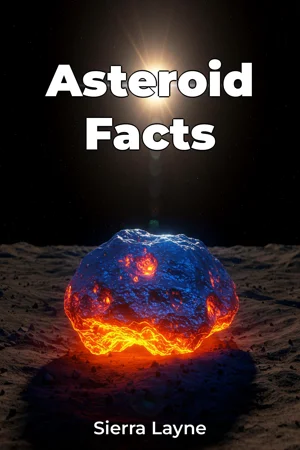
Have you ever wondered about the silent wanderers of our solar system, the asteroids, and the potential impact they hold for our planet? "Asteroid Facts" delves into the fascinating world of these celestial bodies, exploring their origins, characteristics, and their ongoing relationship with Earth. This book will provide a comprehensive understanding of asteroids, bridging the gap between scientific understanding and the potential hazards they present. This exploration hinges on three key areas: defining what asteroids are, tracing their origins and distribution within our solar system, and evaluating the effects they have had, and could have, on Earth's geological and biological history. Understanding these areas is crucial because asteroids represent remnants from the early solar system, offering valuable clues about its formation. Furthermore, by studying past impacts, we can develop strategies for planetary defense, mitigating future risks. To fully appreciate the significance of asteroids, we need to understand the context of planetary formation and the gravitational dynamics of our solar system. Basic knowledge of celestial mechanics and Earth's geological history will be helpful. This book argues that a deeper understanding of asteroids is essential for both advancing our scientific knowledge and ensuring the long-term safety of our planet. "Asteroid Facts" is structured to provide a clear and logical progression of knowledge. First, it introduces the fundamental properties of asteroids: their composition, size distribution, and orbital characteristics. Second, the book explores the formation of asteroids in the early solar system, examining different theories about their origin and the processes that shaped them. This section will also detail the various asteroid groups, such as the Main Belt asteroids, Trojans, and Near-Earth Asteroids. Third, the book details the history of asteroid impacts on Earth, drawing on geological evidence like impact craters and geochemical anomalies. The book culminates in a discussion of the potential future impact risks and current efforts in asteroid detection and mitigation. The evidence presented in "Asteroid Facts" relies on a wealth of data from ground-based observations, space-based telescopes, and spacecraft missions like Dawn and OSIRIS-REx. It also incorporates research from geological studies of impact sites and analyses of meteorites, which are fragments of asteroids that have fallen to Earth. This book connects to various fields, including astronomy, geology, planetary science, and even environmental science. By examining the chemical composition of asteroids, we can gain insights into the building blocks of planets. By studying impact events, we can understand their role in shaping Earth's geology and influencing the course of evolution. Furthermore, the book's discussion of planetary defense connects to policy and technology development. This work stands out by providing a balanced approach, synthesizing information from diverse sources to give a complete and accessible picture of asteroid science. It avoids overly technical jargon, making it accessible for a broad audience while maintaining scientific accuracy. Written in a clear and engaging tone, "Asteroid Facts" targets anyone with an interest in space, geology, or the future of our planet. It is particularly valuable for students, science enthusiasts, and anyone seeking a deeper understanding of the objects that share our solar system. As a work of non-fiction, it will adhere to strict standards of accuracy and transparency, with all claims supported by credible evidence and properly cited sources. The scope of "Asteroid Facts" is intentionally focused on the scientific aspects of asteroids, their origins, their impact history, and the potential future risks. It does not delve extensively into the science fiction portrayals of asteroids or the philosophical implications of life on other planets. The knowledge contained in this book will help readers understand the risks involved with asteroids and support informed discussions about planetary defense strategies. This book also serves as a call to action to support continued research and development in the field of asteroid detection and mitigation. While our understanding of asteroids evolves daily, there remain debates about the precise mechanisms of asteroid formation and the frequency of large impact events in Earth's past. "Asteroid Facts" acknowledges these debates, presenting different viewpoints and highlighting areas of ongoing research.
Have you ever wondered about the silent wanderers of our solar system, the asteroids, and the potential impact they hold for our planet? "Asteroid Facts" delves into the fascinating world of these celestial bodies, exploring their origins, characteristics, and their ongoing relationship with Earth. This book will provide a comprehensive understanding of asteroids, bridging the gap between scientific understanding and the potential hazards they present. This exploration hinges on three key areas: defining what asteroids are, tracing their origins and distribution within our solar system, and evaluating the effects they have had, and could have, on Earth's geological and biological history. Understanding these areas is crucial because asteroids represent remnants from the early solar system, offering valuable clues about its formation. Furthermore, by studying past impacts, we can develop strategies for planetary defense, mitigating future risks. To fully appreciate the significance of asteroids, we need to understand the context of planetary formation and the gravitational dynamics of our solar system. Basic knowledge of celestial mechanics and Earth's geological history will be helpful. This book argues that a deeper understanding of asteroids is essential for both advancing our scientific knowledge and ensuring the long-term safety of our planet. "Asteroid Facts" is structured to provide a clear and logical progression of knowledge. First, it introduces the fundamental properties of asteroids: their composition, size distribution, and orbital characteristics. Second, the book explores the formation of asteroids in the early solar system, examining different theories about their origin and the processes that shaped them. This section will also detail the various asteroid groups, such as the Main Belt asteroids, Trojans, and Near-Earth Asteroids. Third, the book details the history of asteroid impacts on Earth, drawing on geological evidence like impact craters and geochemical anomalies. The book culminates in a discussion of the potential future impact risks and current efforts in asteroid detection and mitigation. The evidence presented in "Asteroid Facts" relies on a wealth of data from ground-based observations, space-based telescopes, and spacecraft missions like Dawn and OSIRIS-REx. It also incorporates research from geological studies of impact sites and analyses of meteorites, which are fragments of asteroids that have fallen to Earth. This book connects to various fields, including astronomy, geology, planetary science, and even environmental science. By examining the chemical composition of asteroids, we can gain insights into the building blocks of planets. By studying impact events, we can understand their role in shaping Earth's geology and influencing the course of evolution. Furthermore, the book's discussion of planetary defense connects to policy and technology development. This work stands out by providing a balanced approach, synthesizing information from diverse sources to give a complete and accessible picture of asteroid science. It avoids overly technical jargon, making it accessible for a broad audience while maintaining scientific accuracy. Written in a clear and engaging tone, "Asteroid Facts" targets anyone with an interest in space, geology, or the future of our planet. It is particularly valuable for students, science enthusiasts, and anyone seeking a deeper understanding of the objects that share our solar system. As a work of non-fiction, it will adhere to strict standards of accuracy and transparency, with all claims supported by credible evidence and properly cited sources. The scope of "Asteroid Facts" is intentionally focused on the scientific aspects of asteroids, their origins, their impact history, and the potential future risks. It does not delve extensively into the science fiction portrayals of asteroids or the philosophical implications of life on other planets. The knowledge contained in this book will help readers understand the risks involved with asteroids and support informed discussions about planetary defense strategies. This book also serves as a call to action to support continued research and development in the field of asteroid detection and mitigation. While our understanding of asteroids evolves daily, there remain debates about the precise mechanisms of asteroid formation and the frequency of large impact events in Earth's past. "Asteroid Facts" acknowledges these debates, presenting different viewpoints and highlighting areas of ongoing research.
"Asteroid Facts" explores the captivating realm of asteroids, those celestial wanderers of our solar system. It delves into their origins, characteristics, and potential impact on Earth. These space rocks, remnants from the early solar system, offer valuable clues about its formation. Studying past impact events, like the one that contributed to the extinction of the dinosaurs, is crucial for planetary defense strategies. The book progresses logically, first introducing the properties of asteroids, such as their composition and orbital characteristics. It then explores their formation and different asteroid groups, including near-Earth asteroids. Finally, it details the history of asteroid impacts on Earth and discusses future impact risks, along with asteroid detection and mitigation efforts. The book synthesizes information from diverse sources, providing a complete and accessible picture of asteroid science for a broad audience interested in space, geology, and planetary science.
Book Details
ISBN
9788233969530
Publisher
Publifye AS
Your Licenses
You don't own any licenses for this book
Purchase a license below to unlock this book and download the EPUB.
Purchase License
Select a tier to unlock this book
Need bulk licensing?
Contact us for enterprise agreements.