
About This Book
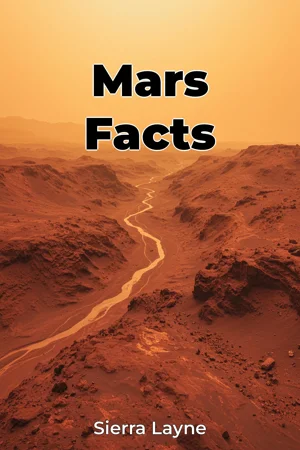
Could life as we know it exist beyond Earth? "Mars Facts" dives into the captivating story of the red planet, exploring its geology, history, and the ongoing quest to determine whether life ever existed there. This journey is crucial to understanding our place in the universe, the potential for life beyond Earth, and the future of space exploration. This book unveils Mars' mysteries, offering an in-depth examination of its past and present. We begin by setting the stage, detailing the early exploration of Mars through telescopes and robotic missions, and outlining the fundamental geological and atmospheric characteristics that make Mars both similar to and drastically different from Earth. The central argument of "Mars Facts" is that understanding Mars' geological history, particularly its past aqueous environment, is critical to assessing its potential for past or present life. We meticulously build this argument by focusing on several key areas: * **Ancient Waterways and Climate History:** We present evidence of extensive river systems, lakes, and even possible oceans that once existed on Mars. Using data from rovers like Curiosity and Perseverance, as well as orbital imagery, we analyze the mineral composition of Martian rocks and sediments to reconstruct the planet's climate history. We address the puzzle of how Mars, with its weak sun, could have sustained liquid water on its surface for extended periods. * **The Search for Biosignatures:** The book closely examines the ongoing search for evidence of past or present microbial life. We present the scientific rationale behind the search for specific chemical compounds, known as biosignatures, that could indicate the presence of life. We analyze the results of experiments conducted by the Viking landers in the 1970s and discuss current efforts, like the Mars Sample Return mission, to collect and analyze Martian samples for definitive proof of life. * **Future Exploration and Human Missions:** The book concludes with a look towards the future, discussing the challenges and opportunities associated with sending humans to Mars. We explore the technological advancements needed for long-duration space travel, the ethical considerations of planetary protection, and the potential for establishing a permanent human presence on Mars. "Mars Facts" draws upon a wealth of data from NASA, the European Space Agency (ESA), and other international space programs. We present detailed analyses of rover data, satellite imagery, and data from Martian meteorites found on Earth. The book integrates knowledge from diverse fields, including geology, climatology, astrobiology, and engineering, to provide a holistic understanding of Mars. This book takes a fact-based approach, presenting information in a clear and accessible style suitable for anyone with an interest in space exploration and the search for life beyond Earth. While remaining scientifically rigorous, the narrative aims to be engaging and inspiring, offering a profound insight into the red planet. Our target audience includes students, science enthusiasts, and anyone curious about the possibility of life on other planets. The book provides a comprehensive overview of current knowledge about Mars while also highlighting the ongoing mysteries and the exciting possibilities for future discoveries. We acknowledge limitations in our current understanding of Mars, particularly with respect to the ambiguous results of past experiments and the challenges of detecting subtle biosignatures. We also address some of the ongoing debates within the scientific community regarding the interpretation of Martian geological features and the potential for extant life. The knowledge gained from studying Mars has practical implications for understanding Earth's climate and the potential for life in extreme environments on our own planet. It also informs our understanding of planetary habitability and the search for exoplanets that could harbor life.
Could life as we know it exist beyond Earth? "Mars Facts" dives into the captivating story of the red planet, exploring its geology, history, and the ongoing quest to determine whether life ever existed there. This journey is crucial to understanding our place in the universe, the potential for life beyond Earth, and the future of space exploration. This book unveils Mars' mysteries, offering an in-depth examination of its past and present. We begin by setting the stage, detailing the early exploration of Mars through telescopes and robotic missions, and outlining the fundamental geological and atmospheric characteristics that make Mars both similar to and drastically different from Earth. The central argument of "Mars Facts" is that understanding Mars' geological history, particularly its past aqueous environment, is critical to assessing its potential for past or present life. We meticulously build this argument by focusing on several key areas: * **Ancient Waterways and Climate History:** We present evidence of extensive river systems, lakes, and even possible oceans that once existed on Mars. Using data from rovers like Curiosity and Perseverance, as well as orbital imagery, we analyze the mineral composition of Martian rocks and sediments to reconstruct the planet's climate history. We address the puzzle of how Mars, with its weak sun, could have sustained liquid water on its surface for extended periods. * **The Search for Biosignatures:** The book closely examines the ongoing search for evidence of past or present microbial life. We present the scientific rationale behind the search for specific chemical compounds, known as biosignatures, that could indicate the presence of life. We analyze the results of experiments conducted by the Viking landers in the 1970s and discuss current efforts, like the Mars Sample Return mission, to collect and analyze Martian samples for definitive proof of life. * **Future Exploration and Human Missions:** The book concludes with a look towards the future, discussing the challenges and opportunities associated with sending humans to Mars. We explore the technological advancements needed for long-duration space travel, the ethical considerations of planetary protection, and the potential for establishing a permanent human presence on Mars. "Mars Facts" draws upon a wealth of data from NASA, the European Space Agency (ESA), and other international space programs. We present detailed analyses of rover data, satellite imagery, and data from Martian meteorites found on Earth. The book integrates knowledge from diverse fields, including geology, climatology, astrobiology, and engineering, to provide a holistic understanding of Mars. This book takes a fact-based approach, presenting information in a clear and accessible style suitable for anyone with an interest in space exploration and the search for life beyond Earth. While remaining scientifically rigorous, the narrative aims to be engaging and inspiring, offering a profound insight into the red planet. Our target audience includes students, science enthusiasts, and anyone curious about the possibility of life on other planets. The book provides a comprehensive overview of current knowledge about Mars while also highlighting the ongoing mysteries and the exciting possibilities for future discoveries. We acknowledge limitations in our current understanding of Mars, particularly with respect to the ambiguous results of past experiments and the challenges of detecting subtle biosignatures. We also address some of the ongoing debates within the scientific community regarding the interpretation of Martian geological features and the potential for extant life. The knowledge gained from studying Mars has practical implications for understanding Earth's climate and the potential for life in extreme environments on our own planet. It also informs our understanding of planetary habitability and the search for exoplanets that could harbor life.
"Mars Facts" explores the captivating story of the Red Planet, delving into its geology, history, and the search for life. Central to this exploration is uncovering whether Mars once harbored ancient waterways, examining evidence of past river systems and lakes using data from rovers like Curiosity and Perseverance. Understanding Mars is crucial for determining the potential for life beyond Earth. The book meticulously builds an argument around Mars' geological history and past aqueous environments, detailing the ongoing search for biosignatures – specific chemical compounds that could indicate life. It presents the scientific rationale behind these searches, analyzing results from Viking landers and current efforts like the Mars Sample Return mission. This knowledge also has practical implications for understanding Earth's climate. Concluding with future exploration, "Mars Facts" discusses challenges and opportunities for human missions to Mars, exploring technological advancements needed for long-duration space travel and the potential for establishing a permanent human presence. The book integrates knowledge from diverse fields to provide a complete understanding, taking a fact-based approach suitable for anyone interested in space exploration.
Book Details
ISBN
9788233969516
Publisher
Publifye AS
Your Licenses
You don't own any licenses for this book
Purchase a license below to unlock this book and download the EPUB.
Purchase License
Select a tier to unlock this book
Need bulk licensing?
Contact us for enterprise agreements.