
About This Book
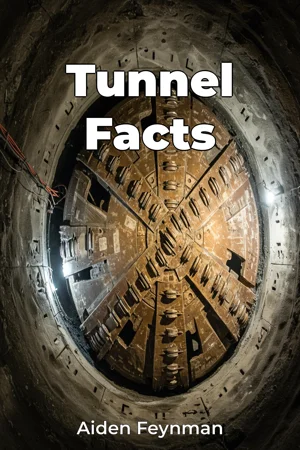
Have you ever considered the intricate world hidden beneath our feet, a network of tunnels vital to modern infrastructure and human civilization? "Tunnel Facts" delves into this subterranean realm, exploring the construction methods, engineering marvels, and the sheer scale of the longest underground routes across the globe. This book will illuminate the often-unseen technology and architectural prowess that have shaped our world. The book focuses on three crucial areas: tunnel construction techniques, notable tunnel projects globally, and the future of tunnel engineering. Understanding these allows readers to appreciate the complexity and importance of subterranean infrastructure and the innovative solutions required to build and maintain them. These topics are important as urbanization increases and the need for efficient transportation and utility networks grows. Overcoming geographic barriers becomes essential, and tunnels offer practical solutions. Historically, tunnels have been crucial for mining, water conveyance, and military purposes. Modern tunnel engineering builds upon centuries of experience, adapting to the ever-increasing demands of society and the environment. Some basic concepts for the reader to recall are geological surveying, soil mechanics, and structural engineering principles. The central thesis of "Tunnel Facts" argues that tunnel engineering represents a critical intersection of technological innovation, environmental awareness, and societal need. It’s about creating efficient, sustainable, and safe underground infrastructure. Highlighting this intersection underscores the vital role of tunnels in shaping modern urban environments and facilitating economic growth while minimizing environmental impact. The book is structured around a logical progression of ideas. It begins by introducing fundamental tunneling concepts and construction methods, such as the New Austrian Tunneling Method (NATM) and Tunnel Boring Machines (TBMs). Next, it showcases detailed case studies of iconic tunnels, including the Channel Tunnel, Seikan Tunnel, and Gotthard Base Tunnel, examining the engineering challenges and breakthroughs associated with each. The book culminates with a discussion of emerging trends in tunneling, such as automation, robotics, and sustainable construction practices. Practical applications, such as urban planning, disaster resilience, and resource management, are explored in the concluding chapter. The evidence presented throughout "Tunnel Facts" draws upon a wide range of sources, including engineering reports, academic research papers, and industry publications. The case studies rely on detailed project documentation, photographic evidence, and expert interviews to provide in-depth insights into the construction processes and operational challenges. Data and statistical analysis are employed to illustrate the economic and environmental impacts of tunnel projects. "Tunnel Facts" connects to several other fields: geology, environmental science, and urban planning. Geological understanding is vital for assessing ground conditions and predicting potential hazards. Environmental considerations shape construction methods and materials to minimize ecological disruption. Integration with urban planning ensures tunnels align with broader transportation and infrastructure goals. A unique aspect of "Tunnel Facts" is its emphasis on the interplay between technological innovation and environmental sustainability in tunnel engineering. It presents a balanced view, acknowledging both the potential benefits and risks associated with large-scale tunneling projects. The book adopts a factual and informative writing style, avoiding technical jargon and complex equations wherever possible. Visual aids, such as diagrams, photographs, and maps, are used to enhance understanding and engagement. The target audience includes students, engineers, urban planners, and anyone interested in infrastructure development and technological innovation. Readers seeking a comprehensive and accessible overview of tunnel engineering will find this book valuable. This work is not just for experts but can be enjoyed by any curious reader. As a book focusing on Technology, Architecture General, and Architecture, "Tunnel Facts" conforms to the genre by providing factual accuracy, design principles, and real-world case studies. It avoids subjective opinions, maintaining an objective and evidence-based approach. The book covers a broad range of tunneling techniques and projects, but it does not delve into highly specialized areas such as tunnel boring machine design or advanced geotechnical analysis. This limitation allows for a more accessible and focused presentation of the core concepts. The information in this book can be applied to various real-world situations, from informed decision-making in infrastructure planning to promoting sustainable construction practices in the engineering sector. It equips readers with the knowledge to critically evaluate tunnel projects and understand their impacts on society and the environment. One ongoing debate addressed in the book concerns balancing the economic benefits of tunnel construction with the potential environmental consequences. "Tunnel Facts" presents different perspectives on this issue, encouraging readers to consider the trade-offs involved and the importance of sustainable design practices.
Have you ever considered the intricate world hidden beneath our feet, a network of tunnels vital to modern infrastructure and human civilization? "Tunnel Facts" delves into this subterranean realm, exploring the construction methods, engineering marvels, and the sheer scale of the longest underground routes across the globe. This book will illuminate the often-unseen technology and architectural prowess that have shaped our world. The book focuses on three crucial areas: tunnel construction techniques, notable tunnel projects globally, and the future of tunnel engineering. Understanding these allows readers to appreciate the complexity and importance of subterranean infrastructure and the innovative solutions required to build and maintain them. These topics are important as urbanization increases and the need for efficient transportation and utility networks grows. Overcoming geographic barriers becomes essential, and tunnels offer practical solutions. Historically, tunnels have been crucial for mining, water conveyance, and military purposes. Modern tunnel engineering builds upon centuries of experience, adapting to the ever-increasing demands of society and the environment. Some basic concepts for the reader to recall are geological surveying, soil mechanics, and structural engineering principles. The central thesis of "Tunnel Facts" argues that tunnel engineering represents a critical intersection of technological innovation, environmental awareness, and societal need. It’s about creating efficient, sustainable, and safe underground infrastructure. Highlighting this intersection underscores the vital role of tunnels in shaping modern urban environments and facilitating economic growth while minimizing environmental impact. The book is structured around a logical progression of ideas. It begins by introducing fundamental tunneling concepts and construction methods, such as the New Austrian Tunneling Method (NATM) and Tunnel Boring Machines (TBMs). Next, it showcases detailed case studies of iconic tunnels, including the Channel Tunnel, Seikan Tunnel, and Gotthard Base Tunnel, examining the engineering challenges and breakthroughs associated with each. The book culminates with a discussion of emerging trends in tunneling, such as automation, robotics, and sustainable construction practices. Practical applications, such as urban planning, disaster resilience, and resource management, are explored in the concluding chapter. The evidence presented throughout "Tunnel Facts" draws upon a wide range of sources, including engineering reports, academic research papers, and industry publications. The case studies rely on detailed project documentation, photographic evidence, and expert interviews to provide in-depth insights into the construction processes and operational challenges. Data and statistical analysis are employed to illustrate the economic and environmental impacts of tunnel projects. "Tunnel Facts" connects to several other fields: geology, environmental science, and urban planning. Geological understanding is vital for assessing ground conditions and predicting potential hazards. Environmental considerations shape construction methods and materials to minimize ecological disruption. Integration with urban planning ensures tunnels align with broader transportation and infrastructure goals. A unique aspect of "Tunnel Facts" is its emphasis on the interplay between technological innovation and environmental sustainability in tunnel engineering. It presents a balanced view, acknowledging both the potential benefits and risks associated with large-scale tunneling projects. The book adopts a factual and informative writing style, avoiding technical jargon and complex equations wherever possible. Visual aids, such as diagrams, photographs, and maps, are used to enhance understanding and engagement. The target audience includes students, engineers, urban planners, and anyone interested in infrastructure development and technological innovation. Readers seeking a comprehensive and accessible overview of tunnel engineering will find this book valuable. This work is not just for experts but can be enjoyed by any curious reader. As a book focusing on Technology, Architecture General, and Architecture, "Tunnel Facts" conforms to the genre by providing factual accuracy, design principles, and real-world case studies. It avoids subjective opinions, maintaining an objective and evidence-based approach. The book covers a broad range of tunneling techniques and projects, but it does not delve into highly specialized areas such as tunnel boring machine design or advanced geotechnical analysis. This limitation allows for a more accessible and focused presentation of the core concepts. The information in this book can be applied to various real-world situations, from informed decision-making in infrastructure planning to promoting sustainable construction practices in the engineering sector. It equips readers with the knowledge to critically evaluate tunnel projects and understand their impacts on society and the environment. One ongoing debate addressed in the book concerns balancing the economic benefits of tunnel construction with the potential environmental consequences. "Tunnel Facts" presents different perspectives on this issue, encouraging readers to consider the trade-offs involved and the importance of sustainable design practices.
"Tunnel Facts" explores the fascinating world of underground infrastructure, revealing the technology and architectural achievements behind tunnels vital to modern society. The book illuminates how tunnels overcome geographical barriers, enabling efficient transportation and utility networks, especially as urbanization increases. Did you know that modern tunnel engineering builds upon centuries of experience, adapting to meet growing societal and environmental demands? Or that geological surveying, soil mechanics, and structural engineering principles are basic concepts for understanding tunnel construction? The book progresses logically, starting with fundamental tunneling concepts like the New Austrian Tunneling Method (NATM) and Tunnel Boring Machines (TBMs). It then showcases case studies of iconic tunnels such as the Channel Tunnel and Gotthard Base Tunnel, highlighting engineering challenges and breakthroughs. Finally, it discusses emerging trends like automation and sustainable construction. A unique aspect is its emphasis on balancing technological innovation with environmental sustainability, presenting a balanced view of the benefits and risks of large-scale tunnel projects. "Tunnel Facts" argues that tunnel engineering represents a critical intersection of technological innovation, environmental awareness, and societal need.
Book Details
ISBN
9788233969462
Publisher
Publifye AS
Your Licenses
You don't own any licenses for this book
Purchase a license below to unlock this book and download the EPUB.
Purchase License
Select a tier to unlock this book
Need bulk licensing?
Contact us for enterprise agreements.