
About This Book
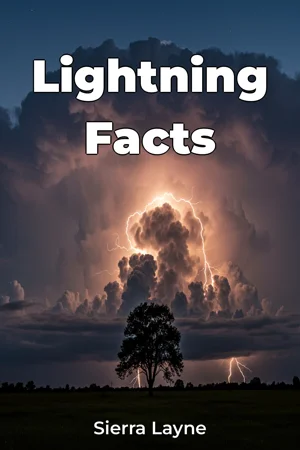
Have you ever wondered about the raw power unleashed in a single flash of lightning? This book, "Lightning Facts," delves into the fascinating and potentially deadly world of lightning, exploring the science behind its formation, the impact of its strikes, and the geographical hotspots most susceptible to its electrifying displays. Understanding lightning is not merely an academic exercise; it’s crucial for personal safety, infrastructure resilience, and a deeper appreciation of our planet's atmospheric dynamics. This book undertakes a comprehensive examination of lightning, structured around three core themes: the atmospheric physics of lightning generation, the destructive potential of lightning strikes, and the geographical distribution of lightning activity. The importance of these topics is underscored by the increasing frequency of extreme weather events and the vulnerability of modern societies to power outages and electrical damage. A historical perspective is interwoven into the narrative, tracing our evolving understanding of lightning from ancient myths to modern scientific models. While no specific prerequisite knowledge is strictly required, a basic understanding of weather patterns and electrical concepts will enhance the reader's appreciation of the material. The central argument of "Lightning Facts" is that a comprehensive understanding of lightning – its causes, effects, and distribution – is essential for mitigating its risks and harnessing its potential. This argument is vital because it bridges the gap between theoretical science and practical applications, empowering individuals and communities to make informed decisions about safety and infrastructure development. The book begins by introducing the fundamental principles of atmospheric electricity, explaining how charge separation occurs within storm clouds and culminates in a lightning discharge. It then develops these ideas by exploring the different types of lightning (cloud-to-ground, cloud-to-cloud, etc.) and the mechanisms of their formation. A dedicated section analyzes the effects of lightning strikes on various targets, from trees and buildings to humans and electronic systems, supported by statistical data and case studies. The study concludes by mapping global lightning patterns, identifying regions with the highest strike densities and exploring the factors that contribute to these geographical variations. The knowledge can be applied in designing lightning protection systems, developing early warning systems, and educating the public about lightning safety. The assertions are backed by diverse evidence, including meteorological data, electrical engineering studies, and geographical surveys derived from global lightning detection networks. It also references peer-reviewed scientific articles, governmental reports, and field observations from lightning research facilities. "Lightning Facts" connects to several interdisciplinary fields. Firstly, it relates to climatology by examining the effects of climate change on lightning frequency and intensity. Secondly, it intertwines with electrical engineering by discussing lightning protection systems and grounding techniques. Thirdly, it links to public health by analyzing the medical consequences of lightning strikes and promoting safety measures. These connections provide a holistic view of lightning and its multifaceted impact on society. The approach taken is deeply rooted in scientific accuracy and clarity. The book avoids sensationalism, focusing instead on providing a balanced and objective presentation of the facts. The writing style is accessible to a broad audience, striking a balance between technical precision and engaging narrative. The target audience includes weather enthusiasts, students of earth science, electrical engineers, emergency responders, and anyone interested in learning more about this powerful natural phenomenon. The book's value lies in its ability to transform complex scientific concepts into understandable information, empowering readers to make informed decisions and appreciate the electrifying forces shaping our world. As a non-fiction work in the genres of science and earth sciences geography, "Lightning Facts" adheres to the conventions of accuracy, objectivity, and clear communication. The scope of the book is limited to the scientific understanding of lightning and its direct impacts, excluding more speculative or philosophical discussions. Future research directions and unresolved questions within the field of lightning science are also highlighted. The information presented can be applied in real-world scenarios, such as developing lightning-resistant infrastructure, improving weather forecasting models, and implementing effective lightning safety protocols. It may also touch upon existing controversies, such as the degree to which climate change is influencing lightning patterns, presenting various viewpoints and supporting data.
Have you ever wondered about the raw power unleashed in a single flash of lightning? This book, "Lightning Facts," delves into the fascinating and potentially deadly world of lightning, exploring the science behind its formation, the impact of its strikes, and the geographical hotspots most susceptible to its electrifying displays. Understanding lightning is not merely an academic exercise; it’s crucial for personal safety, infrastructure resilience, and a deeper appreciation of our planet's atmospheric dynamics. This book undertakes a comprehensive examination of lightning, structured around three core themes: the atmospheric physics of lightning generation, the destructive potential of lightning strikes, and the geographical distribution of lightning activity. The importance of these topics is underscored by the increasing frequency of extreme weather events and the vulnerability of modern societies to power outages and electrical damage. A historical perspective is interwoven into the narrative, tracing our evolving understanding of lightning from ancient myths to modern scientific models. While no specific prerequisite knowledge is strictly required, a basic understanding of weather patterns and electrical concepts will enhance the reader's appreciation of the material. The central argument of "Lightning Facts" is that a comprehensive understanding of lightning – its causes, effects, and distribution – is essential for mitigating its risks and harnessing its potential. This argument is vital because it bridges the gap between theoretical science and practical applications, empowering individuals and communities to make informed decisions about safety and infrastructure development. The book begins by introducing the fundamental principles of atmospheric electricity, explaining how charge separation occurs within storm clouds and culminates in a lightning discharge. It then develops these ideas by exploring the different types of lightning (cloud-to-ground, cloud-to-cloud, etc.) and the mechanisms of their formation. A dedicated section analyzes the effects of lightning strikes on various targets, from trees and buildings to humans and electronic systems, supported by statistical data and case studies. The study concludes by mapping global lightning patterns, identifying regions with the highest strike densities and exploring the factors that contribute to these geographical variations. The knowledge can be applied in designing lightning protection systems, developing early warning systems, and educating the public about lightning safety. The assertions are backed by diverse evidence, including meteorological data, electrical engineering studies, and geographical surveys derived from global lightning detection networks. It also references peer-reviewed scientific articles, governmental reports, and field observations from lightning research facilities. "Lightning Facts" connects to several interdisciplinary fields. Firstly, it relates to climatology by examining the effects of climate change on lightning frequency and intensity. Secondly, it intertwines with electrical engineering by discussing lightning protection systems and grounding techniques. Thirdly, it links to public health by analyzing the medical consequences of lightning strikes and promoting safety measures. These connections provide a holistic view of lightning and its multifaceted impact on society. The approach taken is deeply rooted in scientific accuracy and clarity. The book avoids sensationalism, focusing instead on providing a balanced and objective presentation of the facts. The writing style is accessible to a broad audience, striking a balance between technical precision and engaging narrative. The target audience includes weather enthusiasts, students of earth science, electrical engineers, emergency responders, and anyone interested in learning more about this powerful natural phenomenon. The book's value lies in its ability to transform complex scientific concepts into understandable information, empowering readers to make informed decisions and appreciate the electrifying forces shaping our world. As a non-fiction work in the genres of science and earth sciences geography, "Lightning Facts" adheres to the conventions of accuracy, objectivity, and clear communication. The scope of the book is limited to the scientific understanding of lightning and its direct impacts, excluding more speculative or philosophical discussions. Future research directions and unresolved questions within the field of lightning science are also highlighted. The information presented can be applied in real-world scenarios, such as developing lightning-resistant infrastructure, improving weather forecasting models, and implementing effective lightning safety protocols. It may also touch upon existing controversies, such as the degree to which climate change is influencing lightning patterns, presenting various viewpoints and supporting data.
"Lightning Facts" explores the powerful world of lightning, delving into the science behind its formation, its destructive potential, and its geographical distribution. Understanding lightning is crucial, especially with increasing extreme weather events. The book highlights how lightning, a dramatic display of atmospheric electricity, originates from charge separation within storm clouds. Did you know that there are different types of lightning, such as cloud-to-ground and cloud-to-cloud, each with its own formation mechanism? This book examines the topic across three core themes: atmospheric physics, destructive impact, and geographical distribution. Beginning with the fundamentals of atmospheric electricity, the book progresses by looking at different types of lightning and analyzing the effects of lightning strikes. A dedicated section maps global lightning patterns, identifying regions with the highest strike densities. Readers will gain a deeper appreciation of our planet's dynamics and the importance of lightning protection.
Book Details
ISBN
9788233969325
Publisher
Publifye AS
Your Licenses
You don't own any licenses for this book
Purchase a license below to unlock this book and download the EPUB.
Purchase License
Select a tier to unlock this book
Need bulk licensing?
Contact us for enterprise agreements.