
About This Book
Have you ever wondered what gives tornadoes their awesome, yet terrifying, power? "Tornado Facts" delves into the heart of these atmospheric phenomena, exploring their formation, the science behind their destructive speeds, and their global impact. This book is essential because understanding tornadoes is not just an academic exercise; it is crucial for saving lives and mitigating property damage in vulnerable communities. This book provides necessary context by exploring the history of tornado research, from early observations to modern forecasting techniques. Some familiarity with basic weather concepts will be helpful, but all explanations are crafted for accessibility. The central argument of "Tornado Facts" is that a comprehensive understanding of tornado dynamics, coupled with improved forecasting and preparedness strategies, is vital for reducing the devastating impact of these events worldwide. This argument is significant because, despite advances in technology, tornadoes continue to pose a significant threat to life and property, and improved knowledge can directly translate to better safety measures. The book is structured to provide a comprehensive understanding of tornadoes. First, we introduce the fundamental atmospheric conditions that lead to tornado formation, debunking common myths and misconceptions. Second, we explore the science behind tornado intensity, examining the factors that contribute to extreme wind speeds and the challenges of accurately measuring them. We then examine a chapter on the global distribution of tornadoes, highlighting regional variations and the factors that make certain areas more prone to these events. Finally, a chapter offers a discussion of the latest advancements in tornado forecasting and warning systems, as well as practical advice on how communities and individuals can prepare for and respond to tornado threats. The evidence presented in this book is drawn from a variety of sources, including peer-reviewed scientific studies, data from government agencies such as the National Weather Service, and firsthand accounts from storm chasers and survivors. The book incorporates unique data visualizations to help readers understand complex meteorological concepts. "Tornado Facts" connects to several other fields, including meteorology, geography, engineering, and social science. The book examines how building design can mitigate tornado damage, and how social factors influence people's response to tornado warnings. This book distinguishes itself by providing a global perspective on tornadoes, moving beyond the typical focus on the United States. It also emphasizes the practical application of scientific knowledge, offering concrete steps that individuals and communities can take to improve their safety. The tone of the book is informative and accessible, aiming to present complex scientific information in a way that is understandable to a broad audience. While fact-based, the writing style incorporates real-world examples and case studies to engage readers and illustrate key concepts. The intended audience includes weather enthusiasts, students of earth science or geography, emergency responders, and anyone who lives in a tornado-prone area. This book is valuable because it provides a comprehensive and up-to-date overview of tornado science, as well as practical guidance on how to stay safe during these dangerous events. As a work of non-fiction, "Tornado Facts" adheres to the conventions of accuracy, objectivity, and evidence-based reasoning. All claims are supported by credible sources, and different perspectives on controversial issues are presented fairly. The scope of the book is intentionally broad, covering aspects of tornado science, forecasting, and preparedness. However, the book does not delve into the complex mathematical models used in advanced weather forecasting, focusing instead on providing a conceptual understanding of how these models work. The information in "Tornado Facts" has numerous real-world applications. Readers can use this knowledge to make informed decisions about their safety, advocate for improved building codes, and support policies that promote tornado preparedness. The book also addresses ongoing debates about the impact of climate change on tornado frequency and intensity, presenting the latest scientific evidence and exploring the uncertainties involved.
Have you ever wondered what gives tornadoes their awesome, yet terrifying, power? "Tornado Facts" delves into the heart of these atmospheric phenomena, exploring their formation, the science behind their destructive speeds, and their global impact. This book is essential because understanding tornadoes is not just an academic exercise; it is crucial for saving lives and mitigating property damage in vulnerable communities. This book provides necessary context by exploring the history of tornado research, from early observations to modern forecasting techniques. Some familiarity with basic weather concepts will be helpful, but all explanations are crafted for accessibility. The central argument of "Tornado Facts" is that a comprehensive understanding of tornado dynamics, coupled with improved forecasting and preparedness strategies, is vital for reducing the devastating impact of these events worldwide. This argument is significant because, despite advances in technology, tornadoes continue to pose a significant threat to life and property, and improved knowledge can directly translate to better safety measures. The book is structured to provide a comprehensive understanding of tornadoes. First, we introduce the fundamental atmospheric conditions that lead to tornado formation, debunking common myths and misconceptions. Second, we explore the science behind tornado intensity, examining the factors that contribute to extreme wind speeds and the challenges of accurately measuring them. We then examine a chapter on the global distribution of tornadoes, highlighting regional variations and the factors that make certain areas more prone to these events. Finally, a chapter offers a discussion of the latest advancements in tornado forecasting and warning systems, as well as practical advice on how communities and individuals can prepare for and respond to tornado threats. The evidence presented in this book is drawn from a variety of sources, including peer-reviewed scientific studies, data from government agencies such as the National Weather Service, and firsthand accounts from storm chasers and survivors. The book incorporates unique data visualizations to help readers understand complex meteorological concepts. "Tornado Facts" connects to several other fields, including meteorology, geography, engineering, and social science. The book examines how building design can mitigate tornado damage, and how social factors influence people's response to tornado warnings. This book distinguishes itself by providing a global perspective on tornadoes, moving beyond the typical focus on the United States. It also emphasizes the practical application of scientific knowledge, offering concrete steps that individuals and communities can take to improve their safety. The tone of the book is informative and accessible, aiming to present complex scientific information in a way that is understandable to a broad audience. While fact-based, the writing style incorporates real-world examples and case studies to engage readers and illustrate key concepts. The intended audience includes weather enthusiasts, students of earth science or geography, emergency responders, and anyone who lives in a tornado-prone area. This book is valuable because it provides a comprehensive and up-to-date overview of tornado science, as well as practical guidance on how to stay safe during these dangerous events. As a work of non-fiction, "Tornado Facts" adheres to the conventions of accuracy, objectivity, and evidence-based reasoning. All claims are supported by credible sources, and different perspectives on controversial issues are presented fairly. The scope of the book is intentionally broad, covering aspects of tornado science, forecasting, and preparedness. However, the book does not delve into the complex mathematical models used in advanced weather forecasting, focusing instead on providing a conceptual understanding of how these models work. The information in "Tornado Facts" has numerous real-world applications. Readers can use this knowledge to make informed decisions about their safety, advocate for improved building codes, and support policies that promote tornado preparedness. The book also addresses ongoing debates about the impact of climate change on tornado frequency and intensity, presenting the latest scientific evidence and exploring the uncertainties involved.
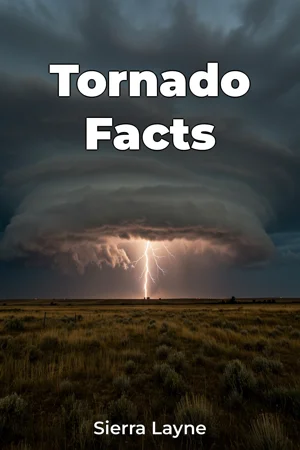
"Tornado Facts" explores the awe-inspiring yet destructive world of tornadoes, offering a comprehensive look at these atmospheric phenomena. It delves into how tornadoes form, the science behind their extreme wind speeds, and their impact across the globe, emphasizing that understanding these natural disasters is crucial for saving lives. For instance, the book highlights how specific atmospheric conditions and regional geography contribute to tornado development. The book uniquely presents a global perspective on tornadoes, moving beyond a U.S.-centric view. It also emphasizes practical applications of weather science, providing concrete steps for individual and community safety, while also discussing the history of tornado research and modern forecasting. "Tornado Facts" progresses from explaining the fundamental conditions that cause tornadoes to examining their intensity, global distribution, and advancements in forecasting and preparedness.
Book Details
ISBN
9788233969318
Publisher
Publifye AS
Your Licenses
You don't own any licenses for this book
Purchase a license below to unlock this book and download the EPUB.
Purchase License
Select a tier to unlock this book
Need bulk licensing?
Contact us for enterprise agreements.