
About This Book
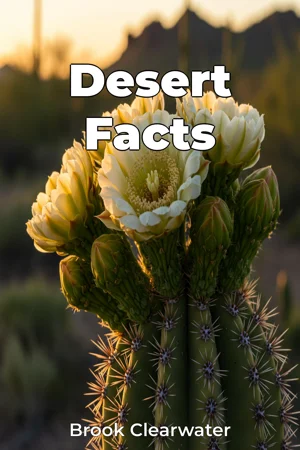
Have you ever wondered how life persists in Earth's most hostile environments? "Desert Facts" explores these extreme landscapes, revealing the intricate web of life that thrives in the face of scorching heat and scarce water. This book delves into the nature, geography, and earth sciences of deserts, investigating the unique adaptations that allow plants, animals, and even microorganisms not only to survive but also to flourish in these arid regions. Deserts are more than just barren wastelands; they are complex ecosystems exhibiting a diverse range of survival strategies. Understanding these strategies is crucial for appreciating the resilience of life on Earth and for informing conservation efforts in increasingly arid environments due to climate change. Furthermore, studying desert ecosystems provides valuable insights into resource management and sustainable living in water-scarce regions. We will discuss the formation of deserts through various geographical and climatic processes to contextualize the challenges faced by desert inhabitants. This book argues that deserts, often perceived as lifeless, are in reality biological treasure troves that offer crucial lessons in adaptation and sustainability. We support this argument by presenting detailed case studies of specific desert environments and their inhabitants, drawing on scientific research from fields such as botany, zoology, and microbiology. We will analyze unique plant adaptations like deep-reaching root systems and water-storing tissues, as well as the physiological and behavioral adaptations of desert animals. We begin by defining what constitutes a desert, examining different types of deserts, and exploring their global distribution. Then, we investigate the geological and climatic forces that shape desert landscapes. Subsequent chapters focus on the diverse forms of life found in deserts, detailing their survival mechanisms and ecological roles. The later part of the book explores the human impact on desert ecosystems, including the challenges of desertification and the potential for sustainable development. Finally, we conclude by discussing the lessons that desert ecosystems can teach us about resilience, resource management, and adapting to a changing climate. The information presented draws from a wide range of scientific literature, including peer-reviewed journal articles, government reports, and field studies conducted by researchers around the world. "Desert Facts" also incorporates data from remote sensing technologies, such as satellite imagery, to analyze large-scale patterns of vegetation cover and land use change in desert regions. The study of deserts connects to several other disciplines, including climatology, hydrology, and environmental science. Understanding desert ecosystems is essential for predicting the impacts of climate change on arid regions and for developing strategies to mitigate desertification. Furthermore, the book offers practical insights for individuals interested in conservation, sustainable agriculture, and resource management in arid environments. This book distinguishes itself by presenting a holistic view of desert ecosystems, integrating geological, biological, and human perspectives. The writing style is accessible and engaging, aimed at a general audience with an interest in nature, geography, and environmental science. While based on solid scientific research, the book avoids excessive jargon and technical details, making it suitable for readers with varying levels of scientific background. "Desert Facts" is targeted toward students, educators, nature enthusiasts, and anyone curious about the natural world. It will appeal to readers seeking a comprehensive and scientifically accurate introduction to desert ecosystems. This book adheres to the conventions of non-fiction science writing by prioritizing factual accuracy, clarity, and objectivity. The scope of this book encompasses the major deserts of the world, including the Sahara, the Atacama, the Gobi, and the Australian Outback. While providing a broad overview of desert ecosystems, the book focuses primarily on the biological and ecological aspects of desert environments, with less emphasis on geological processes or human history. The knowledge gained from "Desert Facts" can be applied in several real-world contexts. For example, understanding the water conservation strategies of desert plants can inform the development of drought-resistant crops. Similarly, studying the sustainable practices of indigenous desert communities can provide valuable lessons for managing resources in arid regions. The book touches upon ongoing debates surrounding the causes and consequences of desertification, including the role of climate change, land degradation, and human activity. It presents different perspectives on these issues, encouraging readers to critically evaluate the evidence and draw their own conclusions.
Have you ever wondered how life persists in Earth's most hostile environments? "Desert Facts" explores these extreme landscapes, revealing the intricate web of life that thrives in the face of scorching heat and scarce water. This book delves into the nature, geography, and earth sciences of deserts, investigating the unique adaptations that allow plants, animals, and even microorganisms not only to survive but also to flourish in these arid regions. Deserts are more than just barren wastelands; they are complex ecosystems exhibiting a diverse range of survival strategies. Understanding these strategies is crucial for appreciating the resilience of life on Earth and for informing conservation efforts in increasingly arid environments due to climate change. Furthermore, studying desert ecosystems provides valuable insights into resource management and sustainable living in water-scarce regions. We will discuss the formation of deserts through various geographical and climatic processes to contextualize the challenges faced by desert inhabitants. This book argues that deserts, often perceived as lifeless, are in reality biological treasure troves that offer crucial lessons in adaptation and sustainability. We support this argument by presenting detailed case studies of specific desert environments and their inhabitants, drawing on scientific research from fields such as botany, zoology, and microbiology. We will analyze unique plant adaptations like deep-reaching root systems and water-storing tissues, as well as the physiological and behavioral adaptations of desert animals. We begin by defining what constitutes a desert, examining different types of deserts, and exploring their global distribution. Then, we investigate the geological and climatic forces that shape desert landscapes. Subsequent chapters focus on the diverse forms of life found in deserts, detailing their survival mechanisms and ecological roles. The later part of the book explores the human impact on desert ecosystems, including the challenges of desertification and the potential for sustainable development. Finally, we conclude by discussing the lessons that desert ecosystems can teach us about resilience, resource management, and adapting to a changing climate. The information presented draws from a wide range of scientific literature, including peer-reviewed journal articles, government reports, and field studies conducted by researchers around the world. "Desert Facts" also incorporates data from remote sensing technologies, such as satellite imagery, to analyze large-scale patterns of vegetation cover and land use change in desert regions. The study of deserts connects to several other disciplines, including climatology, hydrology, and environmental science. Understanding desert ecosystems is essential for predicting the impacts of climate change on arid regions and for developing strategies to mitigate desertification. Furthermore, the book offers practical insights for individuals interested in conservation, sustainable agriculture, and resource management in arid environments. This book distinguishes itself by presenting a holistic view of desert ecosystems, integrating geological, biological, and human perspectives. The writing style is accessible and engaging, aimed at a general audience with an interest in nature, geography, and environmental science. While based on solid scientific research, the book avoids excessive jargon and technical details, making it suitable for readers with varying levels of scientific background. "Desert Facts" is targeted toward students, educators, nature enthusiasts, and anyone curious about the natural world. It will appeal to readers seeking a comprehensive and scientifically accurate introduction to desert ecosystems. This book adheres to the conventions of non-fiction science writing by prioritizing factual accuracy, clarity, and objectivity. The scope of this book encompasses the major deserts of the world, including the Sahara, the Atacama, the Gobi, and the Australian Outback. While providing a broad overview of desert ecosystems, the book focuses primarily on the biological and ecological aspects of desert environments, with less emphasis on geological processes or human history. The knowledge gained from "Desert Facts" can be applied in several real-world contexts. For example, understanding the water conservation strategies of desert plants can inform the development of drought-resistant crops. Similarly, studying the sustainable practices of indigenous desert communities can provide valuable lessons for managing resources in arid regions. The book touches upon ongoing debates surrounding the causes and consequences of desertification, including the role of climate change, land degradation, and human activity. It presents different perspectives on these issues, encouraging readers to critically evaluate the evidence and draw their own conclusions.
"Desert Facts" explores the captivating world of arid regions, revealing how life thrives in extreme conditions. Delving into desert ecosystems, the book highlights the surprising biodiversity and ingenious survival strategies of desert plants and animals. One intriguing fact is that some desert plants have adapted to collect water directly from fog, while certain animals can survive without drinking water for extended periods. The book examines the nature, geography, and earth sciences behind desert formation and the unique challenges faced by its inhabitants. It progresses from defining deserts and exploring their global distribution to investigating the geological and climatic forces that shape these landscapes. Later chapters focus on desert life, human impact, and lessons for resilience and sustainability. By integrating geological, biological, and human perspectives, "Desert Facts" provides a holistic view of these often misunderstood environments.
Book Details
ISBN
9788233969226
Publisher
Publifye AS
Your Licenses
You don't own any licenses for this book
Purchase a license below to unlock this book and download the EPUB.
Purchase License
Select a tier to unlock this book
Need bulk licensing?
Contact us for enterprise agreements.