
About This Book
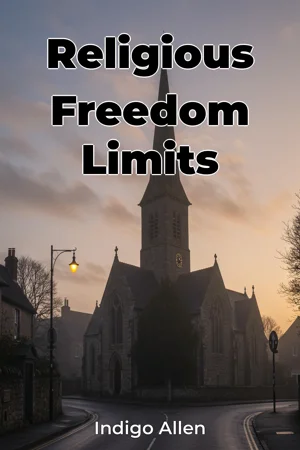
Does the state's responsibility to protect access to healthcare extend so far as to infringe upon fundamental freedoms of religious expression? Religious Freedom Limits examines the increasingly tense intersection of religious expression and government regulations in the United Kingdom, specifically analyzing the implementation and impact of buffer zone regulations and Scottish safe access zone policies between 2023 and 2025. This book grapples with two central and critical themes: first, the evolving legal definitions of religious expression within the public sphere, and second, the proportionality of state intervention when these expressions are perceived to conflict with other rights, such as the right to healthcare access. The relevance of these themes is underscored by the increasing number of legal challenges and public debates surrounding these policies, making it essential to understand their ramifications on religious freedom and civil liberties more broadly. The context for this analysis is rooted in the increasing secularization of UK society coupled with a heightened awareness of the importance of accessible healthcare. This has created friction around locations such as abortion clinics, where religious groups sometimes engage in prayer vigils or offer counsel to women. Understanding the historical precedents for both freedom of religious expression and the development of healthcare rights is essential to grasp the current legal and social landscape. The central argument of Religious Freedom Limits asserts that while the state has a legitimate interest in ensuring unimpeded access to healthcare, the blanket application of buffer zones and safe access zones, without careful consideration of proportionality and the specific nature of religious expression, may unduly restrict fundamental freedoms. This argument is critical because it challenges the prevailing narrative that often frames these regulations solely as necessary protections for vulnerable individuals, pushing for a more nuanced consideration of the competing rights at stake. The book will proceed by first establishing the legal frameworks governing freedom of religious expression in the UK and the rationale behind the implementation of buffer and safe access zones. It will then develop its central argument through detailed case studies of specific incidents and legal challenges occurring between 2023 and 2025, examining the impact of these policies on various religious groups. The book will culminate in a discussion of the implications of these policies for the future of religious freedom in the UK, offering recommendations for a more balanced approach that respects both the right to healthcare access and the freedom of religious expression. The evidence presented will include legal documents, court rulings, policy reports, and testimonies from individuals affected by these regulations, gathered through primary and secondary research. Statistical data on the frequency and nature of protests outside healthcare facilities will also be analyzed. This book connects to related fields such as constitutional law, human rights law, and political science, offering perspectives on the legal, ethical, and political dimensions of the issues. By integrating these disciplines, the book aims to demonstrate the wide-ranging implications of these seemingly localized policies. Religious Freedom Limits offers a unique perspective by focusing on the practical application of these policies and their tangible effects on individuals and religious communities, rather than simply debating abstract legal principles. This approach allows for a deeper understanding of the complexities involved and the potential consequences of different policy choices. This book will present its findings in a clear and academic style. The target audience includes legal professionals, policymakers, academics studying law, religion, or politics, and anyone interested in the ongoing debates surrounding religious freedom and civil liberties in the UK. This book would be valuable to them by providing an in-depth, unbiased analysis of the issues, informing future policy decisions and promoting a more nuanced public discourse. As a work of non-fiction focusing on current legal and political issues, this book will adhere to rigorous standards of accuracy, objectivity, and transparency. It will acknowledge alternative viewpoints and address potential counterarguments, presenting a balanced and well-supported analysis. The scope of the book is limited to the UK, specifically focusing on regulations implemented and cases adjudicated between 2023 and 2025. This focused approach allows for a deeper and more detailed examination of the specific challenges and developments within this particular context. The information presented can be applied practically by policymakers seeking to draft more balanced legislation, legal professionals arguing cases related to religious freedom, and individuals seeking to understand their rights and responsibilities within the evolving legal landscape. The book will address ongoing debates regarding the balance between freedom of expression and the protection of vulnerable individuals, acknowledging the diverse perspectives and potential conflicts inherent in these issues. It provides critical resources for understanding the complexities surrounding religious freedom, especially when it encounters countervailing rights and state interests.
Does the state's responsibility to protect access to healthcare extend so far as to infringe upon fundamental freedoms of religious expression? Religious Freedom Limits examines the increasingly tense intersection of religious expression and government regulations in the United Kingdom, specifically analyzing the implementation and impact of buffer zone regulations and Scottish safe access zone policies between 2023 and 2025. This book grapples with two central and critical themes: first, the evolving legal definitions of religious expression within the public sphere, and second, the proportionality of state intervention when these expressions are perceived to conflict with other rights, such as the right to healthcare access. The relevance of these themes is underscored by the increasing number of legal challenges and public debates surrounding these policies, making it essential to understand their ramifications on religious freedom and civil liberties more broadly. The context for this analysis is rooted in the increasing secularization of UK society coupled with a heightened awareness of the importance of accessible healthcare. This has created friction around locations such as abortion clinics, where religious groups sometimes engage in prayer vigils or offer counsel to women. Understanding the historical precedents for both freedom of religious expression and the development of healthcare rights is essential to grasp the current legal and social landscape. The central argument of Religious Freedom Limits asserts that while the state has a legitimate interest in ensuring unimpeded access to healthcare, the blanket application of buffer zones and safe access zones, without careful consideration of proportionality and the specific nature of religious expression, may unduly restrict fundamental freedoms. This argument is critical because it challenges the prevailing narrative that often frames these regulations solely as necessary protections for vulnerable individuals, pushing for a more nuanced consideration of the competing rights at stake. The book will proceed by first establishing the legal frameworks governing freedom of religious expression in the UK and the rationale behind the implementation of buffer and safe access zones. It will then develop its central argument through detailed case studies of specific incidents and legal challenges occurring between 2023 and 2025, examining the impact of these policies on various religious groups. The book will culminate in a discussion of the implications of these policies for the future of religious freedom in the UK, offering recommendations for a more balanced approach that respects both the right to healthcare access and the freedom of religious expression. The evidence presented will include legal documents, court rulings, policy reports, and testimonies from individuals affected by these regulations, gathered through primary and secondary research. Statistical data on the frequency and nature of protests outside healthcare facilities will also be analyzed. This book connects to related fields such as constitutional law, human rights law, and political science, offering perspectives on the legal, ethical, and political dimensions of the issues. By integrating these disciplines, the book aims to demonstrate the wide-ranging implications of these seemingly localized policies. Religious Freedom Limits offers a unique perspective by focusing on the practical application of these policies and their tangible effects on individuals and religious communities, rather than simply debating abstract legal principles. This approach allows for a deeper understanding of the complexities involved and the potential consequences of different policy choices. This book will present its findings in a clear and academic style. The target audience includes legal professionals, policymakers, academics studying law, religion, or politics, and anyone interested in the ongoing debates surrounding religious freedom and civil liberties in the UK. This book would be valuable to them by providing an in-depth, unbiased analysis of the issues, informing future policy decisions and promoting a more nuanced public discourse. As a work of non-fiction focusing on current legal and political issues, this book will adhere to rigorous standards of accuracy, objectivity, and transparency. It will acknowledge alternative viewpoints and address potential counterarguments, presenting a balanced and well-supported analysis. The scope of the book is limited to the UK, specifically focusing on regulations implemented and cases adjudicated between 2023 and 2025. This focused approach allows for a deeper and more detailed examination of the specific challenges and developments within this particular context. The information presented can be applied practically by policymakers seeking to draft more balanced legislation, legal professionals arguing cases related to religious freedom, and individuals seeking to understand their rights and responsibilities within the evolving legal landscape. The book will address ongoing debates regarding the balance between freedom of expression and the protection of vulnerable individuals, acknowledging the diverse perspectives and potential conflicts inherent in these issues. It provides critical resources for understanding the complexities surrounding religious freedom, especially when it encounters countervailing rights and state interests.
"Religious Freedom Limits" delves into the complex intersection of religious expression and government regulations in the UK, particularly concerning buffer zones and safe access zones implemented between 2023 and 2025. The book examines how evolving legal definitions of religious expression clash with the state's responsibility to ensure healthcare access. It highlights the tension between protecting vulnerable individuals and preserving civil liberties, as religious groups face restrictions on their activities near abortion clinics. The book argues that blanket application of these zones may unduly restrict fundamental freedoms, challenging the narrative that solely prioritizes the protection of healthcare access. The book examines the legal frameworks governing religious freedom and the rationale behind buffer zones. Through case studies and legal challenges from 2023-2025, it assesses the policies' impact on various religious groups. Legal documents, court rulings, and testimonies offer insights into the practical effects on individuals and religious communities. The analysis considers constitutional law, human rights law, and political science, demonstrating the broad implications of these policies. Ultimately, "Religious Freedom Limits" advocates for a more balanced approach that respects both healthcare access and religious expression, offering recommendations for policymakers and legal professionals.
Book Details
ISBN
9788233968984
Publisher
Publifye AS
Your Licenses
You don't own any licenses for this book
Purchase a license below to unlock this book and download the EPUB.
Purchase License
Select a tier to unlock this book
Need bulk licensing?
Contact us for enterprise agreements.