
About This Book
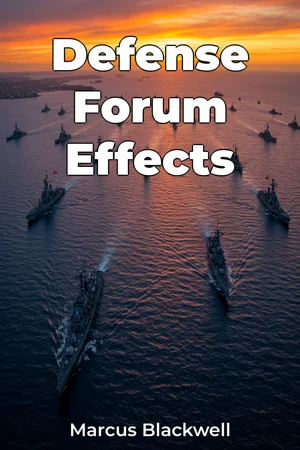
In an era defined by complex global security challenges, are international defense forums merely symbolic gatherings, or do they represent crucial mechanisms for fostering genuine cooperation and enhancing global security? "Defense Forum Effects" delves into the tangible impacts of security forums on international partnerships, military cooperation, and global crisis response, providing a comprehensive analysis supported by rigorous examination of defense policy documentation and real-world case studies. This book addresses three key themes. First, it investigates how defense forums serve as platforms for strengthening alliances and forging new partnerships between nations. These forums provide opportunities for high-level dialogues, information sharing, and the development of common strategies to address mutual security threats. Second, the book examines the role of these forums in enhancing military cooperation through joint exercises, training programs, and the standardization of equipment and procedures. This increased interoperability is essential for effective responses to transnational security challenges. Third, "Defense Forum Effects" analyzes how security forums contribute to improved global crisis response by facilitating pre-emptive planning, coordination of resources, and rapid deployment of forces in times of emergency. The significance of these topics lies in their direct impact on global stability and the ability of nations to collectively address evolving security threats. The analysis is contextualized by a historical overview of the evolution of defense forums, from post-World War II initiatives to contemporary multilateral arrangements. An understanding of international relations theory, particularly concepts of collective security and institutionalism, is helpful to fully appreciate the book’s arguments. The central argument of "Defense Forum Effects" is that international security forums, when effectively structured and utilized, are not simply talking shops but vital instruments for building trust, harmonizing defense policies, and enhancing collective security capabilities on a global scale. This argument is important because it challenges criticisms that often dismiss these forums as ineffective or merely symbolic, offering instead a nuanced assessment of their real-world impact. The book is structured into three main parts. Part I introduces the concept of defense forums, outlining their various forms, objectives, and organizational structures. Part II examines the effects of these forums on international partnerships and military cooperation, presenting case studies of successful and less successful collaborations. Part III analyzes the contribution of defense forums to global crisis response, focusing on specific instances where these forums played a crucial role in coordinating international efforts. The book culminates with a discussion of the policy implications of the findings and recommendations for improving the effectiveness of defense forums in the future. The evidence presented in the book is drawn from a variety of sources, including official defense policy documents, meeting minutes, participant interviews, and quantitative data on military expenditures and joint exercises. A unique aspect of the research is its comparative analysis of different types of defense forums, ranging from regional security arrangements to global initiatives. "Defense Forum Effects" connects to other fields of study, including political science, sociology, and economics. The book relates to political science through its analysis of power dynamics and international cooperation. It connects to sociology by examining the social construction of trust and shared values within defense communities. Finally, it relates to economics through its assessment of the costs and benefits of defense spending and international collaborations. This book offers a unique perspective by moving beyond theoretical discussions of international security to provide an empirical analysis of the actual impacts of defense forums. It avoids abstract generalizations, focusing instead on concrete examples and measurable outcomes. Written in an accessible yet academically rigorous style, "Defense Forum Effects" is aimed at policymakers, military professionals, scholars, and anyone interested in international security and defense policy. The book is valuable to this audience because it provides a clear and evidence-based assessment of the role of defense forums in shaping global security. As a work in the genres of Military History, Politics, and History, "Defense Forum Effects" conforms to the expectations of meticulous research, objective analysis, and clear presentation of evidence. The book's scope is limited to the analysis of formal defense forums and their direct impacts on international partnerships, military cooperation, and crisis response. It does not delve into the broader issues of global governance or the root causes of conflict. However, the implications of the findings extend beyond the specific context of defense forums to inform broader debates about international cooperation and security policy. The information presented in "Defense Forum Effects" can be applied practically by policymakers seeking to improve the effectiveness of defense forums, military professionals involved in international collaborations, and scholars interested in conducting further research on this topic. While the book acknowledges that debates exist regarding the value and effectiveness of international institutions, its aim is to provide an objective assessment of the specific contributions of defense forums to global security.
In an era defined by complex global security challenges, are international defense forums merely symbolic gatherings, or do they represent crucial mechanisms for fostering genuine cooperation and enhancing global security? "Defense Forum Effects" delves into the tangible impacts of security forums on international partnerships, military cooperation, and global crisis response, providing a comprehensive analysis supported by rigorous examination of defense policy documentation and real-world case studies. This book addresses three key themes. First, it investigates how defense forums serve as platforms for strengthening alliances and forging new partnerships between nations. These forums provide opportunities for high-level dialogues, information sharing, and the development of common strategies to address mutual security threats. Second, the book examines the role of these forums in enhancing military cooperation through joint exercises, training programs, and the standardization of equipment and procedures. This increased interoperability is essential for effective responses to transnational security challenges. Third, "Defense Forum Effects" analyzes how security forums contribute to improved global crisis response by facilitating pre-emptive planning, coordination of resources, and rapid deployment of forces in times of emergency. The significance of these topics lies in their direct impact on global stability and the ability of nations to collectively address evolving security threats. The analysis is contextualized by a historical overview of the evolution of defense forums, from post-World War II initiatives to contemporary multilateral arrangements. An understanding of international relations theory, particularly concepts of collective security and institutionalism, is helpful to fully appreciate the book’s arguments. The central argument of "Defense Forum Effects" is that international security forums, when effectively structured and utilized, are not simply talking shops but vital instruments for building trust, harmonizing defense policies, and enhancing collective security capabilities on a global scale. This argument is important because it challenges criticisms that often dismiss these forums as ineffective or merely symbolic, offering instead a nuanced assessment of their real-world impact. The book is structured into three main parts. Part I introduces the concept of defense forums, outlining their various forms, objectives, and organizational structures. Part II examines the effects of these forums on international partnerships and military cooperation, presenting case studies of successful and less successful collaborations. Part III analyzes the contribution of defense forums to global crisis response, focusing on specific instances where these forums played a crucial role in coordinating international efforts. The book culminates with a discussion of the policy implications of the findings and recommendations for improving the effectiveness of defense forums in the future. The evidence presented in the book is drawn from a variety of sources, including official defense policy documents, meeting minutes, participant interviews, and quantitative data on military expenditures and joint exercises. A unique aspect of the research is its comparative analysis of different types of defense forums, ranging from regional security arrangements to global initiatives. "Defense Forum Effects" connects to other fields of study, including political science, sociology, and economics. The book relates to political science through its analysis of power dynamics and international cooperation. It connects to sociology by examining the social construction of trust and shared values within defense communities. Finally, it relates to economics through its assessment of the costs and benefits of defense spending and international collaborations. This book offers a unique perspective by moving beyond theoretical discussions of international security to provide an empirical analysis of the actual impacts of defense forums. It avoids abstract generalizations, focusing instead on concrete examples and measurable outcomes. Written in an accessible yet academically rigorous style, "Defense Forum Effects" is aimed at policymakers, military professionals, scholars, and anyone interested in international security and defense policy. The book is valuable to this audience because it provides a clear and evidence-based assessment of the role of defense forums in shaping global security. As a work in the genres of Military History, Politics, and History, "Defense Forum Effects" conforms to the expectations of meticulous research, objective analysis, and clear presentation of evidence. The book's scope is limited to the analysis of formal defense forums and their direct impacts on international partnerships, military cooperation, and crisis response. It does not delve into the broader issues of global governance or the root causes of conflict. However, the implications of the findings extend beyond the specific context of defense forums to inform broader debates about international cooperation and security policy. The information presented in "Defense Forum Effects" can be applied practically by policymakers seeking to improve the effectiveness of defense forums, military professionals involved in international collaborations, and scholars interested in conducting further research on this topic. While the book acknowledges that debates exist regarding the value and effectiveness of international institutions, its aim is to provide an objective assessment of the specific contributions of defense forums to global security.
"Defense Forum Effects" examines the role of international security forums in fostering collaboration and enhancing global security in an era marked by complex security challenges. It moves beyond the notion of these forums as mere symbolic gatherings, offering a detailed analysis of their tangible impacts on international partnerships, military cooperation, and global crisis response. The book highlights how these forums facilitate high-level dialogues and the development of common strategies, noting that increased interoperability through joint exercises helps nations respond to transnational security challenges. The text uses defense policy documentation and real-world case studies to support its arguments. The book progresses by first introducing the concept of defense forums, then examining their effects on international partnerships and military cooperation, and finally analyzing their contribution to global crisis response. It argues that effectively structured security forums are vital instruments for building trust, harmonizing defense policies, and enhancing collective security capabilities on a global scale. By providing an empirical analysis rather than abstract generalizations, "Defense Forum Effects" offers a unique perspective valuable to policymakers, military professionals, and scholars interested in defense policy, military history, and politics.
Book Details
ISBN
9788233968847
Publisher
Publifye AS
Your Licenses
You don't own any licenses for this book
Purchase a license below to unlock this book and download the EPUB.
Purchase License
Select a tier to unlock this book
Need bulk licensing?
Contact us for enterprise agreements.