
About This Book
Have you ever considered the profound and surprisingly positive role winter plays in shaping our environment? This book, "Winter Environmental Effects," explores the often-overlooked benefits that winter conditions provide, challenging the common perception of winter as merely a season of dormancy and hardship. We delve into the intricate ways winter influences pest control, soil health, and water resource management, ultimately revealing its crucial contributions to ecological balance and sustainability. These topics are significant because understanding winter's multifaceted effects is essential for informed environmental stewardship and effective resource planning in a changing climate. We begin by establishing a foundational understanding of winter's geological and historical context, examining how long-term climate patterns have shaped landscapes and ecosystems. A basic understanding of ecological principles and hydrological cycles will be beneficial. We move into our central argument: winter is not simply a period of environmental stagnation but an active and integral force that drives crucial ecological processes. A deep understanding of winter’s environmental impact is necessary for improved agricultural practices, water conservation strategies, and effective management of pest populations. The book's structure unfolds systematically. First, we introduce core concepts related to winter meteorology, soil science, and pest ecology. Then, we examine the role of freezing temperatures in naturally regulating pest populations, analyzing specific examples of insect species and their susceptibility to cold weather. This discussion is supported by agricultural research and case studies that highlight the economic and environmental benefits of natural pest control. Next, we investigate winter's impact on soil health, focusing on the processes of freeze-thaw weathering, nutrient cycling, and soil structure. Geological research and data from experimental field studies illustrate how these processes enhance soil fertility and water infiltration. Finally, we examine winter's critical role in water resource management, detailing how snowpack accumulation and meltwater runoff contribute to groundwater recharge, streamflow regulation, and water availability during drier seasons. Our analysis relies on a diverse range of evidence, incorporating meteorological data, geological surveys, agricultural experiments, and hydrological models. We draw upon unique data sources, including long-term climate records, soil sample analyses, and water quality monitoring data. The book’s interdisciplinary nature enhances its argument. Firstly, it connects to climatology by exploring the effects of changing winter weather patterns. Secondly, it ties into agricultural science by detailing the impacts on crop yields and pest management strategies. Thirdly, it relates to hydrology through the study of water storage and its impact on regional water tables. A unique aspect of this book is its comprehensive, integrated perspective, viewing winter not as an isolated phenomenon but as a complex interplay of geological, biological, and hydrological processes. This vantage point provides new insights into the ecological functions of winter and highlights its importance in maintaining environmental equilibrium. The tone is fact-based and analytical, aiming to provide a clear and accessible synthesis of scientific knowledge. While rigorous in its approach, the writing style is designed to be engaging and informative, catering to a broad audience. The target audience includes environmental scientists, geographers, agricultural professionals, water resource managers, policymakers, and anyone interested in understanding the intricate workings of our planet. Understanding the content of "Winter Environmental Effects" will provide professionals with applicable knowledge to improve their work. As a work in ‘Earth Sciences Geography, Environment,’ this book adheres to the conventions of scientific accuracy, data-driven analysis, and objective interpretation. It aims to provide a significant contribution to the field by offering a novel synthesis of existing research and highlighting the often-overlooked importance of winter in environmental systems. The scope of the book encompasses a wide range of winter environmental effects, focusing primarily on regions that experience significant seasonal temperature variations. However, it is limited in its treatment of specific regional variations and microclimates. The information presented in the book can be practically applied to improve agricultural practices, enhance water conservation strategies, and develop more effective pest management approaches. It provides valuable insights for informed decision-making in the face of climate change and increasing environmental pressures. Finally, while this book emphasizes the positive environmental effects of winter, it acknowledges ongoing debates surrounding the impacts of climate change on winter conditions, including reduced snowpack, altered freeze-thaw cycles, and shifts in pest distributions. It seeks to provide a nuanced perspective that recognizes both the benefits and challenges associated with winter in a changing world.
Have you ever considered the profound and surprisingly positive role winter plays in shaping our environment? This book, "Winter Environmental Effects," explores the often-overlooked benefits that winter conditions provide, challenging the common perception of winter as merely a season of dormancy and hardship. We delve into the intricate ways winter influences pest control, soil health, and water resource management, ultimately revealing its crucial contributions to ecological balance and sustainability. These topics are significant because understanding winter's multifaceted effects is essential for informed environmental stewardship and effective resource planning in a changing climate. We begin by establishing a foundational understanding of winter's geological and historical context, examining how long-term climate patterns have shaped landscapes and ecosystems. A basic understanding of ecological principles and hydrological cycles will be beneficial. We move into our central argument: winter is not simply a period of environmental stagnation but an active and integral force that drives crucial ecological processes. A deep understanding of winter’s environmental impact is necessary for improved agricultural practices, water conservation strategies, and effective management of pest populations. The book's structure unfolds systematically. First, we introduce core concepts related to winter meteorology, soil science, and pest ecology. Then, we examine the role of freezing temperatures in naturally regulating pest populations, analyzing specific examples of insect species and their susceptibility to cold weather. This discussion is supported by agricultural research and case studies that highlight the economic and environmental benefits of natural pest control. Next, we investigate winter's impact on soil health, focusing on the processes of freeze-thaw weathering, nutrient cycling, and soil structure. Geological research and data from experimental field studies illustrate how these processes enhance soil fertility and water infiltration. Finally, we examine winter's critical role in water resource management, detailing how snowpack accumulation and meltwater runoff contribute to groundwater recharge, streamflow regulation, and water availability during drier seasons. Our analysis relies on a diverse range of evidence, incorporating meteorological data, geological surveys, agricultural experiments, and hydrological models. We draw upon unique data sources, including long-term climate records, soil sample analyses, and water quality monitoring data. The book’s interdisciplinary nature enhances its argument. Firstly, it connects to climatology by exploring the effects of changing winter weather patterns. Secondly, it ties into agricultural science by detailing the impacts on crop yields and pest management strategies. Thirdly, it relates to hydrology through the study of water storage and its impact on regional water tables. A unique aspect of this book is its comprehensive, integrated perspective, viewing winter not as an isolated phenomenon but as a complex interplay of geological, biological, and hydrological processes. This vantage point provides new insights into the ecological functions of winter and highlights its importance in maintaining environmental equilibrium. The tone is fact-based and analytical, aiming to provide a clear and accessible synthesis of scientific knowledge. While rigorous in its approach, the writing style is designed to be engaging and informative, catering to a broad audience. The target audience includes environmental scientists, geographers, agricultural professionals, water resource managers, policymakers, and anyone interested in understanding the intricate workings of our planet. Understanding the content of "Winter Environmental Effects" will provide professionals with applicable knowledge to improve their work. As a work in ‘Earth Sciences Geography, Environment,’ this book adheres to the conventions of scientific accuracy, data-driven analysis, and objective interpretation. It aims to provide a significant contribution to the field by offering a novel synthesis of existing research and highlighting the often-overlooked importance of winter in environmental systems. The scope of the book encompasses a wide range of winter environmental effects, focusing primarily on regions that experience significant seasonal temperature variations. However, it is limited in its treatment of specific regional variations and microclimates. The information presented in the book can be practically applied to improve agricultural practices, enhance water conservation strategies, and develop more effective pest management approaches. It provides valuable insights for informed decision-making in the face of climate change and increasing environmental pressures. Finally, while this book emphasizes the positive environmental effects of winter, it acknowledges ongoing debates surrounding the impacts of climate change on winter conditions, including reduced snowpack, altered freeze-thaw cycles, and shifts in pest distributions. It seeks to provide a nuanced perspective that recognizes both the benefits and challenges associated with winter in a changing world.
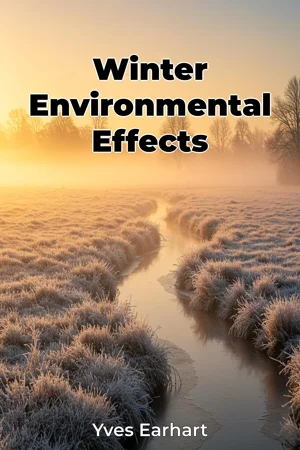
"Winter Environmental Effects" explores the unsung benefits of winter, challenging the common view of it as a dormant season. The book highlights winter's crucial role in pest control, where freezing temperatures naturally regulate pest populations, reducing the need for chemical interventions. It also examines how freeze-thaw cycles enhance soil health through weathering and nutrient cycling, contributing to soil fertility. The book systematically progresses from basic concepts of winter meteorology and ecology to detailed analyses of winter's impact on pest populations, soil health, and water resource management. It uses meteorological data, geological surveys, and agricultural experiments to support its arguments, offering practical insights for improved agricultural practices and water conservation strategies. This comprehensive approach provides a unique perspective on winter as a vital, active force in maintaining ecological balance and sustainability.
Book Details
ISBN
9788233968717
Publisher
Publifye AS
Your Licenses
You don't own any licenses for this book
Purchase a license below to unlock this book and download the EPUB.
Purchase License
Select a tier to unlock this book
Need bulk licensing?
Contact us for enterprise agreements.