
About This Book
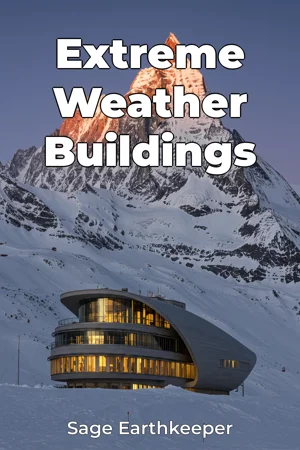
Can architecture truly defy the elements? *Extreme Weather Buildings* delves into the specialized construction methods required to create resilient and sustainable structures in the world’s most challenging climate zones. This book examines the intersection of meteorological data, architectural adaptation, and innovative engineering, offering a comprehensive guide to building for a future increasingly impacted by extreme weather events. Addressing the crucial need for resilient infrastructure, this study presents strategies for architects, engineers, and policymakers to combat the destructive forces of nature. This book focuses on three core areas: understanding extreme weather patterns, adapting architectural designs, and implementing advanced construction techniques. We emphasize the profound impact of climate change, underscoring the vulnerability of conventional buildings to increasingly intense and frequent weather phenomena. By exploring these topics, the book aims to equip readers with the knowledge necessary to design and construct buildings that not only withstand extreme conditions but also minimize their environmental footprint. Building upon established principles of climatology and architectural history, we address the escalating demand for infrastructure resistant to extreme weather. The book acknowledges that traditional construction methods often fall short in regions prone to hurricanes, blizzards, droughts, or extreme heat, necessitating a paradigm shift towards more resilient and adaptable designs. We delve into the critical need for innovative techniques, referencing landmark buildings and theoretical frameworks to emphasize the urgency and complexity of the subject. The central argument of *Extreme Weather Buildings* asserts that architectural design must proactively integrate real-time meteorological data and adopt flexible construction strategies to ensure the long-term safety, functionality, and sustainability of buildings in extreme climates. This argument is crucial because it challenges the conventional reactive approach to building design, advocating for a proactive, data-driven methodology that anticipates and mitigates the impacts of severe weather. The book begins by introducing the fundamental concepts of extreme weather climatology and their influence on architectural design. We proceed with examining design strategies tailored for specific climate challenges, analyzing building forms, material selection, and energy-efficient systems appropriate for each region. The discussion then culminates in a practical overview of advanced construction techniques, including modular construction, 3D printing, and the use of sustainable materials. Finally, we explore the implications of these methods for urban planning and policy-making, demonstrating how they can contribute to creating climate-resilient communities. The evidence presented in this book is drawn from diverse sources, including meteorological datasets, case studies of successful and unsuccessful building adaptations, and experimental data on material performance under extreme conditions. We analyze wind tunnel tests, thermal simulations, and structural analyses to support our claims. Furthermore, we utilize unique data from on-site monitoring of buildings in extreme environments, providing real-world validation of our recommendations. This study integrates knowledge from earth sciences and geography to understand weather patterns, architectural design to create practical solutions, and materials science to evaluate building component performance. It connects to fields like urban planning and policy-making, demonstrating how resilient building design can contribute to broader community resilience and adaptation strategies. *Extreme Weather Buildings* stands out by presenting a cohesive framework that combines meteorological data with architectural design principles, providing a practical guide for creating resilient and sustainable structures. It emphasizes the necessity of predictive modeling and proactive adaptation, offering a forward-thinking approach to building in an era of increasing climate uncertainty. The tone is informative and analytical, providing a balanced perspective on the challenges and opportunities of building in extreme climates. The writing style is accessible while maintaining academic rigor, ensuring that the concepts are understandable to a wide audience. The intended readership includes architects, engineers, urban planners, policymakers, and anyone interested in sustainable building practices. This book would be valuable to them because it offers practical guidance and insights into creating resilient and sustainable buildings in the face of climate change. Adhering to architectural non-fiction conventions, this book provides technical drawings, photographs of case studies, and detailed analyses of building performance. It offers a systematic exploration of design principles, construction techniques, and material considerations. The scope of *Extreme Weather Buildings* encompasses a wide range of climate zones, from arctic regions to arid deserts. However, it focuses primarily on structural and environmental performance, rather than aesthetic considerations. The book provides a general overview of retrofitting existing structures, but the primary focus lies in the design and construction of new buildings. The information presented in this book can be applied practically by readers through the design of climate-resilient buildings, the selection of appropriate materials and construction techniques, and the development of sustainable building practices. It can also inform policy decisions related to building codes, zoning regulations, and climate adaptation strategies. This book also acknowledges that the field is not without ongoing debates, such as the balance between cost-effectiveness and long-term resilience, and the role of technology versus traditional building practices. By presenting different perspectives and viewpoints, *Extreme Weather Buildings* serves as a comprehensive guide for building in an era of increasing climate uncertainty.
Can architecture truly defy the elements? *Extreme Weather Buildings* delves into the specialized construction methods required to create resilient and sustainable structures in the world’s most challenging climate zones. This book examines the intersection of meteorological data, architectural adaptation, and innovative engineering, offering a comprehensive guide to building for a future increasingly impacted by extreme weather events. Addressing the crucial need for resilient infrastructure, this study presents strategies for architects, engineers, and policymakers to combat the destructive forces of nature. This book focuses on three core areas: understanding extreme weather patterns, adapting architectural designs, and implementing advanced construction techniques. We emphasize the profound impact of climate change, underscoring the vulnerability of conventional buildings to increasingly intense and frequent weather phenomena. By exploring these topics, the book aims to equip readers with the knowledge necessary to design and construct buildings that not only withstand extreme conditions but also minimize their environmental footprint. Building upon established principles of climatology and architectural history, we address the escalating demand for infrastructure resistant to extreme weather. The book acknowledges that traditional construction methods often fall short in regions prone to hurricanes, blizzards, droughts, or extreme heat, necessitating a paradigm shift towards more resilient and adaptable designs. We delve into the critical need for innovative techniques, referencing landmark buildings and theoretical frameworks to emphasize the urgency and complexity of the subject. The central argument of *Extreme Weather Buildings* asserts that architectural design must proactively integrate real-time meteorological data and adopt flexible construction strategies to ensure the long-term safety, functionality, and sustainability of buildings in extreme climates. This argument is crucial because it challenges the conventional reactive approach to building design, advocating for a proactive, data-driven methodology that anticipates and mitigates the impacts of severe weather. The book begins by introducing the fundamental concepts of extreme weather climatology and their influence on architectural design. We proceed with examining design strategies tailored for specific climate challenges, analyzing building forms, material selection, and energy-efficient systems appropriate for each region. The discussion then culminates in a practical overview of advanced construction techniques, including modular construction, 3D printing, and the use of sustainable materials. Finally, we explore the implications of these methods for urban planning and policy-making, demonstrating how they can contribute to creating climate-resilient communities. The evidence presented in this book is drawn from diverse sources, including meteorological datasets, case studies of successful and unsuccessful building adaptations, and experimental data on material performance under extreme conditions. We analyze wind tunnel tests, thermal simulations, and structural analyses to support our claims. Furthermore, we utilize unique data from on-site monitoring of buildings in extreme environments, providing real-world validation of our recommendations. This study integrates knowledge from earth sciences and geography to understand weather patterns, architectural design to create practical solutions, and materials science to evaluate building component performance. It connects to fields like urban planning and policy-making, demonstrating how resilient building design can contribute to broader community resilience and adaptation strategies. *Extreme Weather Buildings* stands out by presenting a cohesive framework that combines meteorological data with architectural design principles, providing a practical guide for creating resilient and sustainable structures. It emphasizes the necessity of predictive modeling and proactive adaptation, offering a forward-thinking approach to building in an era of increasing climate uncertainty. The tone is informative and analytical, providing a balanced perspective on the challenges and opportunities of building in extreme climates. The writing style is accessible while maintaining academic rigor, ensuring that the concepts are understandable to a wide audience. The intended readership includes architects, engineers, urban planners, policymakers, and anyone interested in sustainable building practices. This book would be valuable to them because it offers practical guidance and insights into creating resilient and sustainable buildings in the face of climate change. Adhering to architectural non-fiction conventions, this book provides technical drawings, photographs of case studies, and detailed analyses of building performance. It offers a systematic exploration of design principles, construction techniques, and material considerations. The scope of *Extreme Weather Buildings* encompasses a wide range of climate zones, from arctic regions to arid deserts. However, it focuses primarily on structural and environmental performance, rather than aesthetic considerations. The book provides a general overview of retrofitting existing structures, but the primary focus lies in the design and construction of new buildings. The information presented in this book can be applied practically by readers through the design of climate-resilient buildings, the selection of appropriate materials and construction techniques, and the development of sustainable building practices. It can also inform policy decisions related to building codes, zoning regulations, and climate adaptation strategies. This book also acknowledges that the field is not without ongoing debates, such as the balance between cost-effectiveness and long-term resilience, and the role of technology versus traditional building practices. By presenting different perspectives and viewpoints, *Extreme Weather Buildings* serves as a comprehensive guide for building in an era of increasing climate uncertainty.
"Extreme Weather Buildings" tackles the critical challenge of designing resilient and sustainable architecture in an era defined by increasingly severe weather. It addresses how buildings can be adapted to withstand extreme conditions, emphasizing the integration of meteorological data and advanced construction techniques. The book reveals that conventional building methods often fall short in regions prone to natural disasters, necessitating a shift towards innovative, climate-resilient designs. For instance, the book explores how buildings can be designed to withstand extreme heat, hurricanes, blizzards, and droughts. The book progresses from an introduction of extreme weather climatology to specific design strategies tailored for different climate challenges. It examines building forms, material selection, and energy-efficient systems, concluding with a practical overview of advanced construction methods like modular construction and 3D printing. By bridging the gap between earth sciences, geography, and architectural engineering, this book provides a framework for creating sustainable, climate-resilient communities and informs policy-making.
Book Details
ISBN
9788233968649
Publisher
Publifye AS
Your Licenses
You don't own any licenses for this book
Purchase a license below to unlock this book and download the EPUB.
Purchase License
Select a tier to unlock this book
Need bulk licensing?
Contact us for enterprise agreements.