
About This Book
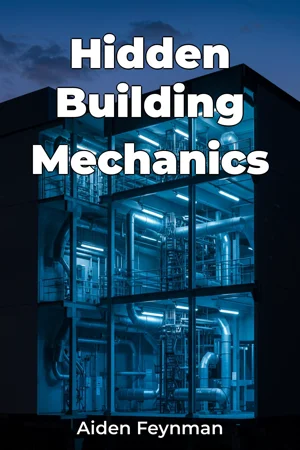
Have you ever considered the intricate dance of forces and systems hidden within the walls of the buildings we inhabit daily? "Hidden Building Mechanics" unveils the often-unseen structural elements and mechanical systems that underpin modern architectural marvels. This book explores the essential yet frequently overlooked engineering principles that ensure a building's stability, functionality, and sustainability, drawing upon established concepts taught at leading architectural institutes worldwide. The book delves into three core areas: advanced structural support systems, innovative climate control mechanisms, and efficient energy distribution networks. Understanding these areas is crucial for architects, engineers, and anyone interested in the built environment, as they directly impact a building's longevity, environmental impact, and the well-being of its occupants. Neglecting these systems can lead to structural failures, unsustainable energy consumption, and compromised indoor environments. Historically, architectural focus often prioritized aesthetics over engineering efficiency. However, increasing awareness of environmental concerns and the need for resilient infrastructure has shifted the paradigm, demanding a more holistic approach. While a basic understanding of physics and mathematics is helpful, the book is designed to be accessible to a broad audience, providing clear explanations of complex concepts. The central argument of "Hidden Building Mechanics" is that a comprehensive understanding of underlying mechanical and structural systems is not merely supplemental but fundamental to creating truly successful and sustainable architectural designs. By demystifying these hidden elements, the book empowers readers to make informed decisions that optimize building performance and minimize environmental impact. The book begins by introducing fundamental principles of structural engineering, thermodynamics, and fluid mechanics as they apply to building design. It then progresses through three major sections. First, it examines advanced structural systems like tension structures, geodesic domes, and bio-inspired designs, analyzing their load-bearing capabilities and adaptability. Second, it explores innovative climate control mechanisms, including passive ventilation strategies, radiant heating and cooling systems, and geothermal energy applications. Third, it investigates efficient energy distribution networks, such as smart grids, renewable energy integration, and waste heat recovery systems. The book culminates with a discussion of practical applications, including case studies of high-performance buildings and guidelines for integrating these systems into new construction and retrofitting existing structures. The arguments presented are supported by a wealth of evidence, including case studies of exemplary buildings, detailed engineering diagrams, performance data from real-world applications, and comparative analyses of different system designs. References to industry standards and building codes further ground the discussion in practical realities. Data sources include technical reports from engineering firms, research publications from leading universities, and publicly available datasets on building energy performance. The book bridges the gap between architecture and mechanical engineering, demonstrating how these disciplines are inextricably linked in modern building design. Connections are also drawn to environmental science through the discussion of sustainable building practices and energy efficiency, as well as to urban planning through considerations of infrastructure integration and community resilience. These interdisciplinary connections enrich the book's argument, highlighting the multifaceted nature of building design in the 21st century. "Hidden Building Mechanics" offers a unique perspective by focusing on the often-overlooked engineering aspects of architecture. It moves beyond purely aesthetic considerations to explore the functional and environmental performance of buildings, providing a comprehensive understanding of the systems that make them work. The tone is informative and analytical, presenting complex information in a clear and accessible manner. The writing style balances technical precision with engaging explanations, making the material understandable for a broad audience. The target audience includes architecture students, practicing architects, structural engineers, mechanical engineers, building contractors, and anyone interested in sustainable building design. The book provides valuable insights for professionals seeking to enhance their knowledge of building systems and for students preparing for careers in the built environment. As a work of non-fiction, "Hidden Building Mechanics" adheres to principles of accuracy, objectivity, and evidence-based reasoning. It presents information in a clear and unbiased manner, citing sources and providing supporting data for all claims. The scope of the book is limited to the structural and mechanical systems of buildings, with a focus on modern technologies and sustainable practices. It does not delve into interior design, landscape architecture, or other aspects of the built environment. The information in "Hidden Building Mechanics" can be applied practically by architects and engineers to design more efficient, sustainable, and resilient buildings. It also provides valuable knowledge for building owners and operators seeking to optimize building performance and reduce energy consumption. While the benefits of integrating advanced mechanical systems into building designs are widely recognized, debates persist regarding the cost-effectiveness and practicality of certain technologies. The book addresses these controversies by presenting a balanced discussion of the advantages and disadvantages of different approaches, encouraging readers to critically evaluate the evidence and make informed decisions.
Have you ever considered the intricate dance of forces and systems hidden within the walls of the buildings we inhabit daily? "Hidden Building Mechanics" unveils the often-unseen structural elements and mechanical systems that underpin modern architectural marvels. This book explores the essential yet frequently overlooked engineering principles that ensure a building's stability, functionality, and sustainability, drawing upon established concepts taught at leading architectural institutes worldwide. The book delves into three core areas: advanced structural support systems, innovative climate control mechanisms, and efficient energy distribution networks. Understanding these areas is crucial for architects, engineers, and anyone interested in the built environment, as they directly impact a building's longevity, environmental impact, and the well-being of its occupants. Neglecting these systems can lead to structural failures, unsustainable energy consumption, and compromised indoor environments. Historically, architectural focus often prioritized aesthetics over engineering efficiency. However, increasing awareness of environmental concerns and the need for resilient infrastructure has shifted the paradigm, demanding a more holistic approach. While a basic understanding of physics and mathematics is helpful, the book is designed to be accessible to a broad audience, providing clear explanations of complex concepts. The central argument of "Hidden Building Mechanics" is that a comprehensive understanding of underlying mechanical and structural systems is not merely supplemental but fundamental to creating truly successful and sustainable architectural designs. By demystifying these hidden elements, the book empowers readers to make informed decisions that optimize building performance and minimize environmental impact. The book begins by introducing fundamental principles of structural engineering, thermodynamics, and fluid mechanics as they apply to building design. It then progresses through three major sections. First, it examines advanced structural systems like tension structures, geodesic domes, and bio-inspired designs, analyzing their load-bearing capabilities and adaptability. Second, it explores innovative climate control mechanisms, including passive ventilation strategies, radiant heating and cooling systems, and geothermal energy applications. Third, it investigates efficient energy distribution networks, such as smart grids, renewable energy integration, and waste heat recovery systems. The book culminates with a discussion of practical applications, including case studies of high-performance buildings and guidelines for integrating these systems into new construction and retrofitting existing structures. The arguments presented are supported by a wealth of evidence, including case studies of exemplary buildings, detailed engineering diagrams, performance data from real-world applications, and comparative analyses of different system designs. References to industry standards and building codes further ground the discussion in practical realities. Data sources include technical reports from engineering firms, research publications from leading universities, and publicly available datasets on building energy performance. The book bridges the gap between architecture and mechanical engineering, demonstrating how these disciplines are inextricably linked in modern building design. Connections are also drawn to environmental science through the discussion of sustainable building practices and energy efficiency, as well as to urban planning through considerations of infrastructure integration and community resilience. These interdisciplinary connections enrich the book's argument, highlighting the multifaceted nature of building design in the 21st century. "Hidden Building Mechanics" offers a unique perspective by focusing on the often-overlooked engineering aspects of architecture. It moves beyond purely aesthetic considerations to explore the functional and environmental performance of buildings, providing a comprehensive understanding of the systems that make them work. The tone is informative and analytical, presenting complex information in a clear and accessible manner. The writing style balances technical precision with engaging explanations, making the material understandable for a broad audience. The target audience includes architecture students, practicing architects, structural engineers, mechanical engineers, building contractors, and anyone interested in sustainable building design. The book provides valuable insights for professionals seeking to enhance their knowledge of building systems and for students preparing for careers in the built environment. As a work of non-fiction, "Hidden Building Mechanics" adheres to principles of accuracy, objectivity, and evidence-based reasoning. It presents information in a clear and unbiased manner, citing sources and providing supporting data for all claims. The scope of the book is limited to the structural and mechanical systems of buildings, with a focus on modern technologies and sustainable practices. It does not delve into interior design, landscape architecture, or other aspects of the built environment. The information in "Hidden Building Mechanics" can be applied practically by architects and engineers to design more efficient, sustainable, and resilient buildings. It also provides valuable knowledge for building owners and operators seeking to optimize building performance and reduce energy consumption. While the benefits of integrating advanced mechanical systems into building designs are widely recognized, debates persist regarding the cost-effectiveness and practicality of certain technologies. The book addresses these controversies by presenting a balanced discussion of the advantages and disadvantages of different approaches, encouraging readers to critically evaluate the evidence and make informed decisions.
"Hidden Building Mechanics" reveals the crucial yet often unseen mechanical systems and structural elements that are integral to modern buildings. It explores the essential engineering principles that ensure a building's stability, functionality, and sustainability. Did you know that a greater understanding of these systems can lead to more sustainable energy consumption and improved indoor environments? The book emphasizes that integrating architectural design with a comprehensive understanding of building mechanics is fundamental for creating successful and environmentally conscious buildings. The book bridges architecture and mechanical engineering, discussing advanced structural support systems, innovative climate control mechanisms, and efficient energy distribution networks. For example, it discusses bio-inspired designs and geothermal energy applications. "Hidden Building Mechanics" starts with fundamental principles and progresses through major sections, examining structural systems, climate control, and energy distribution. It concludes with practical case studies for new construction and retrofitting.
Book Details
ISBN
9788233968632
Publisher
Publifye AS
Your Licenses
You don't own any licenses for this book
Purchase a license below to unlock this book and download the EPUB.
Purchase License
Select a tier to unlock this book
Need bulk licensing?
Contact us for enterprise agreements.