
About This Book
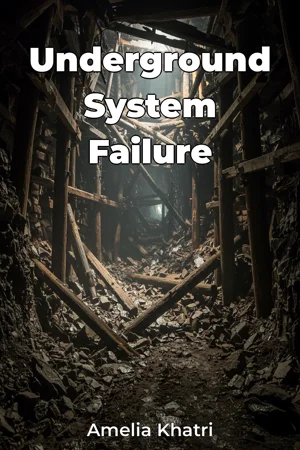
Have you ever considered the fragility of life when confined within the earth; a mine, a bunker, a research facility? "Underground System Failure" delves into the harrowing realities of survival during malfunctions in subterranean facilities. Our exploration centers on two critical domains: the historical analysis of mining disasters combined with present-day assessment of underground structure studies. These seemingly distinct disciplines converge in their shared vulnerability to systemic failure, offering invaluable insights into human resilience and the imperative of robust engineering. This book’s argument proposes that catastrophic failures in underground systems, whether in historical mining operations or in modern subterranean facilities, share common precursors and patterns, and that understanding these patterns is crucial for improving safety and survivability. This argument is vital because, as humanity increasingly utilizes underground spaces for resource extraction, scientific research, and even habitation, the potential consequences of system failures become ever more significant. The historical context is crucial. Throughout the book's initial chapters, we revisit significant mining incidents, beginning with accidents in the late 19th century and progressing to more recent disasters. We analyze factors like inadequate ventilation, structural weaknesses, and the human element, recognizing the repetitive nature of errors and oversights that have led to tragic consequences. We study detailed accounts, reports, and survivor testimonies to extract lessons learned, and we will explain relevant mining techniques and safety regulations of each represented period. The focus then shifts to modern underground structures – research facilities, bunkers, and storage sites. Based on research involving structural engineering protocols, geological surveys, and risk assessment analyses, we examine the designs and safety measures of these facilities, evaluating their ability to withstand natural disasters, technological failures, and human error. This evaluation includes assessing the effectiveness of emergency response protocols. The content unfolds in a structured manner. The opening section introduces the core concepts of system failure, resilience engineering, and risk management. The book then progresses through detailed case studies of both mining disasters and modern facility incidents. These case studies form the core of the book, with each chapter dissecting the event, identifying root causes, and evaluating the effectiveness of response efforts. The penultimate section synthesizes these findings, identifying common vulnerabilities and proposing improvements in design, maintenance, and emergency preparedness. The final section examines real-world implications, offering practical guidelines for facility managers, engineers, and policymakers. Evidence stems from diverse sources, including official investigation reports, academic studies, geological surveys, and first-hand accounts. A unique aspect of our research involves comparing historical mining accident data with contemporary risk assessments for underground facilities, seeking correlations and divergences in failure modes. "Underground System Failure" intersects with several fields, including history, engineering, and sociology. The book connects to the history of technology by examining the evolution of mining techniques and safety practices. It connects to structural and geological engineering by analyzing the physical vulnerabilities of underground environments. And it connects to sociology by exploring the human factors that contribute to both failures and successful survival strategies. We adopt a fact-based, analytical tone, prioritizing clarity and accuracy. While mindful of the human cost of these events, our focus remains on extracting objective lessons and actionable recommendations. The intended audience comprises engineers, historians of technology, policymakers involved in infrastructure and disaster preparedness, and anyone interested in the complexities of human interaction with challenging environments. This book offers a comprehensive framework for understanding, preventing, and mitigating the risks associated with underground system failures. The scope intentionally excludes military applications of underground structures, focusing instead on civilian and scientific contexts. While we acknowledge the potential for sabotage or malicious intent, our primary concern is with unintentional failures resulting from technical flaws, natural hazards, or human error. This book addresses ongoing debates within the engineering community regarding the appropriate balance between cost-effectiveness and safety in underground construction. It contributes to discussions about the need for more rigorous risk assessments, more robust safety regulations, and better preparedness for emergencies in subterranean environments.
Have you ever considered the fragility of life when confined within the earth; a mine, a bunker, a research facility? "Underground System Failure" delves into the harrowing realities of survival during malfunctions in subterranean facilities. Our exploration centers on two critical domains: the historical analysis of mining disasters combined with present-day assessment of underground structure studies. These seemingly distinct disciplines converge in their shared vulnerability to systemic failure, offering invaluable insights into human resilience and the imperative of robust engineering. This book’s argument proposes that catastrophic failures in underground systems, whether in historical mining operations or in modern subterranean facilities, share common precursors and patterns, and that understanding these patterns is crucial for improving safety and survivability. This argument is vital because, as humanity increasingly utilizes underground spaces for resource extraction, scientific research, and even habitation, the potential consequences of system failures become ever more significant. The historical context is crucial. Throughout the book's initial chapters, we revisit significant mining incidents, beginning with accidents in the late 19th century and progressing to more recent disasters. We analyze factors like inadequate ventilation, structural weaknesses, and the human element, recognizing the repetitive nature of errors and oversights that have led to tragic consequences. We study detailed accounts, reports, and survivor testimonies to extract lessons learned, and we will explain relevant mining techniques and safety regulations of each represented period. The focus then shifts to modern underground structures – research facilities, bunkers, and storage sites. Based on research involving structural engineering protocols, geological surveys, and risk assessment analyses, we examine the designs and safety measures of these facilities, evaluating their ability to withstand natural disasters, technological failures, and human error. This evaluation includes assessing the effectiveness of emergency response protocols. The content unfolds in a structured manner. The opening section introduces the core concepts of system failure, resilience engineering, and risk management. The book then progresses through detailed case studies of both mining disasters and modern facility incidents. These case studies form the core of the book, with each chapter dissecting the event, identifying root causes, and evaluating the effectiveness of response efforts. The penultimate section synthesizes these findings, identifying common vulnerabilities and proposing improvements in design, maintenance, and emergency preparedness. The final section examines real-world implications, offering practical guidelines for facility managers, engineers, and policymakers. Evidence stems from diverse sources, including official investigation reports, academic studies, geological surveys, and first-hand accounts. A unique aspect of our research involves comparing historical mining accident data with contemporary risk assessments for underground facilities, seeking correlations and divergences in failure modes. "Underground System Failure" intersects with several fields, including history, engineering, and sociology. The book connects to the history of technology by examining the evolution of mining techniques and safety practices. It connects to structural and geological engineering by analyzing the physical vulnerabilities of underground environments. And it connects to sociology by exploring the human factors that contribute to both failures and successful survival strategies. We adopt a fact-based, analytical tone, prioritizing clarity and accuracy. While mindful of the human cost of these events, our focus remains on extracting objective lessons and actionable recommendations. The intended audience comprises engineers, historians of technology, policymakers involved in infrastructure and disaster preparedness, and anyone interested in the complexities of human interaction with challenging environments. This book offers a comprehensive framework for understanding, preventing, and mitigating the risks associated with underground system failures. The scope intentionally excludes military applications of underground structures, focusing instead on civilian and scientific contexts. While we acknowledge the potential for sabotage or malicious intent, our primary concern is with unintentional failures resulting from technical flaws, natural hazards, or human error. This book addresses ongoing debates within the engineering community regarding the appropriate balance between cost-effectiveness and safety in underground construction. It contributes to discussions about the need for more rigorous risk assessments, more robust safety regulations, and better preparedness for emergencies in subterranean environments.
"Underground System Failure" explores the critical intersection of historical mining disasters and modern subterranean infrastructure, highlighting the shared vulnerabilities of these seemingly disparate systems. By examining both historical events and contemporary structures, the book argues that recognizing recurring patterns in system failures is paramount for enhancing safety and survivability in underground environments. One intriguing aspect explored is that many historical mining disasters, such as those arising from inadequate ventilation, share common precursors with potential failures in modern facilities. The book progresses by initially presenting core concepts of system failure, resilience engineering, and risk management. It then dives into detailed case studies of both mining disasters and modern facility incidents, dissecting each event to identify root causes and evaluate the effectiveness of response efforts. A key insight is the comparison of historical mining accident data with contemporary risk assessments, revealing correlations and divergences in failure modes. The analysis reveals a clear need for a more holistic approach to risk assessment and emergency preparedness. The book makes a unique contribution by bridging the gap between historical analysis and modern engineering practices, offering practical guidelines for facility managers, engineers, and policymakers. By understanding the repetitive nature of errors and oversights, the book provides a framework for preventing and mitigating risks in increasingly vital underground spaces. The approach is fact-based and analytical, prioritizing clarity and accuracy to provide actionable recommendations for improving safety and resilience.
Book Details
ISBN
9788233968571
Publisher
Publifye AS
Your Licenses
You don't own any licenses for this book
Purchase a license below to unlock this book and download the EPUB.
Purchase License
Select a tier to unlock this book
Need bulk licensing?
Contact us for enterprise agreements.