
About This Book
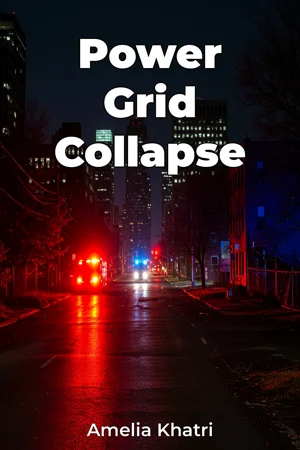
Could our modern cities survive a prolonged power grid failure? *Power Grid Collapse: Investigation of Urban Survival during Extended Electrical Failures, Referencing Historical Blackouts and Infrastructure Studies* addresses this critical question, delving into the multifaceted challenges of urban survival when the electrical infrastructure that underpins modern life ceases to function. This book explores not only the technical aspects of power grid vulnerability but also the historical precedents and potential societal consequences of widespread, long-term blackouts. Two key themes are explored: first, the inherent fragility of complex, interconnected power grids in the face of both natural disasters and malicious attacks; and second, the preparedness, or lack thereof, of urban populations to cope with the cascading effects of a prolonged electrical outage. Understanding these themes is vital because modern society is critically dependent on electricity for almost every facet of daily life, from communication and transportation to water and food distribution. Historically, blackouts have served as stark reminders of this dependency. The book examines historical events such as the Northeast Blackout of 1965, the New York City blackout of 1977, and more recent grid failures across the globe. Through the lens of these events, the book analyzes patterns of societal response, infrastructure failures, and the long-term impacts on affected communities. It also draws upon existing infrastructure studies from governmental and academic sources, examining grid vulnerabilities, redundancy measures, and potential failure points. The central argument of *Power Grid Collapse* is that current urban infrastructure and emergency preparedness strategies are inadequate to mitigate the potential devastation resulting from a long-term, widespread power grid failure. This argument is crucial because it highlights the urgent need for proactive measures, including infrastructure hardening, decentralized energy solutions, and enhanced public awareness, to ensure urban resilience in the face of this growing threat. The book is structured in four parts. First, it introduces the essential concepts of power grid operation, including the principles of electricity generation, transmission, and distribution. Second, it develops an understanding of power grid vulnerabilities and failure modes, including physical attacks, cyberattacks, and natural disasters. Third, it analyzes historical case studies of significant blackouts, drawing lessons from past experiences and identifying common patterns of urban disruption. Finally, the book culminates in a set of practical recommendations for improving urban resilience, ranging from infrastructure improvements and emergency preparedness planning to community-based initiatives. The evidence presented throughout the book includes technical data from power grid operators, analyses of historical blackout events, and research from urban planning and emergency management experts. Unique data sources include after-action reports from past blackouts, as well as simulations and modeling studies of potential grid failure scenarios. This research is interdisciplinary, drawing connections between electrical engineering, history, urban planning, and sociology. For example, the book examines how social factors, such as income inequality and social cohesion, can influence a community's ability to cope with a blackout. It also explores the implications of power grid failure for essential services such as healthcare, law enforcement, and transportation. This book adopts a fact-based, analytical approach to presenting information, avoiding sensationalism and focusing on verifiable evidence and well-reasoned arguments. The target audience includes policymakers, urban planners, emergency management professionals, electrical engineers, and concerned citizens. The book would be valuable to them by providing a comprehensive overview of the risks associated with power grid failure and offering practical guidance on how to improve urban resilience. While *Power Grid Collapse* aims to provide a thorough examination of the topic, its scope is intentionally limited to the context of urban environments. It does not delve into the specific technical details of power grid design or engineering, but rather focuses on the broader societal implications of grid failure. The information in the book can be applied practically by readers to inform policy decisions, improve emergency preparedness plans, and enhance community resilience. The book addresses ongoing debates in the field, such as the relative merits of centralized versus decentralized energy systems, and the appropriate balance between security measures and individual liberties.
Could our modern cities survive a prolonged power grid failure? *Power Grid Collapse: Investigation of Urban Survival during Extended Electrical Failures, Referencing Historical Blackouts and Infrastructure Studies* addresses this critical question, delving into the multifaceted challenges of urban survival when the electrical infrastructure that underpins modern life ceases to function. This book explores not only the technical aspects of power grid vulnerability but also the historical precedents and potential societal consequences of widespread, long-term blackouts. Two key themes are explored: first, the inherent fragility of complex, interconnected power grids in the face of both natural disasters and malicious attacks; and second, the preparedness, or lack thereof, of urban populations to cope with the cascading effects of a prolonged electrical outage. Understanding these themes is vital because modern society is critically dependent on electricity for almost every facet of daily life, from communication and transportation to water and food distribution. Historically, blackouts have served as stark reminders of this dependency. The book examines historical events such as the Northeast Blackout of 1965, the New York City blackout of 1977, and more recent grid failures across the globe. Through the lens of these events, the book analyzes patterns of societal response, infrastructure failures, and the long-term impacts on affected communities. It also draws upon existing infrastructure studies from governmental and academic sources, examining grid vulnerabilities, redundancy measures, and potential failure points. The central argument of *Power Grid Collapse* is that current urban infrastructure and emergency preparedness strategies are inadequate to mitigate the potential devastation resulting from a long-term, widespread power grid failure. This argument is crucial because it highlights the urgent need for proactive measures, including infrastructure hardening, decentralized energy solutions, and enhanced public awareness, to ensure urban resilience in the face of this growing threat. The book is structured in four parts. First, it introduces the essential concepts of power grid operation, including the principles of electricity generation, transmission, and distribution. Second, it develops an understanding of power grid vulnerabilities and failure modes, including physical attacks, cyberattacks, and natural disasters. Third, it analyzes historical case studies of significant blackouts, drawing lessons from past experiences and identifying common patterns of urban disruption. Finally, the book culminates in a set of practical recommendations for improving urban resilience, ranging from infrastructure improvements and emergency preparedness planning to community-based initiatives. The evidence presented throughout the book includes technical data from power grid operators, analyses of historical blackout events, and research from urban planning and emergency management experts. Unique data sources include after-action reports from past blackouts, as well as simulations and modeling studies of potential grid failure scenarios. This research is interdisciplinary, drawing connections between electrical engineering, history, urban planning, and sociology. For example, the book examines how social factors, such as income inequality and social cohesion, can influence a community's ability to cope with a blackout. It also explores the implications of power grid failure for essential services such as healthcare, law enforcement, and transportation. This book adopts a fact-based, analytical approach to presenting information, avoiding sensationalism and focusing on verifiable evidence and well-reasoned arguments. The target audience includes policymakers, urban planners, emergency management professionals, electrical engineers, and concerned citizens. The book would be valuable to them by providing a comprehensive overview of the risks associated with power grid failure and offering practical guidance on how to improve urban resilience. While *Power Grid Collapse* aims to provide a thorough examination of the topic, its scope is intentionally limited to the context of urban environments. It does not delve into the specific technical details of power grid design or engineering, but rather focuses on the broader societal implications of grid failure. The information in the book can be applied practically by readers to inform policy decisions, improve emergency preparedness plans, and enhance community resilience. The book addresses ongoing debates in the field, such as the relative merits of centralized versus decentralized energy systems, and the appropriate balance between security measures and individual liberties.
"Power Grid Collapse" explores the fragility of urban centers when faced with extended power outages, a growing concern given our increasing dependence on electricity. The book investigates the technical vulnerabilities of interconnected power grids, referencing historical blackouts like the Northeast Blackout of 1965 and the New York City blackout of 1977 to analyze societal responses and infrastructure failures. A key insight is that current emergency preparedness might be inadequate for long-term, widespread outages, highlighting the urgent need for proactive measures. The book adopts an analytical approach, drawing on data from power grid operators, historical event analyses, and urban planning research. It progresses from explaining power grid operations to examining vulnerabilities, then analyzes historical blackouts and culminates in recommendations for improving urban resilience. The central argument emphasizes infrastructure hardening and decentralized energy solutions as vital components of urban survival strategies, making this book a valuable resource for policymakers, urban planners, and anyone concerned about the resilience of modern cities.
Book Details
ISBN
9788233968526
Publisher
Publifye AS
Your Licenses
You don't own any licenses for this book
Purchase a license below to unlock this book and download the EPUB.
Purchase License
Select a tier to unlock this book
Need bulk licensing?
Contact us for enterprise agreements.