
About This Book
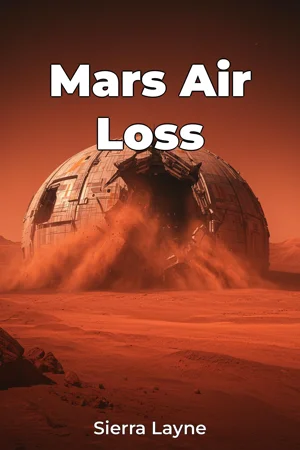
Could humanity survive a catastrophic atmospheric decompression event on Mars? *Mars Air Loss* meticulously examines this critical question, presenting a comprehensive analysis of potential human survival scenarios under such extreme conditions, leveraging NASA research and extensive environmental systems data. This book is not merely a theoretical exercise, but a critical exploration into the vulnerabilities and resilience of future Martian inhabitants. The core of our investigation centers on three main topics: the physiological effects of rapid atmospheric pressure loss on the human body, the performance of current and projected life support systems under emergency conditions, and the modeling of decompression events within Martian habitats. Understanding these interconnected elements is paramount to assessing the true risks of Martian colonization and developing effective mitigation strategies. These aspects are important due to the inevitable risks associated with long-term habitation, despite safeguards. To contextualize these topics, we delve into the history of space exploration mishaps and near-misses where atmospheric integrity was compromised. We examine the lessons learned from previous accidents, such as those encountered in early space missions and simulated decompression tests. Our readers will gain an understanding of the crucial role that environmental control and life support systems (ECLSS) play in maintaining habitable environments in space and on planetary surfaces. The central argument of *Mars Air Loss* posits that while sudden atmospheric decompression on Mars represents a significant threat to human life, survival is possible with robust engineering solutions, comprehensive emergency protocols, and an understanding of human physiological limitations. We strive to prove that a proactive approach to risk assessment and mitigation is crucial to safeguard future Martian colonies. The book unfolds in a structured manner. First, we will introduce the fundamental principles of atmospheric science and human physiology relevant to Martian conditions, outlining the differences between Earth's atmosphere and the manufactured environment within Martian habitats. Second, we develop our argument through detailed chapters exploring the physics of decompression events, the performance of various ECLSS technologies under stress, and the probable injury patterns resulting from rapid pressure changes. We analyze the effectiveness of different emergency procedures, including the deployment of rapid-response shelters and the use of emergency oxygen supplies. Third, we explore the practical implications of our analysis for habitat design, emergency response planning, and astronaut training. Our analysis is firmly grounded in empirical data, drawing from NASA technical reports, peer-reviewed scientific publications, and simulations using state-of-the-art environmental modeling software. We incorporate data from human physiological studies, including those performed in hypobaric chambers, to quantify the effects of rapid decompression on the respiratory and circulatory systems. *Mars Air Loss* benefits from interdisciplinary connections, bridging knowledge from aerospace engineering, environmental science, and human physiology. Its connections to fields like risk management and disaster preparedness can inform strategies for mitigating other types of environmental hazards, both on Earth and in space. Our unique approach involves integrating engineering models of habitat performance with medical analyses of human survival limits, offering a holistic perspective on the challenges of Martian colonization. Throughout *Mars Air Loss*, we adopt a factual and analytical tone, presenting complex information in a clear and accessible manner. Our writing style balances technical accuracy with readability, ensuring that the book is informative to experts while remaining engaging for a broader audience. This book is designed for aerospace engineers, space scientists, astrobiologists, and anyone interested in space exploration, disaster management, and the future of human settlements on Mars. It provides valuable insights for researchers, policymakers, and anyone seeking a comprehensive understanding of the risks and challenges associated with Martian colonization. In scope, *Mars Air Loss* focuses specifically on the challenges of atmospheric decompression. While we acknowledge the importance of other environmental hazards on Mars, such as radiation exposure and dust storms, these topics are addressed only insofar as they interact with the primary focus of atmospheric integrity. The information presented has real-world applications, including informing the design of safer and more resilient Martian habitats, refining emergency protocols for space missions, and developing advanced life support technologies. In the context of ongoing debates, *Mars Air Loss* addresses concerns about the long-term sustainability of life support systems in closed environments, providing a critical perspective on the trade-offs between technological solutions and inherent environmental risks.
Could humanity survive a catastrophic atmospheric decompression event on Mars? *Mars Air Loss* meticulously examines this critical question, presenting a comprehensive analysis of potential human survival scenarios under such extreme conditions, leveraging NASA research and extensive environmental systems data. This book is not merely a theoretical exercise, but a critical exploration into the vulnerabilities and resilience of future Martian inhabitants. The core of our investigation centers on three main topics: the physiological effects of rapid atmospheric pressure loss on the human body, the performance of current and projected life support systems under emergency conditions, and the modeling of decompression events within Martian habitats. Understanding these interconnected elements is paramount to assessing the true risks of Martian colonization and developing effective mitigation strategies. These aspects are important due to the inevitable risks associated with long-term habitation, despite safeguards. To contextualize these topics, we delve into the history of space exploration mishaps and near-misses where atmospheric integrity was compromised. We examine the lessons learned from previous accidents, such as those encountered in early space missions and simulated decompression tests. Our readers will gain an understanding of the crucial role that environmental control and life support systems (ECLSS) play in maintaining habitable environments in space and on planetary surfaces. The central argument of *Mars Air Loss* posits that while sudden atmospheric decompression on Mars represents a significant threat to human life, survival is possible with robust engineering solutions, comprehensive emergency protocols, and an understanding of human physiological limitations. We strive to prove that a proactive approach to risk assessment and mitigation is crucial to safeguard future Martian colonies. The book unfolds in a structured manner. First, we will introduce the fundamental principles of atmospheric science and human physiology relevant to Martian conditions, outlining the differences between Earth's atmosphere and the manufactured environment within Martian habitats. Second, we develop our argument through detailed chapters exploring the physics of decompression events, the performance of various ECLSS technologies under stress, and the probable injury patterns resulting from rapid pressure changes. We analyze the effectiveness of different emergency procedures, including the deployment of rapid-response shelters and the use of emergency oxygen supplies. Third, we explore the practical implications of our analysis for habitat design, emergency response planning, and astronaut training. Our analysis is firmly grounded in empirical data, drawing from NASA technical reports, peer-reviewed scientific publications, and simulations using state-of-the-art environmental modeling software. We incorporate data from human physiological studies, including those performed in hypobaric chambers, to quantify the effects of rapid decompression on the respiratory and circulatory systems. *Mars Air Loss* benefits from interdisciplinary connections, bridging knowledge from aerospace engineering, environmental science, and human physiology. Its connections to fields like risk management and disaster preparedness can inform strategies for mitigating other types of environmental hazards, both on Earth and in space. Our unique approach involves integrating engineering models of habitat performance with medical analyses of human survival limits, offering a holistic perspective on the challenges of Martian colonization. Throughout *Mars Air Loss*, we adopt a factual and analytical tone, presenting complex information in a clear and accessible manner. Our writing style balances technical accuracy with readability, ensuring that the book is informative to experts while remaining engaging for a broader audience. This book is designed for aerospace engineers, space scientists, astrobiologists, and anyone interested in space exploration, disaster management, and the future of human settlements on Mars. It provides valuable insights for researchers, policymakers, and anyone seeking a comprehensive understanding of the risks and challenges associated with Martian colonization. In scope, *Mars Air Loss* focuses specifically on the challenges of atmospheric decompression. While we acknowledge the importance of other environmental hazards on Mars, such as radiation exposure and dust storms, these topics are addressed only insofar as they interact with the primary focus of atmospheric integrity. The information presented has real-world applications, including informing the design of safer and more resilient Martian habitats, refining emergency protocols for space missions, and developing advanced life support technologies. In the context of ongoing debates, *Mars Air Loss* addresses concerns about the long-term sustainability of life support systems in closed environments, providing a critical perspective on the trade-offs between technological solutions and inherent environmental risks.
What would happen to humans during a catastrophic atmospheric decompression event on Mars? *Mars Air Loss* addresses this critical question by investigating human survival scenarios under such extreme conditions, drawing from NASA research. The book examines the physiological effects of rapid atmospheric pressure loss, the performance of life support systems, and the modeling of decompression events within Martian habitats. One intriguing fact explored is how previous space mishaps and simulated decompression tests offer invaluable lessons for future Martian colonization. The book's approach is structured, beginning with the fundamentals of atmospheric science and human physiology relevant to Mars. It progresses through detailed chapters on the physics of decompression, the effectiveness of environmental control and life support systems (ECLSS), and potential injury patterns. The analysis incorporates empirical data, including human physiological studies in hypobaric chambers, to quantify the impact of rapid decompression on the respiratory and circulatory systems. This study demonstrates the importance of robust engineering and emergency protocols for survival, highlighting the need for proactive risk assessment and mitigation. The book uniquely bridges aerospace engineering, environmental science, and human physiology, providing a holistic perspective on the challenges of Martian colonization. Ultimately, it posits that while atmospheric decompression on Mars poses a significant threat, survival is possible with the right preparation and technology.
Book Details
ISBN
9788233968519
Publisher
Publifye AS
Your Licenses
You don't own any licenses for this book
Purchase a license below to unlock this book and download the EPUB.
Purchase License
Select a tier to unlock this book
Need bulk licensing?
Contact us for enterprise agreements.