
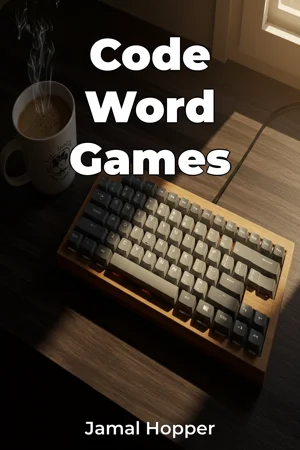
About This Book
Have you ever wondered how to create engaging and intellectually stimulating games using nothing but code and the power of words? "Code Word Games" provides a comprehensive guide to designing and implementing text-based games and word puzzles, delving into the fascinating intersection of programming, artificial intelligence, and language processing. This book explores how to harness the versatility of string manipulation and natural language techniques to craft interactive and entertaining experiences. This book focuses on two core areas: the design principles behind compelling word games and the practical coding skills required to bring these concepts to life. We will explore the importance of well-defined game mechanics, balanced challenge levels, and engaging narratives in creating truly enjoyable text-based experiences. Crucially, we will demonstrate how to translate these design principles into robust and efficient code. These topics are vital because interactive text-based entertainment offers a unique blend of creativity and analytical thinking, applicable not only to game development but also to fields like education, training, and therapeutic interventions. "Code Word Games" will begin with introducing the fundamental concepts of string manipulation, exploring techniques such as pattern matching, substitution, and parsing. We'll then transition to language processing, covering topics like lexical analysis, stemming, and basic sentiment analysis. Understanding these concepts is essential for creating games that can intelligently interpret player input and provide meaningful feedback. No prior experience with AI is required, but a basic understanding of programming concepts such as variables, loops, and conditional statements will be beneficial. The central argument of this book is that text-based games, often perceived as simple or outdated, represent a powerful and accessible medium for exploring complex computational and linguistic concepts. We demonstrate that with careful design and the application of appropriate programming techniques, it's possible to create word games that are both intellectually stimulating and surprisingly sophisticated. This argument is important because it challenges the prevalent notion that advanced graphics and complex simulations are prerequisites for engaging gaming experiences. The book is structured to provide a clear and progressive learning path. The first part introduces fundamental programming concepts and essential string manipulation techniques. The second part delves into game design principles, illustrating how to create compelling narratives, puzzles, and challenges within a text-based environment. The third section integrates AI and language processing techniques to enhance gameplay, enabling features like intelligent hints, adaptive difficulty, and personalized player experiences. Finally, the book culminates with several real-world examples and case studies, demonstrating how the concepts learned can be applied to various applications, from educational games to interactive storytelling platforms. The book includes code examples in a widely used, accessible programming language (like Python), thoroughly commented to illustrate the underlying logic. We will also present design documents, user interface mockups, and gameplay analyses to support our arguments. In addition, we will analyze existing text-based games, dissecting their mechanics and code to identify best practices and common pitfalls. This book draws connections between computer science, linguistics, and game design. It explores how algorithms are used to process natural language, how linguistic principles inform game mechanics, and how game design theories can be applied to create engaging interactive experiences. "Code Word Games" adopts a hands-on, project-based approach. Each chapter guides the reader through the development of a different type of word game or puzzle, providing practical examples and step-by-step instructions. The writing style is clear and concise, aiming to make complex topics accessible to readers with varying levels of programming experience. The target audience includes hobbyist programmers, students learning introductory AI and natural language processing, educators seeking engaging teaching tools, and anyone interested in exploring the creative potential of text-based games. This book will be valuable to them by providing a practical and accessible guide to a unique and rewarding area of software development. As a non-fiction programming guide, the book adheres to the standards of clarity, accuracy, and practical application. It provides ample code samples, design diagrams, and illustrative examples. While the book covers a wide range of word game types and programming techniques, it does not delve into advanced topics such as complex AI algorithms or sophisticated natural language understanding. The focus remains on providing a solid foundation for readers to build upon. The knowledge gained from this book can be directly applied to creating custom word games for personal enjoyment, developing educational software for classrooms, or building interactive training modules for corporate environments. Finally, while the book advocates for the educational and entertainment value of text-based games, it also acknowledges ongoing discussions about the role of technology in education and the potential for game addiction. However, it focuses on the creative and constructive aspects of game development, leaving broader social and ethical debates to other forums.
Have you ever wondered how to create engaging and intellectually stimulating games using nothing but code and the power of words? "Code Word Games" provides a comprehensive guide to designing and implementing text-based games and word puzzles, delving into the fascinating intersection of programming, artificial intelligence, and language processing. This book explores how to harness the versatility of string manipulation and natural language techniques to craft interactive and entertaining experiences. This book focuses on two core areas: the design principles behind compelling word games and the practical coding skills required to bring these concepts to life. We will explore the importance of well-defined game mechanics, balanced challenge levels, and engaging narratives in creating truly enjoyable text-based experiences. Crucially, we will demonstrate how to translate these design principles into robust and efficient code. These topics are vital because interactive text-based entertainment offers a unique blend of creativity and analytical thinking, applicable not only to game development but also to fields like education, training, and therapeutic interventions. "Code Word Games" will begin with introducing the fundamental concepts of string manipulation, exploring techniques such as pattern matching, substitution, and parsing. We'll then transition to language processing, covering topics like lexical analysis, stemming, and basic sentiment analysis. Understanding these concepts is essential for creating games that can intelligently interpret player input and provide meaningful feedback. No prior experience with AI is required, but a basic understanding of programming concepts such as variables, loops, and conditional statements will be beneficial. The central argument of this book is that text-based games, often perceived as simple or outdated, represent a powerful and accessible medium for exploring complex computational and linguistic concepts. We demonstrate that with careful design and the application of appropriate programming techniques, it's possible to create word games that are both intellectually stimulating and surprisingly sophisticated. This argument is important because it challenges the prevalent notion that advanced graphics and complex simulations are prerequisites for engaging gaming experiences. The book is structured to provide a clear and progressive learning path. The first part introduces fundamental programming concepts and essential string manipulation techniques. The second part delves into game design principles, illustrating how to create compelling narratives, puzzles, and challenges within a text-based environment. The third section integrates AI and language processing techniques to enhance gameplay, enabling features like intelligent hints, adaptive difficulty, and personalized player experiences. Finally, the book culminates with several real-world examples and case studies, demonstrating how the concepts learned can be applied to various applications, from educational games to interactive storytelling platforms. The book includes code examples in a widely used, accessible programming language (like Python), thoroughly commented to illustrate the underlying logic. We will also present design documents, user interface mockups, and gameplay analyses to support our arguments. In addition, we will analyze existing text-based games, dissecting their mechanics and code to identify best practices and common pitfalls. This book draws connections between computer science, linguistics, and game design. It explores how algorithms are used to process natural language, how linguistic principles inform game mechanics, and how game design theories can be applied to create engaging interactive experiences. "Code Word Games" adopts a hands-on, project-based approach. Each chapter guides the reader through the development of a different type of word game or puzzle, providing practical examples and step-by-step instructions. The writing style is clear and concise, aiming to make complex topics accessible to readers with varying levels of programming experience. The target audience includes hobbyist programmers, students learning introductory AI and natural language processing, educators seeking engaging teaching tools, and anyone interested in exploring the creative potential of text-based games. This book will be valuable to them by providing a practical and accessible guide to a unique and rewarding area of software development. As a non-fiction programming guide, the book adheres to the standards of clarity, accuracy, and practical application. It provides ample code samples, design diagrams, and illustrative examples. While the book covers a wide range of word game types and programming techniques, it does not delve into advanced topics such as complex AI algorithms or sophisticated natural language understanding. The focus remains on providing a solid foundation for readers to build upon. The knowledge gained from this book can be directly applied to creating custom word games for personal enjoyment, developing educational software for classrooms, or building interactive training modules for corporate environments. Finally, while the book advocates for the educational and entertainment value of text-based games, it also acknowledges ongoing discussions about the role of technology in education and the potential for game addiction. However, it focuses on the creative and constructive aspects of game development, leaving broader social and ethical debates to other forums.
"Code Word Games" explores the creation of engaging text-based games by merging programming with artificial intelligence and semantics. The book demonstrates how seemingly simple word games can become sophisticated tools for exploring computational thinking and natural language processing. It reveals the power of string manipulation and lexical analysis in crafting interactive experiences, arguing against the notion that advanced graphics are necessary for engaging gameplay. Did you know that text-based games can intelligently interpret player input and provide meaningful feedback, adapting difficulty and personalizing experiences? The book adopts a practical, project-based approach, guiding readers through the development of various word games. Progressing from fundamental programming concepts to game design principles, it integrates AI and language processing techniques. Code examples are provided in an accessible programming language, ensuring clarity and ease of understanding. By analyzing existing text-based games, the book provides valuable insights into best practices and common pitfalls, making it an invaluable resource for hobbyist programmers, educators, and anyone interested in the intersection of game development and artificial intelligence.
Book Details
ISBN
9788233968496
Publisher
Publifye AS
Your Licenses
You don't own any licenses for this book
Purchase a license below to unlock this book and download the EPUB.
Purchase License
Select a tier to unlock this book
Need bulk licensing?
Contact us for enterprise agreements.