
About This Book
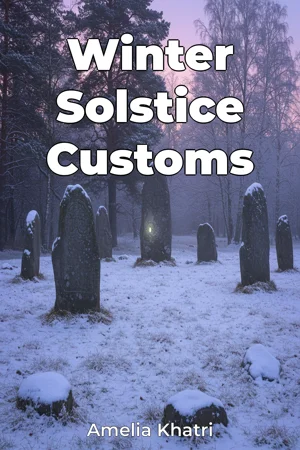
Across millennia and continents, why has the winter solstice held such profound significance for human societies? "Winter Solstice Customs" delves into the rich tapestry of traditions and rituals surrounding this astronomical event, offering a comprehensive examination of documented celebrations across cultures, based on anthropological studies and historical records extending from Europe to Asia. This book explores three key interwoven topics: the astronomical understanding of the solstice across different cultures, the social and communal significance of the celebrations, and the persistence and evolution of these customs through time. Understanding the astronomical knowledge embedded within these practices reveals the sophisticated observational skills of early societies. Examining the communal aspects highlights the crucial role these celebrations played in reinforcing social bonds and ensuring survival during the harshest months. Tracking the evolution of these customs sheds light on the complex interplay between tradition and change in human culture. To fully appreciate the diverse practices surrounding the winter solstice, some understanding of basic astronomy – the Earth’s axial tilt and its effect on seasons – is helpful. Additionally, a familiarity with basic anthropological concepts, such as ritual, symbolism, and cultural transmission, will enhance the reader's engagement with the material. The central argument of "Winter Solstice Customs" proposes that winter solstice celebrations are not merely remnants of a distant past but rather dynamic expressions of fundamental human needs: to understand the natural world, to create meaning, and to foster community resilience in the face of adversity. This argument is vital because it challenges the often-superficial understanding of these traditions, revealing their deep-seated roots in human experience and their ongoing relevance in contemporary society. The book’s structure unfolds systematically. Initially, the introduction establishes the astronomical and cultural context of the winter solstice, outlining its varying definitions and significance across different regions. The subsequent sections develop this foundation by exploring specific cultural traditions. One section details European customs, examining practices from ancient Roman festivals like Saturnalia to medieval Yule celebrations and their modern iterations. Another focuses on Asian traditions, highlighting Chinese Dongzhi Festival, Japanese Tōji, and related customs in other Asian countries. A third section analyzes the common threads and divergent paths of these celebrations, exploring themes of light and darkness, death and rebirth, and communal feasting. Finally, the conclusion synthesizes these findings, offering insights into the enduring appeal of winter solstice celebrations and their reflection of core human values. The book draws on various forms of evidence, including ethnographic accounts from anthropological field studies, historical texts such as chronicles and religious documents, and archaeological findings that illuminate ancient ritual practices. Unique data sources include lesser-known regional folklore collections and previously untranslated historical accounts, providing fresh perspectives on established narratives. "Winter Solstice Customs" intersects with several other fields of study. It connects with astronomy through its exploration of celestial events and their interpretation by various cultures. It also relates to religious studies by examining the spiritual and symbolic dimensions of solstice rituals. Furthermore, it's relevant to folklore studies by analyzing the myths, legends, and traditions associated with the winter solstice. These connections enrich the book’s analysis, offering a more holistic understanding of the subject. This book adopts an interdisciplinary approach, combining historical analysis with anthropological insights to provide a nuanced perspective on winter solstice customs. The writing style aims to be accessible yet scholarly, blending engaging storytelling with rigorous academic research. The intended audience includes students and researchers in anthropology, history, religious studies, and folklore, as well as general readers interested in cultural traditions and the history of human beliefs. This book offers a valuable resource for anyone seeking a deeper understanding of the winter solstice and its significance in human cultures. As a work of non-fiction, "Winter Solstice Customs" adheres to the genre’s conventions by maintaining a factual and evidence-based approach, citing sources meticulously, and presenting information in a clear and organized manner. While the book strives for broad coverage, its scope is intentionally limited to documented winter solstice celebrations in Europe and Asia, reflecting the availability of detailed historical and anthropological data. This focused approach allows for a more in-depth analysis of these regions, acknowledging that similar traditions exist in other parts of the world. The information presented in "Winter Solstice Customs" has real-world applications, offering insights into cultural diversity, the importance of community, and the enduring power of human traditions. Readers can apply this knowledge to better understand and appreciate different cultures, promote intercultural dialogue, and create meaningful celebrations in their own communities. While the astronomical basis of the winter solstice is well-established, debates persist regarding the interpretation and significance of specific cultural practices. This book addresses these debates by presenting different viewpoints and encouraging readers to critically evaluate the evidence.
Across millennia and continents, why has the winter solstice held such profound significance for human societies? "Winter Solstice Customs" delves into the rich tapestry of traditions and rituals surrounding this astronomical event, offering a comprehensive examination of documented celebrations across cultures, based on anthropological studies and historical records extending from Europe to Asia. This book explores three key interwoven topics: the astronomical understanding of the solstice across different cultures, the social and communal significance of the celebrations, and the persistence and evolution of these customs through time. Understanding the astronomical knowledge embedded within these practices reveals the sophisticated observational skills of early societies. Examining the communal aspects highlights the crucial role these celebrations played in reinforcing social bonds and ensuring survival during the harshest months. Tracking the evolution of these customs sheds light on the complex interplay between tradition and change in human culture. To fully appreciate the diverse practices surrounding the winter solstice, some understanding of basic astronomy – the Earth’s axial tilt and its effect on seasons – is helpful. Additionally, a familiarity with basic anthropological concepts, such as ritual, symbolism, and cultural transmission, will enhance the reader's engagement with the material. The central argument of "Winter Solstice Customs" proposes that winter solstice celebrations are not merely remnants of a distant past but rather dynamic expressions of fundamental human needs: to understand the natural world, to create meaning, and to foster community resilience in the face of adversity. This argument is vital because it challenges the often-superficial understanding of these traditions, revealing their deep-seated roots in human experience and their ongoing relevance in contemporary society. The book’s structure unfolds systematically. Initially, the introduction establishes the astronomical and cultural context of the winter solstice, outlining its varying definitions and significance across different regions. The subsequent sections develop this foundation by exploring specific cultural traditions. One section details European customs, examining practices from ancient Roman festivals like Saturnalia to medieval Yule celebrations and their modern iterations. Another focuses on Asian traditions, highlighting Chinese Dongzhi Festival, Japanese Tōji, and related customs in other Asian countries. A third section analyzes the common threads and divergent paths of these celebrations, exploring themes of light and darkness, death and rebirth, and communal feasting. Finally, the conclusion synthesizes these findings, offering insights into the enduring appeal of winter solstice celebrations and their reflection of core human values. The book draws on various forms of evidence, including ethnographic accounts from anthropological field studies, historical texts such as chronicles and religious documents, and archaeological findings that illuminate ancient ritual practices. Unique data sources include lesser-known regional folklore collections and previously untranslated historical accounts, providing fresh perspectives on established narratives. "Winter Solstice Customs" intersects with several other fields of study. It connects with astronomy through its exploration of celestial events and their interpretation by various cultures. It also relates to religious studies by examining the spiritual and symbolic dimensions of solstice rituals. Furthermore, it's relevant to folklore studies by analyzing the myths, legends, and traditions associated with the winter solstice. These connections enrich the book’s analysis, offering a more holistic understanding of the subject. This book adopts an interdisciplinary approach, combining historical analysis with anthropological insights to provide a nuanced perspective on winter solstice customs. The writing style aims to be accessible yet scholarly, blending engaging storytelling with rigorous academic research. The intended audience includes students and researchers in anthropology, history, religious studies, and folklore, as well as general readers interested in cultural traditions and the history of human beliefs. This book offers a valuable resource for anyone seeking a deeper understanding of the winter solstice and its significance in human cultures. As a work of non-fiction, "Winter Solstice Customs" adheres to the genre’s conventions by maintaining a factual and evidence-based approach, citing sources meticulously, and presenting information in a clear and organized manner. While the book strives for broad coverage, its scope is intentionally limited to documented winter solstice celebrations in Europe and Asia, reflecting the availability of detailed historical and anthropological data. This focused approach allows for a more in-depth analysis of these regions, acknowledging that similar traditions exist in other parts of the world. The information presented in "Winter Solstice Customs" has real-world applications, offering insights into cultural diversity, the importance of community, and the enduring power of human traditions. Readers can apply this knowledge to better understand and appreciate different cultures, promote intercultural dialogue, and create meaningful celebrations in their own communities. While the astronomical basis of the winter solstice is well-established, debates persist regarding the interpretation and significance of specific cultural practices. This book addresses these debates by presenting different viewpoints and encouraging readers to critically evaluate the evidence.
"Winter Solstice Customs" examines the diverse and profound significance of winter solstice celebrations across cultures, especially in Europe and Asia. It highlights how these traditions, deeply rooted in history and social science, reflect humanity's fundamental need to understand the natural world and foster community. These celebrations are not just remnants of the past; they are dynamic expressions that have evolved over time. Did you know that some cultures viewed the solstice as a time of death and rebirth, while others emphasized communal feasting to reinforce social bonds during the harsh winter months? The book adopts an interdisciplinary approach, blending historical analysis with anthropological insights to explore the astronomical understanding, social significance, and evolution of solstice customs. It draws on ethnographic accounts, historical texts, and even archaeological findings to paint a comprehensive picture. The structure systematically unfolds, starting with the astronomical and cultural context before delving into specific European customs like ancient Roman Saturnalia and Asian traditions such as the Chinese Dongzhi Festival. The book concludes by synthesizing these findings, offering a deeper understanding of the enduring appeal and core human values reflected in winter solstice celebrations.
Book Details
ISBN
9788233968250
Publisher
Publifye AS
Your Licenses
You don't own any licenses for this book
Purchase a license below to unlock this book and download the EPUB.
Purchase License
Select a tier to unlock this book
Need bulk licensing?
Contact us for enterprise agreements.