
About This Book
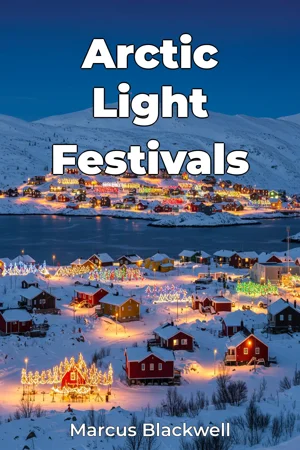
Have you ever wondered how cultures adapt and thrive in some of Earth's most extreme environments, where light and darkness dictate the rhythm of life? "Arctic Light Festivals" delves into the cultural celebrations that punctuate the shifting light cycles of polar regions, exploring how communities mark the return of the sun after prolonged darkness and acknowledge the periods of extended daylight. This book examines the intersection of cultural practices, environmental realities, and historical context, revealing the profound connection between human societies and the natural world in the Arctic and sub-Arctic. The book focuses on two primary themes: the historical evolution of light-based festivals and their contemporary manifestations. We explore how these celebrations have adapted over time, influenced by factors such as technological advancements, globalization, and changing social structures. A second key theme is the role that these festivals play in fostering community resilience and cultural identity in the face of environmental and social change. These celebrations are central to maintaining social cohesion and transmitting cultural knowledge across generations. Understanding these events provides insights into human adaptability and the enduring power of cultural traditions. To fully appreciate the significance of these festivals, the book provides a comprehensive overview of the Arctic environment, including the unique light cycles characteristic of high-latitude regions, the challenges these cycles pose for human habitation, the historical context of Arctic exploration and settlement, and the indigenous cultures that have thrived in these regions for millennia. Readers will gain a foundational understanding of the geographical and historical factors shaping human life in the Arctic. At its core, "Arctic Light Festivals" argues that these celebrations are not merely quaint traditions but crucial mechanisms for cultural preservation and community building in challenging environments. These festivals represent a dynamic interplay between human agency and environmental constraints, demonstrating the resilience and adaptability of Arctic cultures. By understanding the historical and contemporary significance of these light festivals, we can gain a deeper appreciation for the diverse ways in which human societies adapt to and celebrate the natural world. The book's structure unfolds in a logical progression. First, it introduces the concept of light festivals in the Arctic, providing a geographical and historical context for their emergence. Next, it explores specific examples of these festivals in different regions, examining their unique characteristics and historical trajectories. Case studies will include celebrations from Scandinavia, Russia, Canada, and Alaska, considering both indigenous traditions and those introduced by later settlers. Further chapters analyze the modern evolution of these festivals, considering the impact of technology, tourism, and cultural exchange. Finally, the book culminates with a discussion of the broader implications of these festivals for cultural preservation, community resilience, and environmental awareness; including the importance of cultural tourism and sustainability. The evidence presented in this book draws upon a wide range of sources, including historical accounts from explorers and missionaries, ethnographic studies of Arctic communities, contemporary documentation of festivals through photographs and videos, and interviews with festival participants. The book also incorporates data from climate science and environmental studies to contextualize the environmental challenges faced by Arctic communities. "Arctic Light Festivals" connects to several other fields of study, including anthropology, environmental studies, sociology, and tourism studies. By integrating perspectives from these disciplines, the book provides a holistic understanding of the cultural, social, and environmental dimensions of light festivals in the Arctic. This book offers a unique perspective by combining historical analysis with contemporary observations and interdisciplinary insights. It moves beyond descriptive accounts of festivals to offer a nuanced interpretation of their cultural and social significance. The writing style seeks to be accessible to a broad audience while maintaining academic rigor. It blends narrative storytelling with analytical insights, aiming to engage readers emotionally and intellectually. The target audience includes students and scholars in Arctic studies, geography, history, and anthropology, as well as general readers with an interest in cultural traditions, environmental issues, and the Arctic region. The book would also appeal to travelers and cultural enthusiasts seeking a deeper understanding of the regions they visit. As a work of non-fiction, this book adheres to the conventions of academic scholarship, including thorough research, clear citations, and objective analysis. It also aims to be engaging and accessible, avoiding jargon and technical language where possible. The scope of "Arctic Light Festivals" is limited to the cultural celebrations surrounding changing light cycles in polar regions. It does not attempt to provide a comprehensive overview of all aspects of Arctic culture or environmental issues. The insights presented in this book can be applied practically by readers interested in cultural tourism, community development, and environmental sustainability. It offers valuable lessons about the importance of cultural preservation and community resilience in the face of environmental change. While the value of these festivals is generally celebrated, the book also addresses potential controversies, such as the impact of tourism on local cultures and the appropriation of indigenous traditions. The book seeks to present a balanced and nuanced perspective, acknowledging both the positive and negative aspects of these celebrations.
Have you ever wondered how cultures adapt and thrive in some of Earth's most extreme environments, where light and darkness dictate the rhythm of life? "Arctic Light Festivals" delves into the cultural celebrations that punctuate the shifting light cycles of polar regions, exploring how communities mark the return of the sun after prolonged darkness and acknowledge the periods of extended daylight. This book examines the intersection of cultural practices, environmental realities, and historical context, revealing the profound connection between human societies and the natural world in the Arctic and sub-Arctic. The book focuses on two primary themes: the historical evolution of light-based festivals and their contemporary manifestations. We explore how these celebrations have adapted over time, influenced by factors such as technological advancements, globalization, and changing social structures. A second key theme is the role that these festivals play in fostering community resilience and cultural identity in the face of environmental and social change. These celebrations are central to maintaining social cohesion and transmitting cultural knowledge across generations. Understanding these events provides insights into human adaptability and the enduring power of cultural traditions. To fully appreciate the significance of these festivals, the book provides a comprehensive overview of the Arctic environment, including the unique light cycles characteristic of high-latitude regions, the challenges these cycles pose for human habitation, the historical context of Arctic exploration and settlement, and the indigenous cultures that have thrived in these regions for millennia. Readers will gain a foundational understanding of the geographical and historical factors shaping human life in the Arctic. At its core, "Arctic Light Festivals" argues that these celebrations are not merely quaint traditions but crucial mechanisms for cultural preservation and community building in challenging environments. These festivals represent a dynamic interplay between human agency and environmental constraints, demonstrating the resilience and adaptability of Arctic cultures. By understanding the historical and contemporary significance of these light festivals, we can gain a deeper appreciation for the diverse ways in which human societies adapt to and celebrate the natural world. The book's structure unfolds in a logical progression. First, it introduces the concept of light festivals in the Arctic, providing a geographical and historical context for their emergence. Next, it explores specific examples of these festivals in different regions, examining their unique characteristics and historical trajectories. Case studies will include celebrations from Scandinavia, Russia, Canada, and Alaska, considering both indigenous traditions and those introduced by later settlers. Further chapters analyze the modern evolution of these festivals, considering the impact of technology, tourism, and cultural exchange. Finally, the book culminates with a discussion of the broader implications of these festivals for cultural preservation, community resilience, and environmental awareness; including the importance of cultural tourism and sustainability. The evidence presented in this book draws upon a wide range of sources, including historical accounts from explorers and missionaries, ethnographic studies of Arctic communities, contemporary documentation of festivals through photographs and videos, and interviews with festival participants. The book also incorporates data from climate science and environmental studies to contextualize the environmental challenges faced by Arctic communities. "Arctic Light Festivals" connects to several other fields of study, including anthropology, environmental studies, sociology, and tourism studies. By integrating perspectives from these disciplines, the book provides a holistic understanding of the cultural, social, and environmental dimensions of light festivals in the Arctic. This book offers a unique perspective by combining historical analysis with contemporary observations and interdisciplinary insights. It moves beyond descriptive accounts of festivals to offer a nuanced interpretation of their cultural and social significance. The writing style seeks to be accessible to a broad audience while maintaining academic rigor. It blends narrative storytelling with analytical insights, aiming to engage readers emotionally and intellectually. The target audience includes students and scholars in Arctic studies, geography, history, and anthropology, as well as general readers with an interest in cultural traditions, environmental issues, and the Arctic region. The book would also appeal to travelers and cultural enthusiasts seeking a deeper understanding of the regions they visit. As a work of non-fiction, this book adheres to the conventions of academic scholarship, including thorough research, clear citations, and objective analysis. It also aims to be engaging and accessible, avoiding jargon and technical language where possible. The scope of "Arctic Light Festivals" is limited to the cultural celebrations surrounding changing light cycles in polar regions. It does not attempt to provide a comprehensive overview of all aspects of Arctic culture or environmental issues. The insights presented in this book can be applied practically by readers interested in cultural tourism, community development, and environmental sustainability. It offers valuable lessons about the importance of cultural preservation and community resilience in the face of environmental change. While the value of these festivals is generally celebrated, the book also addresses potential controversies, such as the impact of tourism on local cultures and the appropriation of indigenous traditions. The book seeks to present a balanced and nuanced perspective, acknowledging both the positive and negative aspects of these celebrations.
"Arctic Light Festivals" explores cultural celebrations in polar regions, revealing how communities commemorate the return of the sun and acknowledge extended daylight. These festivals are not mere traditions but vital for cultural preservation and community building. For example, the book highlights how these celebrations adapted over time, influenced by technological advancements and globalization, while still maintaining social cohesion. The book examines the historical evolution and contemporary manifestations of these light-based festivals, connecting cultural practices with environmental realities and historical context. It emphasizes the role these festivals play in fostering community resilience, especially given the unique challenges posed by the Arctic environment, such as extreme light cycles. Through case studies from Scandinavia, Russia, Canada, and Alaska, the book progresses from introducing the geographical and historical context to analyzing the modern evolution of these festivals, considering the impact of tourism and cultural exchange.
Book Details
ISBN
9788233968243
Publisher
Publifye AS
Your Licenses
You don't own any licenses for this book
Purchase a license below to unlock this book and download the EPUB.
Purchase License
Select a tier to unlock this book
Need bulk licensing?
Contact us for enterprise agreements.