
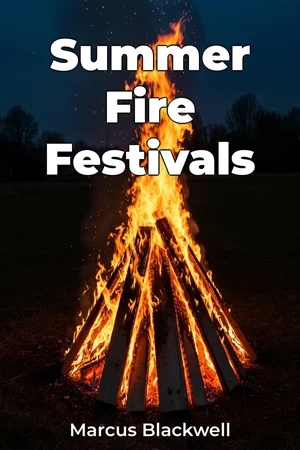
About This Book
Why, across vastly different cultures separated by geography and time, do flames leap skyward in the heart of summer? "Summer Fire Festivals" delves into this compelling question, exploring the historical roots, cultural significance, and enduring power of midsummer fire celebrations around the world. This study examines the traditions from Nordic bonfires to Japanese fire festivals, revealing the profound human connection to fire, the sun, and the cycle of seasons. The book's primary focus lies on understanding the shared symbolism and divergent expressions of midsummer fire rituals. It aims to explore the historical context that shaped these practices, analyze the common threads connecting these events across cultures, and also to understand the variations in how these fire rituals are expressed in different cultures. Why did these celebrations take hold in societies with such distinct histories? Providing a foundation for understanding, the book first establishes the historical context surrounding midsummer celebrations. It examines the agricultural calendars of pre-industrial societies, the importance of the summer solstice, and the role of fire in ancient belief systems. No prior expertise is required, as foundational concepts are clearly defined. The central argument of "Summer Fire Festivals" posits that midsummer fire festivals represent a fundamental human response to the power and vulnerability inherent in the natural world. These rituals served as a means of ensuring a bountiful harvest, warding off evil spirits, and reaffirming community bonds during a pivotal time of year. This perspective is important because it highlights not only the diversity of human cultures but also the unifying patterns that shape our traditions. Organized thematically, the book begins by introducing the concept of midsummer as a liminal time, a period of transition between planting and harvesting, light and darkness. It then proceeds to explore case studies from around the world, including the bonfires of Northern Europe, the fire festivals of Japan, and related traditions in other regions. Each case study will analyze the historical origins, ritual practices, and cultural meanings associated with each celebration. The book culminates by synthesizing these diverse examples, providing a comprehensive framework for understanding the universal appeal and enduring significance of midsummer fire festivals. To support its arguments, "Summer Fire Festivals" draws upon a wide range of historical sources, including archaeological records, folklore collections, ethnographic studies, and travel accounts. It features firsthand accounts of festival participants and observers, alongside scholarly analyses of the rituals themselves. The book utilizes a comparative methodology, juxtaposing different traditions to reveal both their shared elements and their unique characteristics. "Summer Fire Festivals" also connects to other academic fields. Firstly, anthropology by examining cultural rituals and their meaning. Secondly, religious studies, by exploring the spiritual dimensions of fire worship. Finally, environmental history, by investigating the relationship between humans, fire, and the environment. These interdisciplinary connections enrich the book's analysis, providing a more nuanced and comprehensive understanding of its subject matter. This book distinguishes itself by adopting a global perspective, transcending regional boundaries to examine the common threads that unite seemingly disparate traditions. Rather than focusing solely on European or Western examples, it seeks to provide a truly comprehensive overview of midsummer fire festivals worldwide. Written in an accessible and engaging style, "Summer Fire Festivals" is intended for a broad audience, including students, researchers, and anyone interested in history, culture, and the enduring power of ritual. The book's clear organization, compelling narratives, and insightful analysis make it valuable for both academic and general readers. As a work of non-fiction, "Summer Fire Festivals" adheres to the genre's conventions of accuracy, objectivity, and thorough documentation. All claims are supported by evidence, and sources are clearly cited. The book's scope is intentionally broad, encompassing a wide range of cultures and historical periods. However, it is also limited by the availability of historical documentation and the challenges of interpreting ancient rituals. While seeking to be comprehensive, the book acknowledges that certain regional variations and individual experiences may not be fully represented. Ultimately, "Summer Fire Festivals" offers readers a deeper understanding of the human relationship with fire, the sun, and the cycle of seasons. By exploring the historical roots and cultural significance of midsummer fire celebrations, the book encourages readers to reflect on their own connection to the natural world and the enduring power of tradition. While exploring the cultural significance around fire, the book will also touch briefly on the ongoing debates surrounding controlled burns and forest management, offering a historical perspective on the complex relationship between humans and fire.
Why, across vastly different cultures separated by geography and time, do flames leap skyward in the heart of summer? "Summer Fire Festivals" delves into this compelling question, exploring the historical roots, cultural significance, and enduring power of midsummer fire celebrations around the world. This study examines the traditions from Nordic bonfires to Japanese fire festivals, revealing the profound human connection to fire, the sun, and the cycle of seasons. The book's primary focus lies on understanding the shared symbolism and divergent expressions of midsummer fire rituals. It aims to explore the historical context that shaped these practices, analyze the common threads connecting these events across cultures, and also to understand the variations in how these fire rituals are expressed in different cultures. Why did these celebrations take hold in societies with such distinct histories? Providing a foundation for understanding, the book first establishes the historical context surrounding midsummer celebrations. It examines the agricultural calendars of pre-industrial societies, the importance of the summer solstice, and the role of fire in ancient belief systems. No prior expertise is required, as foundational concepts are clearly defined. The central argument of "Summer Fire Festivals" posits that midsummer fire festivals represent a fundamental human response to the power and vulnerability inherent in the natural world. These rituals served as a means of ensuring a bountiful harvest, warding off evil spirits, and reaffirming community bonds during a pivotal time of year. This perspective is important because it highlights not only the diversity of human cultures but also the unifying patterns that shape our traditions. Organized thematically, the book begins by introducing the concept of midsummer as a liminal time, a period of transition between planting and harvesting, light and darkness. It then proceeds to explore case studies from around the world, including the bonfires of Northern Europe, the fire festivals of Japan, and related traditions in other regions. Each case study will analyze the historical origins, ritual practices, and cultural meanings associated with each celebration. The book culminates by synthesizing these diverse examples, providing a comprehensive framework for understanding the universal appeal and enduring significance of midsummer fire festivals. To support its arguments, "Summer Fire Festivals" draws upon a wide range of historical sources, including archaeological records, folklore collections, ethnographic studies, and travel accounts. It features firsthand accounts of festival participants and observers, alongside scholarly analyses of the rituals themselves. The book utilizes a comparative methodology, juxtaposing different traditions to reveal both their shared elements and their unique characteristics. "Summer Fire Festivals" also connects to other academic fields. Firstly, anthropology by examining cultural rituals and their meaning. Secondly, religious studies, by exploring the spiritual dimensions of fire worship. Finally, environmental history, by investigating the relationship between humans, fire, and the environment. These interdisciplinary connections enrich the book's analysis, providing a more nuanced and comprehensive understanding of its subject matter. This book distinguishes itself by adopting a global perspective, transcending regional boundaries to examine the common threads that unite seemingly disparate traditions. Rather than focusing solely on European or Western examples, it seeks to provide a truly comprehensive overview of midsummer fire festivals worldwide. Written in an accessible and engaging style, "Summer Fire Festivals" is intended for a broad audience, including students, researchers, and anyone interested in history, culture, and the enduring power of ritual. The book's clear organization, compelling narratives, and insightful analysis make it valuable for both academic and general readers. As a work of non-fiction, "Summer Fire Festivals" adheres to the genre's conventions of accuracy, objectivity, and thorough documentation. All claims are supported by evidence, and sources are clearly cited. The book's scope is intentionally broad, encompassing a wide range of cultures and historical periods. However, it is also limited by the availability of historical documentation and the challenges of interpreting ancient rituals. While seeking to be comprehensive, the book acknowledges that certain regional variations and individual experiences may not be fully represented. Ultimately, "Summer Fire Festivals" offers readers a deeper understanding of the human relationship with fire, the sun, and the cycle of seasons. By exploring the historical roots and cultural significance of midsummer fire celebrations, the book encourages readers to reflect on their own connection to the natural world and the enduring power of tradition. While exploring the cultural significance around fire, the book will also touch briefly on the ongoing debates surrounding controlled burns and forest management, offering a historical perspective on the complex relationship between humans and fire.
"Summer Fire Festivals" explores the widespread phenomenon of midsummer fire celebrations, examining their historical roots and cultural significance across diverse societies. From Nordic bonfires to Japanese fire festivals, these rituals highlight humanity's deep connection to fire, the sun, and seasonal cycles. One intriguing fact is the role fire played in ancient belief systems, often seen as a way to ensure a bountiful harvest or ward off evil spirits. The book uniquely adopts a global perspective, comparing traditions to reveal both shared elements and unique characteristics. Organized thematically, the book progresses from establishing the historical context of midsummer as a liminal time to exploring case studies from around the world. By drawing upon historical sources, folklore, and ethnographic studies, it analyzes the common threads connecting these events, such as the symbolism of fire and light, while also acknowledging variations in how these fire rituals are expressed. Ultimately, the book provides a comprehensive framework for understanding the universal appeal and enduring significance of these cultural rituals and traditions.
Book Details
ISBN
9788233968229
Publisher
Publifye AS
Your Licenses
You don't own any licenses for this book
Purchase a license below to unlock this book and download the EPUB.
Purchase License
Select a tier to unlock this book
Need bulk licensing?
Contact us for enterprise agreements.