
About This Book
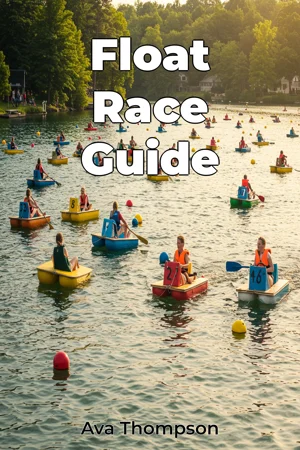
Have you ever watched a flotilla of creatively designed floating devices vie for supremacy on a summer afternoon and wondered about the rules, the equipment, and the sheer ingenuity behind these buoyant battles? This book, "Float Race Guide," is the definitive exploration of floating device races and games. It delves into the specifications of the equipment used, the diverse competition formats employed, and the underlying principles that govern these accessible recreational water sports. This book addresses two primary areas. First, it offers instruction on building and modifying floating devices using readily available materials. This aspect is important because it empowers enthusiasts to participate actively in the sport without requiring specialized skills or costly equipment. Second, it provides a thorough examination of various competitive formats, ranging from casual, family-friendly games to organized races with specific rules and regulations. Understanding these formats is crucial for both participants and organizers to ensure fair play and maximize enjoyment. The "Float Race Guide" traces the history of floating device races, from their humble beginnings as spontaneous summer activities to their modern incarnations, which often incorporate elements of engineering, design, and competitive strategy. It also explores the social aspect of these events, highlighting their role in community building and fostering creativity among participants of all ages. Some basic knowledge of buoyancy principles and water safety is advantageous but not essential, as these concepts are introduced and explained in simple terms. The central argument of this book is that floating device races are more than just frivolous summer fun; they represent a unique intersection of creativity, engineering, and community engagement. We contend that by embracing these activities, individuals can develop problem-solving skills, learn about basic scientific principles, and build stronger social connections. The book is structured to provide a comprehensive understanding of float races. It begins with an introduction to the fundamental concepts of buoyancy, stability, and hydrodynamics. The second section explores the materials and construction techniques used in building floating devices, detailing the advantages and disadvantages of various designs. The third section dives into competition formats, outlining rules, judging criteria, and strategies for success. This culminates in a discussion of the practical applications of these activities in educational settings, community events, and recreational programs. The arguments presented are supported by a combination of practical experiments, case studies of successful float race events, and interviews with experienced participants and organizers. The book draws on data from engineering studies, physics demonstrations, and recreational program evaluations. The "Float Race Guide" connects to several related fields, including: engineering, offering practical applications of buoyancy and stability principles; environmental science, emphasizing the use of sustainable materials and responsible water usage and community development, showing how these events can bring people together. This book adopts a unique approach by combining practical instruction with a scholarly examination of the social and scientific aspects of float races. It bridges the gap between casual participation and serious competition, providing valuable insights for enthusiasts of all levels. The tone is informative and accessible, designed to appeal to a broad audience ranging from hobbyists and educators to community organizers and families. It balances technical details with engaging anecdotes and real-world examples. The target audience includes educators seeking hands-on STEM activities, community organizers planning recreational events, families looking for fun summer projects, and anyone interested in the design and construction of floating devices. As a book in the 'Sports, Crafts & Hobbies' genre, it provides practical guidance, step-by-step instructions, and inspiring examples to encourage readers to actively participate in the activity. The scope is limited to non-motorized floating devices and human-powered propulsion methods. It does not cover advanced engineering concepts or professional-level racing. The information presented can be directly applied to building and racing floating devices, organizing float race events, and developing educational programs that incorporate hands-on learning. The book also touches on ongoing discussions about the environmental impact of recreational water sports and encourages responsible participation through the use of sustainable materials and ethical racing practices.
Have you ever watched a flotilla of creatively designed floating devices vie for supremacy on a summer afternoon and wondered about the rules, the equipment, and the sheer ingenuity behind these buoyant battles? This book, "Float Race Guide," is the definitive exploration of floating device races and games. It delves into the specifications of the equipment used, the diverse competition formats employed, and the underlying principles that govern these accessible recreational water sports. This book addresses two primary areas. First, it offers instruction on building and modifying floating devices using readily available materials. This aspect is important because it empowers enthusiasts to participate actively in the sport without requiring specialized skills or costly equipment. Second, it provides a thorough examination of various competitive formats, ranging from casual, family-friendly games to organized races with specific rules and regulations. Understanding these formats is crucial for both participants and organizers to ensure fair play and maximize enjoyment. The "Float Race Guide" traces the history of floating device races, from their humble beginnings as spontaneous summer activities to their modern incarnations, which often incorporate elements of engineering, design, and competitive strategy. It also explores the social aspect of these events, highlighting their role in community building and fostering creativity among participants of all ages. Some basic knowledge of buoyancy principles and water safety is advantageous but not essential, as these concepts are introduced and explained in simple terms. The central argument of this book is that floating device races are more than just frivolous summer fun; they represent a unique intersection of creativity, engineering, and community engagement. We contend that by embracing these activities, individuals can develop problem-solving skills, learn about basic scientific principles, and build stronger social connections. The book is structured to provide a comprehensive understanding of float races. It begins with an introduction to the fundamental concepts of buoyancy, stability, and hydrodynamics. The second section explores the materials and construction techniques used in building floating devices, detailing the advantages and disadvantages of various designs. The third section dives into competition formats, outlining rules, judging criteria, and strategies for success. This culminates in a discussion of the practical applications of these activities in educational settings, community events, and recreational programs. The arguments presented are supported by a combination of practical experiments, case studies of successful float race events, and interviews with experienced participants and organizers. The book draws on data from engineering studies, physics demonstrations, and recreational program evaluations. The "Float Race Guide" connects to several related fields, including: engineering, offering practical applications of buoyancy and stability principles; environmental science, emphasizing the use of sustainable materials and responsible water usage and community development, showing how these events can bring people together. This book adopts a unique approach by combining practical instruction with a scholarly examination of the social and scientific aspects of float races. It bridges the gap between casual participation and serious competition, providing valuable insights for enthusiasts of all levels. The tone is informative and accessible, designed to appeal to a broad audience ranging from hobbyists and educators to community organizers and families. It balances technical details with engaging anecdotes and real-world examples. The target audience includes educators seeking hands-on STEM activities, community organizers planning recreational events, families looking for fun summer projects, and anyone interested in the design and construction of floating devices. As a book in the 'Sports, Crafts & Hobbies' genre, it provides practical guidance, step-by-step instructions, and inspiring examples to encourage readers to actively participate in the activity. The scope is limited to non-motorized floating devices and human-powered propulsion methods. It does not cover advanced engineering concepts or professional-level racing. The information presented can be directly applied to building and racing floating devices, organizing float race events, and developing educational programs that incorporate hands-on learning. The book also touches on ongoing discussions about the environmental impact of recreational water sports and encourages responsible participation through the use of sustainable materials and ethical racing practices.
"Float Race Guide" explores the engaging world of floating device races, revealing them to be more than just fun summer activities. These buoyant battles uniquely blend creativity, engineering, and community engagement. Did you know that some races incorporate elements of STEM activities, teaching participants about buoyancy and hydrodynamics in a hands-on way? Or that these events often foster stronger social connections? This guide adopts a comprehensive approach, starting with basic concepts and progressing to materials, construction techniques, and competition formats. It’s valuable to anyone from hobbyists and families looking for fun projects to educators seeking STEM activities. The book traces the history of float races, highlighting their evolution from spontaneous summer fun to organized events. The book is structured to offer a thorough understanding, beginning with fundamental concepts, moving onto construction techniques, and culminating in competition formats. With its accessible tone and practical guidance, "Float Race Guide" encourages active participation and responsible practices in these recreational water sports.
Book Details
ISBN
9788233968120
Publisher
Publifye AS
Your Licenses
You don't own any licenses for this book
Purchase a license below to unlock this book and download the EPUB.
Purchase License
Select a tier to unlock this book
Need bulk licensing?
Contact us for enterprise agreements.