
About This Book
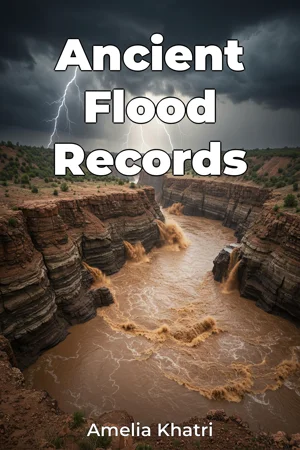
Could catastrophic floods have shaped not only the Earth's geological features but also the very course of human civilization? This book, "Ancient Flood Records," explores this compelling question by examining the evidence of major flooding events throughout human history. We delve into geological records, uncovering sedimentary layers and erosion patterns that testify to widespread inundations. We analyze archaeological findings, interpreting the placement of settlements, the destruction layers within ancient cities, and the content of oral histories. Finally, we scrutinize the early written records of civilizations around the globe, from Mesopotamia to the Americas, to assess their depictions of large-scale floods and their potential basis in reality. These three fields offer distinct but complementary perspectives. Geological evidence provides the physical timeline and scale of flooding events. Archaeological discoveries offer insights into the impact of these floods on human populations and their adaptations. Early written records, while potentially embellished or mythologized, offer invaluable cultural memory and perspective. This book argues that major flooding events have acted as significant catalysts in the development, displacement, and cultural narratives of numerous civilizations. These deluges were not simply destructive forces; they also forced innovation, societal restructuring, and the migration of populations, leaving an indelible mark on human history. The book is structured in three primary sections. Part one introduces the geological evidence for major floods, examining sedimentary deposits, glacial meltwater pulses, and sea-level changes that point to repeated episodes of large-scale inundation. Part two analyzes the archaeological record, focusing on case studies of specific civilizations and their responses to flooding, including the development of flood management technologies and the relocation of settlements. Part three investigates the flood narratives and creation myths found in various cultures, assessing their potential connections to real-world events and exploring their symbolic significance. The culmination of these sections will reveal the pervasive role of floods in shaping human culture and adaptation. Supporting this argument is a wealth of interdisciplinary evidence. We draw on geological surveys, sediment core data, archaeological site reports, and translations of ancient texts, all interpreted through the lens of modern scientific understanding. The book utilizes comparative mythology to identify common themes and motifs in flood narratives across different cultures, seeking to distinguish between symbolic storytelling and potential historical accounts. "Ancient Flood Records" connects to the fields of climate science by examining the potential drivers of past flooding events. It also has connections to anthropology, offering insights into how societies adapt to environmental challenges. And finally, to the study of religion by analyzing creation myths, which provide valuable cultural context. This book offers a fresh perspective by integrating geological, archaeological, and textual evidence to provide a more holistic understanding of the impact of floods on human history. It moves beyond simplistic catastrophism, exploring the complex and nuanced ways in which societies have responded to and been shaped by these powerful natural events. The writing style is factual and accessible, aiming to engage both academic researchers and general readers interested in the intersection of history, science, and mythology. The target audience includes students and researchers in earth sciences, archaeology, history, and related fields, as well as anyone interested in the history of climate, the role of natural disasters in shaping civilizations, and the origins of flood myths. This book meets genre expectations for non-fiction focused on historical and scientific analysis, presenting evidence-backed claims in a clear and organized manner. The book intentionally limits its scope to major flooding events with discernible impacts on human societies, focusing on those with demonstrable geological or archaeological evidence. While it acknowledges the importance of local and regional floods, it emphasizes the broader patterns and long-term consequences of large-scale inundations. Understanding past flooding events is critical for anticipating and mitigating the risks posed by future climate change. By examining how ancient civilizations coped with floods, we can gain valuable insights into building more resilient communities today. While the interpretation of flood narratives and the dating of specific events may always be subject to some amount of scholarly debate, this book offers a balanced and evidence-based assessment of the available data, acknowledging the uncertainties while presenting a comprehensive overview of the current state of knowledge.
Could catastrophic floods have shaped not only the Earth's geological features but also the very course of human civilization? This book, "Ancient Flood Records," explores this compelling question by examining the evidence of major flooding events throughout human history. We delve into geological records, uncovering sedimentary layers and erosion patterns that testify to widespread inundations. We analyze archaeological findings, interpreting the placement of settlements, the destruction layers within ancient cities, and the content of oral histories. Finally, we scrutinize the early written records of civilizations around the globe, from Mesopotamia to the Americas, to assess their depictions of large-scale floods and their potential basis in reality. These three fields offer distinct but complementary perspectives. Geological evidence provides the physical timeline and scale of flooding events. Archaeological discoveries offer insights into the impact of these floods on human populations and their adaptations. Early written records, while potentially embellished or mythologized, offer invaluable cultural memory and perspective. This book argues that major flooding events have acted as significant catalysts in the development, displacement, and cultural narratives of numerous civilizations. These deluges were not simply destructive forces; they also forced innovation, societal restructuring, and the migration of populations, leaving an indelible mark on human history. The book is structured in three primary sections. Part one introduces the geological evidence for major floods, examining sedimentary deposits, glacial meltwater pulses, and sea-level changes that point to repeated episodes of large-scale inundation. Part two analyzes the archaeological record, focusing on case studies of specific civilizations and their responses to flooding, including the development of flood management technologies and the relocation of settlements. Part three investigates the flood narratives and creation myths found in various cultures, assessing their potential connections to real-world events and exploring their symbolic significance. The culmination of these sections will reveal the pervasive role of floods in shaping human culture and adaptation. Supporting this argument is a wealth of interdisciplinary evidence. We draw on geological surveys, sediment core data, archaeological site reports, and translations of ancient texts, all interpreted through the lens of modern scientific understanding. The book utilizes comparative mythology to identify common themes and motifs in flood narratives across different cultures, seeking to distinguish between symbolic storytelling and potential historical accounts. "Ancient Flood Records" connects to the fields of climate science by examining the potential drivers of past flooding events. It also has connections to anthropology, offering insights into how societies adapt to environmental challenges. And finally, to the study of religion by analyzing creation myths, which provide valuable cultural context. This book offers a fresh perspective by integrating geological, archaeological, and textual evidence to provide a more holistic understanding of the impact of floods on human history. It moves beyond simplistic catastrophism, exploring the complex and nuanced ways in which societies have responded to and been shaped by these powerful natural events. The writing style is factual and accessible, aiming to engage both academic researchers and general readers interested in the intersection of history, science, and mythology. The target audience includes students and researchers in earth sciences, archaeology, history, and related fields, as well as anyone interested in the history of climate, the role of natural disasters in shaping civilizations, and the origins of flood myths. This book meets genre expectations for non-fiction focused on historical and scientific analysis, presenting evidence-backed claims in a clear and organized manner. The book intentionally limits its scope to major flooding events with discernible impacts on human societies, focusing on those with demonstrable geological or archaeological evidence. While it acknowledges the importance of local and regional floods, it emphasizes the broader patterns and long-term consequences of large-scale inundations. Understanding past flooding events is critical for anticipating and mitigating the risks posed by future climate change. By examining how ancient civilizations coped with floods, we can gain valuable insights into building more resilient communities today. While the interpretation of flood narratives and the dating of specific events may always be subject to some amount of scholarly debate, this book offers a balanced and evidence-based assessment of the available data, acknowledging the uncertainties while presenting a comprehensive overview of the current state of knowledge.
"Ancient Flood Records" investigates how major floods have shaped Earth's geological features and the trajectory of human civilization. By examining geological records like sedimentary deposits, archaeological evidence such as settlement placements, and ancient texts, the book uncovers compelling insights into past inundations. For instance, the placement of ancient cities and the destruction layers within them offer tangible evidence of how catastrophic floods impacted human populations. The book argues that these events acted as catalysts for societal restructuring, innovation, and migration. The book uniquely integrates geological, archaeological, and textual evidence to provide a holistic understanding. It moves beyond simple catastrophism, exploring how societies adapted to these natural events. The book is structured in three parts, progressing from geological evidence to archaeological findings, and finally, to flood narratives across cultures. This approach connects to climate science by examining potential drivers of past flooding events. Ultimately, "Ancient Flood Records" aims to provide a balanced, evidence-based assessment, acknowledging uncertainties while offering a comprehensive overview. Understanding ancient floods is vital for anticipating and mitigating risks associated with climate change and building more resilient communities.
Book Details
ISBN
9788233968090
Publisher
Publifye AS
Your Licenses
You don't own any licenses for this book
Purchase a license below to unlock this book and download the EPUB.
Purchase License
Select a tier to unlock this book
Need bulk licensing?
Contact us for enterprise agreements.