
About This Book
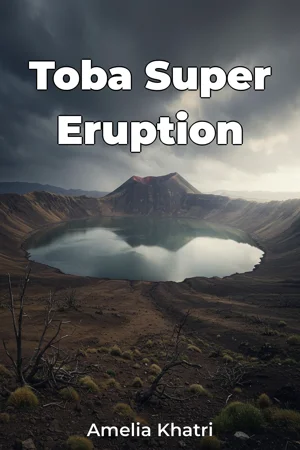
Could a single volcanic event nearly extinguish humanity? "Toba Super-Eruption" delves into the compelling evidence surrounding the cataclysmic eruption of the Toba supervolcano approximately 75,000 years ago and its potential impact on human evolution and population dynamics. This book explores the intersection of geological evidence and genetic population studies to investigate the hypothesis of a near-extinction event, a severe bottleneck that drastically reduced the size of the human population. These topics are important because understanding such events can shed light on the resilience and adaptability of our species, as well as inform our understanding of potential future threats from large-scale natural disasters. To understand the scale of the Toba event, it’s necessary to grasp the concept of supervolcanoes and their capacity for destruction, far exceeding that of typical volcanic eruptions. This requires familiarity with basic geological processes like magma formation, volcanic explosivity indices, and global climate forcing. Prior understanding of genetic diversity and population bottlenecks will also enhance the reader's comprehension of the genetic evidence presented. The central argument of this book posits that the Toba super-eruption triggered a prolonged volcanic winter, leading to significant environmental changes and resource scarcity, which in turn caused a severe population bottleneck in human populations. This bottleneck, while not leading to complete extinction, drastically reduced human genetic diversity and potentially shaped the subsequent trajectory of human evolution and migration. The importance of this argument lies in its ability to provide a framework for understanding the development of modern human populations and the influence of extreme environmental events on our species survival. The book unfolds by first introducing the geological context of the Toba supervolcano, detailing the magnitude of the eruption based on tephra deposits found across the globe. It then investigates the environmental consequences of the eruption, analyzing paleoclimatic data to reconstruct the volcanic winter and its impact on ecosystems. A significant portion of the book is dedicated to exploring genetic evidence for a population bottleneck around 75,000 years ago, analyzing patterns of genetic diversity in modern human populations and comparing them to other species. Finally, the book synthesizes the geological and genetic evidence to assess the likelihood of a Toba-induced near-extinction event, discussing the potential mechanisms by which human populations survived and subsequently repopulated the world. The practical implications include understanding the vulnerability of human populations to future catastrophic events and planning for long-term survival. The book relies on a diverse range of evidence, including geological analysis of Toba tephra deposits, paleoclimatic reconstructions based on ice core data and sediment records, and genetic analyses of modern human populations using techniques such as mitochondrial DNA and Y-chromosome sequencing. Unique data sources include detailed tephra distribution maps and newly published genomic studies of ancient human remains. "Toba Super-Eruption" bridges earth sciences, geography, and history. It connects to climatology through the study of volcanic winters, to anthropology through the investigation of human migration patterns, and to genetics through the analysis of population bottlenecks and genetic diversity. These interdisciplinary connections enrich the book's argument by providing a holistic view of the Toba event and its consequences. The book offers a comprehensive assessment of the Toba bottleneck hypothesis, integrating geological and genetic evidence within a coherent framework. This interdisciplinary approach, combined with a focus on the potential mechanisms of human survival, provides a more nuanced and complete picture than previous studies that have typically focused on one line of evidence. The tone is informative and scientifically grounded, aiming to appeal to both academics and informed general readers. The writing style is clear and accessible, avoiding excessive jargon and complex equations while still maintaining scientific rigor. This book is targeted toward readers interested in earth sciences, human evolution, and the impact of natural disasters on human history. It will be valuable to students, researchers, and anyone curious about the intersection of geology and human history. Following genre conventions, the book maintains a factual and objective approach, presenting evidence and analysis in a fair and balanced manner. It avoids speculation and prioritizes evidence-based conclusions. The scope of the book is limited to the investigation of the Toba super-eruption and its potential impact on human populations. It does not delve into other potential causes of population bottlenecks or explore unrelated aspects of human evolution. The information presented in the book can be applied to understanding contemporary risks from volcanic eruptions and other large-scale natural disasters. It can also inform conservation efforts by highlighting the importance of genetic diversity and the vulnerability of small populations. The book addresses ongoing debates surrounding the Toba bottleneck hypothesis, including the severity of the environmental impact and the timing and extent of the genetic bottleneck. It presents different perspectives and evaluates the strengths and weaknesses of each argument.
Could a single volcanic event nearly extinguish humanity? "Toba Super-Eruption" delves into the compelling evidence surrounding the cataclysmic eruption of the Toba supervolcano approximately 75,000 years ago and its potential impact on human evolution and population dynamics. This book explores the intersection of geological evidence and genetic population studies to investigate the hypothesis of a near-extinction event, a severe bottleneck that drastically reduced the size of the human population. These topics are important because understanding such events can shed light on the resilience and adaptability of our species, as well as inform our understanding of potential future threats from large-scale natural disasters. To understand the scale of the Toba event, it’s necessary to grasp the concept of supervolcanoes and their capacity for destruction, far exceeding that of typical volcanic eruptions. This requires familiarity with basic geological processes like magma formation, volcanic explosivity indices, and global climate forcing. Prior understanding of genetic diversity and population bottlenecks will also enhance the reader's comprehension of the genetic evidence presented. The central argument of this book posits that the Toba super-eruption triggered a prolonged volcanic winter, leading to significant environmental changes and resource scarcity, which in turn caused a severe population bottleneck in human populations. This bottleneck, while not leading to complete extinction, drastically reduced human genetic diversity and potentially shaped the subsequent trajectory of human evolution and migration. The importance of this argument lies in its ability to provide a framework for understanding the development of modern human populations and the influence of extreme environmental events on our species survival. The book unfolds by first introducing the geological context of the Toba supervolcano, detailing the magnitude of the eruption based on tephra deposits found across the globe. It then investigates the environmental consequences of the eruption, analyzing paleoclimatic data to reconstruct the volcanic winter and its impact on ecosystems. A significant portion of the book is dedicated to exploring genetic evidence for a population bottleneck around 75,000 years ago, analyzing patterns of genetic diversity in modern human populations and comparing them to other species. Finally, the book synthesizes the geological and genetic evidence to assess the likelihood of a Toba-induced near-extinction event, discussing the potential mechanisms by which human populations survived and subsequently repopulated the world. The practical implications include understanding the vulnerability of human populations to future catastrophic events and planning for long-term survival. The book relies on a diverse range of evidence, including geological analysis of Toba tephra deposits, paleoclimatic reconstructions based on ice core data and sediment records, and genetic analyses of modern human populations using techniques such as mitochondrial DNA and Y-chromosome sequencing. Unique data sources include detailed tephra distribution maps and newly published genomic studies of ancient human remains. "Toba Super-Eruption" bridges earth sciences, geography, and history. It connects to climatology through the study of volcanic winters, to anthropology through the investigation of human migration patterns, and to genetics through the analysis of population bottlenecks and genetic diversity. These interdisciplinary connections enrich the book's argument by providing a holistic view of the Toba event and its consequences. The book offers a comprehensive assessment of the Toba bottleneck hypothesis, integrating geological and genetic evidence within a coherent framework. This interdisciplinary approach, combined with a focus on the potential mechanisms of human survival, provides a more nuanced and complete picture than previous studies that have typically focused on one line of evidence. The tone is informative and scientifically grounded, aiming to appeal to both academics and informed general readers. The writing style is clear and accessible, avoiding excessive jargon and complex equations while still maintaining scientific rigor. This book is targeted toward readers interested in earth sciences, human evolution, and the impact of natural disasters on human history. It will be valuable to students, researchers, and anyone curious about the intersection of geology and human history. Following genre conventions, the book maintains a factual and objective approach, presenting evidence and analysis in a fair and balanced manner. It avoids speculation and prioritizes evidence-based conclusions. The scope of the book is limited to the investigation of the Toba super-eruption and its potential impact on human populations. It does not delve into other potential causes of population bottlenecks or explore unrelated aspects of human evolution. The information presented in the book can be applied to understanding contemporary risks from volcanic eruptions and other large-scale natural disasters. It can also inform conservation efforts by highlighting the importance of genetic diversity and the vulnerability of small populations. The book addresses ongoing debates surrounding the Toba bottleneck hypothesis, including the severity of the environmental impact and the timing and extent of the genetic bottleneck. It presents different perspectives and evaluates the strengths and weaknesses of each argument.
"Toba Super-Eruption" explores the theory that a massive volcanic event nearly wiped out humanity around 75,000 years ago. This book merges earth sciences, geography, and history to investigate the Toba super-eruption's potential role in creating a population bottleneck. It examines geological evidence, such as widespread tephra deposits, alongside genetic studies showing reduced human genetic diversity that may link to the event. The concept of a "volcanic winter" and its impact on early human survival is central to the argument. The book's unique value lies in its interdisciplinary approach, combining climatology, anthropology, and genetics to assess the likelihood of a near-extinction event. It highlights intriguing insights, such as the scale of the Toba eruption dwarfing typical volcanic events and the potential for such events to drastically alter human evolution and migration patterns. Beginning with the geological context of the eruption, the book progresses to analyze its environmental consequences and then explores genetic data supporting a population bottleneck. It offers a comprehensive assessment of the Toba bottleneck hypothesis, making it valuable for readers interested in the intersection of earth sciences, human history and the impact of natural disasters.
Book Details
ISBN
9788233968038
Publisher
Publifye AS
Your Licenses
You don't own any licenses for this book
Purchase a license below to unlock this book and download the EPUB.
Purchase License
Select a tier to unlock this book
Need bulk licensing?
Contact us for enterprise agreements.