
About This Book
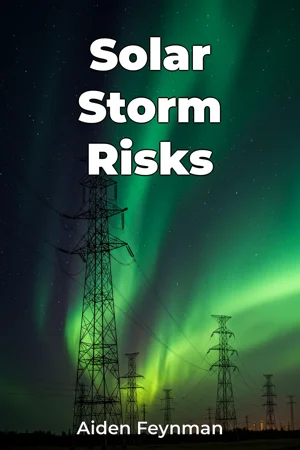
Could a solar storm plunge the modern world into technological darkness, and are we prepared for such an event? "Solar Storm Risks" delves into the potential impacts of solar electromagnetic disturbances on our increasingly vulnerable infrastructure. This book explores the science behind solar storms, examines historical events like the 1859 Carrington Event, and analyzes recent solar observations to provide a comprehensive assessment of current and future risks. The core of this book revolves around three key topics: the physics of solar storms and their electromagnetic effects, the vulnerability of modern technological infrastructure, and strategies for mitigating potential damage. Understanding the processes behind coronal mass ejections (CMEs) and solar flares is crucial for predicting and preparing for future events. Modern society relies heavily on interconnected systems like power grids, communication networks, and satellite infrastructure, all of which are susceptible to disruption from intense electromagnetic radiation. The book argues that a lack of preparedness could lead to widespread blackouts, communication failures, and economic instability. The Carrington Event serves as a stark reminder of the potential consequences of extreme solar activity. This historical event, which occurred before the widespread use of electricity, caused telegraph systems worldwide to fail. The book draws parallels between this event and the potential impact on today's far more complex and vulnerable infrastructure, emphasizing the increased risks posed by our reliance on sophisticated technology. Recent solar observations, including data from space-based observatories, reveal the frequency and intensity of solar events, providing valuable insights into the likelihood of future extreme storms. "Solar Storm Risks" argues that proactive measures are essential to safeguard critical infrastructure. The book presents a detailed examination of the scientific literature and data from organizations like Space Weather Prediction Center (SWPC) and NASA to substantiate this claim. It systematically outlines the potential risks, analyzes case studies of previous solar events, and proposes practical mitigation strategies. The book's structure follows a logical progression. It begins with an introduction to solar physics, explaining the causes and characteristics of solar storms. It then transitions to an examination of the vulnerabilities of various elements of modern infrastructure, including power grids, communication networks, and GPS systems. Subsequent chapters delve into mitigation strategies, such as hardening infrastructure, developing early warning systems, and establishing emergency response protocols. The book culminates with a discussion of policy implications and the need for international cooperation to address this global threat. The evidence presented consists of scientific data, historical records, engineering analyses, and risk assessments. Unique data sources include real-time solar observations from space-based telescopes and ground-based observatories. The book's methodology involves integrating scientific research with engineering principles to assess the potential impact of solar storms on technological systems. This book connects to several other fields, including astrophysics, electrical engineering, and emergency management. The astrophysical perspective provides an understanding of the causes and behavior of solar storms. Electrical engineering expertise is essential for assessing the vulnerability of power grids and communication networks. Emergency management principles guide the development of effective response strategies. These interdisciplinary connections enhance the book's argument by providing a holistic perspective on the risks posed by solar storms. "Solar Storm Risks" adopts a fact-based, analytical approach to presenting information. The writing style is clear, concise, and accessible to a broad audience. The book is intended for policymakers, engineers, scientists, and anyone interested in understanding the risks posed by solar storms and the steps that can be taken to mitigate them. It will be valuable to those working in the energy sector, telecommunications, and government agencies responsible for infrastructure protection. As a work of non-fiction, the book aims to provide accurate and reliable information, avoiding speculation and sensationalism. The scope of the book is limited to the direct effects of solar electromagnetic disturbances on technological infrastructure, excluding other potential space weather phenomena. The information in this book can be applied practically by engineers to design more resilient infrastructure, by policymakers to develop effective regulations, and by individuals to prepare for potential disruptions. The book addresses some debates in the scientific community regarding the frequency and intensity of extreme solar events, offering a balanced perspective based on current research.
Could a solar storm plunge the modern world into technological darkness, and are we prepared for such an event? "Solar Storm Risks" delves into the potential impacts of solar electromagnetic disturbances on our increasingly vulnerable infrastructure. This book explores the science behind solar storms, examines historical events like the 1859 Carrington Event, and analyzes recent solar observations to provide a comprehensive assessment of current and future risks. The core of this book revolves around three key topics: the physics of solar storms and their electromagnetic effects, the vulnerability of modern technological infrastructure, and strategies for mitigating potential damage. Understanding the processes behind coronal mass ejections (CMEs) and solar flares is crucial for predicting and preparing for future events. Modern society relies heavily on interconnected systems like power grids, communication networks, and satellite infrastructure, all of which are susceptible to disruption from intense electromagnetic radiation. The book argues that a lack of preparedness could lead to widespread blackouts, communication failures, and economic instability. The Carrington Event serves as a stark reminder of the potential consequences of extreme solar activity. This historical event, which occurred before the widespread use of electricity, caused telegraph systems worldwide to fail. The book draws parallels between this event and the potential impact on today's far more complex and vulnerable infrastructure, emphasizing the increased risks posed by our reliance on sophisticated technology. Recent solar observations, including data from space-based observatories, reveal the frequency and intensity of solar events, providing valuable insights into the likelihood of future extreme storms. "Solar Storm Risks" argues that proactive measures are essential to safeguard critical infrastructure. The book presents a detailed examination of the scientific literature and data from organizations like Space Weather Prediction Center (SWPC) and NASA to substantiate this claim. It systematically outlines the potential risks, analyzes case studies of previous solar events, and proposes practical mitigation strategies. The book's structure follows a logical progression. It begins with an introduction to solar physics, explaining the causes and characteristics of solar storms. It then transitions to an examination of the vulnerabilities of various elements of modern infrastructure, including power grids, communication networks, and GPS systems. Subsequent chapters delve into mitigation strategies, such as hardening infrastructure, developing early warning systems, and establishing emergency response protocols. The book culminates with a discussion of policy implications and the need for international cooperation to address this global threat. The evidence presented consists of scientific data, historical records, engineering analyses, and risk assessments. Unique data sources include real-time solar observations from space-based telescopes and ground-based observatories. The book's methodology involves integrating scientific research with engineering principles to assess the potential impact of solar storms on technological systems. This book connects to several other fields, including astrophysics, electrical engineering, and emergency management. The astrophysical perspective provides an understanding of the causes and behavior of solar storms. Electrical engineering expertise is essential for assessing the vulnerability of power grids and communication networks. Emergency management principles guide the development of effective response strategies. These interdisciplinary connections enhance the book's argument by providing a holistic perspective on the risks posed by solar storms. "Solar Storm Risks" adopts a fact-based, analytical approach to presenting information. The writing style is clear, concise, and accessible to a broad audience. The book is intended for policymakers, engineers, scientists, and anyone interested in understanding the risks posed by solar storms and the steps that can be taken to mitigate them. It will be valuable to those working in the energy sector, telecommunications, and government agencies responsible for infrastructure protection. As a work of non-fiction, the book aims to provide accurate and reliable information, avoiding speculation and sensationalism. The scope of the book is limited to the direct effects of solar electromagnetic disturbances on technological infrastructure, excluding other potential space weather phenomena. The information in this book can be applied practically by engineers to design more resilient infrastructure, by policymakers to develop effective regulations, and by individuals to prepare for potential disruptions. The book addresses some debates in the scientific community regarding the frequency and intensity of extreme solar events, offering a balanced perspective based on current research.
"Solar Storm Risks" explores the real threat that solar storms pose to our modern technological infrastructure. It highlights how events like coronal mass ejections and solar flares can cause electromagnetic disturbances, potentially crippling power grids and communication networks. A key insight is that our reliance on technology has made us increasingly vulnerable, drawing parallels to the 1859 Carrington Event, which disrupted telegraph systems worldwide. The book emphasizes the urgent need for risk assessment and mitigation strategies to protect against potentially devastating consequences. The book presents a fact-based analysis of solar physics, infrastructure vulnerability, and mitigation strategies. It progresses logically from explaining the science behind solar storms to examining the weaknesses in our technological systems. Subsequent chapters explore hardening infrastructure, early warning systems, and emergency response protocols, showcasing a comprehensive approach to addressing this global technological risk. It underscores the importance of international cooperation to safeguard against future events.
Book Details
ISBN
9788233968021
Publisher
Publifye AS
Your Licenses
You don't own any licenses for this book
Purchase a license below to unlock this book and download the EPUB.
Purchase License
Select a tier to unlock this book
Need bulk licensing?
Contact us for enterprise agreements.