
About This Book
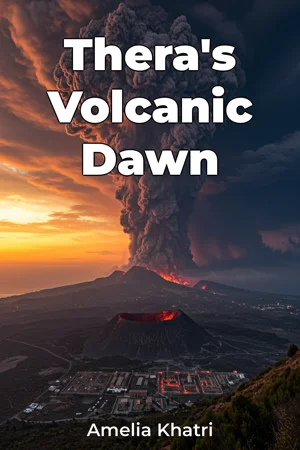
Imagine a world plunged into darkness, a vibrant civilization extinguished in an instant. This is not fiction, but a stark reality explored in "Thera's Volcanic Dawn," a meticulous examination of the Minoan eruption and its devastating impact on the Bronze Age Mediterranean world. This book delves into the confluence of geological forces and human history, revealing the intricate connections between the natural world and the rise and fall of civilizations. "Thera's Volcanic Dawn" addresses several key topics. First, it offers a comprehensive geological analysis of the Thera eruption itself, meticulously reconstructing the event's magnitude, sequence, and immediate environmental consequences. Second, it investigates the widespread impact of the eruption on Bronze Age societies, including the Minoan civilization on Crete and other cultures across the Aegean and Eastern Mediterranean. Finally, it explores the long-term effects of the eruption on trade routes, political landscapes, and cultural development in the region. These topics are vital for understanding the vulnerability of even advanced societies to natural disasters and the complex interplay between environmental change and human history. Understanding the Minoan eruption requires some knowledge of Bronze Age history and basic volcanology. The Bronze Age (c. 3300-1200 BCE) was a period of significant technological and social development in the Mediterranean, marked by the rise of complex societies like the Minoans, known for their advanced art, architecture, and maritime trade. The book will provide detailed information about the geological processes behind explosive volcanic eruptions, including magma composition, caldera formation, and tephra dispersal. The central argument of "Thera's Volcanic Dawn" is that the Minoan eruption was not simply a catastrophic event, but a pivotal moment that profoundly reshaped the Bronze Age Mediterranean world. While the eruption's immediate impact was undeniably devastating, its long-term consequences were far-reaching, contributing to the decline of Minoan civilization, altering trade networks, and influencing the rise of new power centers in the region. This perspective challenges earlier interpretations that viewed the eruption as either a localized disaster or a single cause for the Minoan decline, instead emphasizing its complex and multifaceted impact. The book is structured to guide the reader through a clear and logical analysis. It begins by introducing the geological context of the Aegean volcanic arc and detailing the pre-eruption Minoan society. It then reconstructs the Minoan eruption based on geological data, including tephra deposits, caldera morphology, and geochemical analyses. Subsequently, the book analyzes the eruption's impact on Akrotiri, a Minoan city on Thera preserved by volcanic ash, drawing on archaeological findings. Further chapters explore the eruption's effects on Crete and other regions of the Mediterranean, examining archaeological, textual, and environmental evidence. The book culminates in a discussion of the eruption's long-term consequences and its significance for understanding the interplay between natural disasters and societal change. Evidence presented in "Thera's Volcanic Dawn" draws from diverse sources. Geological data, including tephra stratigraphy, volcanic rock composition, and radiocarbon dating, provide a detailed timeline of the eruption. Archaeological evidence from Akrotiri and other sites across the Mediterranean sheds light on the eruption's impact on human settlements and material culture. Textual sources, such as Egyptian and Near Eastern records, offer glimpses into the broader historical context. The book also integrates environmental data, including pollen analysis and sea-level reconstructions, to assess the eruption's impact on the natural environment. "Thera's Volcanic Dawn" bridges several disciplines. It connects Earth Sciences by examining volcanic processes and their environmental impacts. It intersects with History by analyzing the eruption's influence on Bronze Age civilizations. Finally, it relates to Archaeology through the interpretation of material remains to reconstruct past events. These interdisciplinary connections enrich the book's analysis and provide a more complete understanding of the eruption's significance. This book offers a unique perspective by integrating detailed geological data with archaeological and historical evidence to reconstruct the Minoan eruption and its impact. It moves beyond simplistic narratives of cause and effect, emphasizing the complex interplay between natural and human systems. The book is written in a professional yet accessible style, aimed at both academic and general audiences interested in volcanology, archaeology, and Bronze Age history. It avoids jargon and provides clear explanations of technical concepts, making it accessible to readers with varying backgrounds. The target audience includes students and scholars in Earth Sciences, History, and Archaeology, as well as general readers interested in volcanology, ancient civilizations, and environmental history. The book offers valuable insights into the dynamics of past societies and the challenges of living in a world shaped by natural forces. It provides a comprehensive and up-to-date account of the Minoan eruption and its significance, making it a valuable resource for anyone interested in this pivotal event in human history. As a work of non-fiction, "Thera's Volcanic Dawn" adheres to the highest standards of accuracy and objectivity. All claims are supported by evidence, and different interpretations are presented fairly. The book includes detailed citations and a comprehensive bibliography to allow readers to further explore the topic. The scope of "Thera's Volcanic Dawn" is limited to the Minoan eruption and its impact on the Bronze Age Mediterranean. While it touches on broader themes of volcanism and societal change, it does not attempt to provide a comprehensive overview of these topics. This focused approach allows for a more in-depth and nuanced analysis of the Minoan eruption and its significance. The information in "Thera's Volcanic Dawn" has practical applications for understanding and mitigating the risks of volcanic hazards today. By studying the Minoan eruption, we can learn valuable lessons about the vulnerability of human societies to natural disasters and the importance of preparedness and resilience. The book also provides insights into the long-term environmental consequences of volcanic eruptions, informing efforts to manage and mitigate these impacts. The dating and precise impacts of the Thera eruption remain subjects of debate within the scientific community. "Thera's Volcanic Dawn" addresses these controversies, presenting different perspectives and critically evaluating the evidence supporting each view. It acknowledges the uncertainties inherent in reconstructing past events and emphasizes the ongoing nature of scientific inquiry.
Imagine a world plunged into darkness, a vibrant civilization extinguished in an instant. This is not fiction, but a stark reality explored in "Thera's Volcanic Dawn," a meticulous examination of the Minoan eruption and its devastating impact on the Bronze Age Mediterranean world. This book delves into the confluence of geological forces and human history, revealing the intricate connections between the natural world and the rise and fall of civilizations. "Thera's Volcanic Dawn" addresses several key topics. First, it offers a comprehensive geological analysis of the Thera eruption itself, meticulously reconstructing the event's magnitude, sequence, and immediate environmental consequences. Second, it investigates the widespread impact of the eruption on Bronze Age societies, including the Minoan civilization on Crete and other cultures across the Aegean and Eastern Mediterranean. Finally, it explores the long-term effects of the eruption on trade routes, political landscapes, and cultural development in the region. These topics are vital for understanding the vulnerability of even advanced societies to natural disasters and the complex interplay between environmental change and human history. Understanding the Minoan eruption requires some knowledge of Bronze Age history and basic volcanology. The Bronze Age (c. 3300-1200 BCE) was a period of significant technological and social development in the Mediterranean, marked by the rise of complex societies like the Minoans, known for their advanced art, architecture, and maritime trade. The book will provide detailed information about the geological processes behind explosive volcanic eruptions, including magma composition, caldera formation, and tephra dispersal. The central argument of "Thera's Volcanic Dawn" is that the Minoan eruption was not simply a catastrophic event, but a pivotal moment that profoundly reshaped the Bronze Age Mediterranean world. While the eruption's immediate impact was undeniably devastating, its long-term consequences were far-reaching, contributing to the decline of Minoan civilization, altering trade networks, and influencing the rise of new power centers in the region. This perspective challenges earlier interpretations that viewed the eruption as either a localized disaster or a single cause for the Minoan decline, instead emphasizing its complex and multifaceted impact. The book is structured to guide the reader through a clear and logical analysis. It begins by introducing the geological context of the Aegean volcanic arc and detailing the pre-eruption Minoan society. It then reconstructs the Minoan eruption based on geological data, including tephra deposits, caldera morphology, and geochemical analyses. Subsequently, the book analyzes the eruption's impact on Akrotiri, a Minoan city on Thera preserved by volcanic ash, drawing on archaeological findings. Further chapters explore the eruption's effects on Crete and other regions of the Mediterranean, examining archaeological, textual, and environmental evidence. The book culminates in a discussion of the eruption's long-term consequences and its significance for understanding the interplay between natural disasters and societal change. Evidence presented in "Thera's Volcanic Dawn" draws from diverse sources. Geological data, including tephra stratigraphy, volcanic rock composition, and radiocarbon dating, provide a detailed timeline of the eruption. Archaeological evidence from Akrotiri and other sites across the Mediterranean sheds light on the eruption's impact on human settlements and material culture. Textual sources, such as Egyptian and Near Eastern records, offer glimpses into the broader historical context. The book also integrates environmental data, including pollen analysis and sea-level reconstructions, to assess the eruption's impact on the natural environment. "Thera's Volcanic Dawn" bridges several disciplines. It connects Earth Sciences by examining volcanic processes and their environmental impacts. It intersects with History by analyzing the eruption's influence on Bronze Age civilizations. Finally, it relates to Archaeology through the interpretation of material remains to reconstruct past events. These interdisciplinary connections enrich the book's analysis and provide a more complete understanding of the eruption's significance. This book offers a unique perspective by integrating detailed geological data with archaeological and historical evidence to reconstruct the Minoan eruption and its impact. It moves beyond simplistic narratives of cause and effect, emphasizing the complex interplay between natural and human systems. The book is written in a professional yet accessible style, aimed at both academic and general audiences interested in volcanology, archaeology, and Bronze Age history. It avoids jargon and provides clear explanations of technical concepts, making it accessible to readers with varying backgrounds. The target audience includes students and scholars in Earth Sciences, History, and Archaeology, as well as general readers interested in volcanology, ancient civilizations, and environmental history. The book offers valuable insights into the dynamics of past societies and the challenges of living in a world shaped by natural forces. It provides a comprehensive and up-to-date account of the Minoan eruption and its significance, making it a valuable resource for anyone interested in this pivotal event in human history. As a work of non-fiction, "Thera's Volcanic Dawn" adheres to the highest standards of accuracy and objectivity. All claims are supported by evidence, and different interpretations are presented fairly. The book includes detailed citations and a comprehensive bibliography to allow readers to further explore the topic. The scope of "Thera's Volcanic Dawn" is limited to the Minoan eruption and its impact on the Bronze Age Mediterranean. While it touches on broader themes of volcanism and societal change, it does not attempt to provide a comprehensive overview of these topics. This focused approach allows for a more in-depth and nuanced analysis of the Minoan eruption and its significance. The information in "Thera's Volcanic Dawn" has practical applications for understanding and mitigating the risks of volcanic hazards today. By studying the Minoan eruption, we can learn valuable lessons about the vulnerability of human societies to natural disasters and the importance of preparedness and resilience. The book also provides insights into the long-term environmental consequences of volcanic eruptions, informing efforts to manage and mitigate these impacts. The dating and precise impacts of the Thera eruption remain subjects of debate within the scientific community. "Thera's Volcanic Dawn" addresses these controversies, presenting different perspectives and critically evaluating the evidence supporting each view. It acknowledges the uncertainties inherent in reconstructing past events and emphasizes the ongoing nature of scientific inquiry.
"Thera's Volcanic Dawn" explores the cataclysmic Minoan eruption and its far-reaching consequences in the Bronze Age Mediterranean. This book meticulously examines the geological event, reconstructing its magnitude and immediate environmental fallout, while also investigating the eruption's widespread impact on Minoan civilization and other Bronze Age societies. One intriguing insight is how the eruption profoundly altered trade routes and political landscapes across the Aegean. The book adopts an interdisciplinary approach, blending Earth Sciences, History, and Archaeology to offer a comprehensive understanding. Starting with the geological context of the Aegean and pre-eruption Minoan society, it then reconstructs the eruption using geological data and analyzes its effects on sites like Akrotiri. Further chapters delve into the eruption's impact on Crete and other regions, concluding with a discussion of its long-term consequences and the complex interplay between natural disasters and societal change.
Book Details
ISBN
9788233968007
Publisher
Publifye AS
Your Licenses
You don't own any licenses for this book
Purchase a license below to unlock this book and download the EPUB.
Purchase License
Select a tier to unlock this book
Need bulk licensing?
Contact us for enterprise agreements.