
About This Book
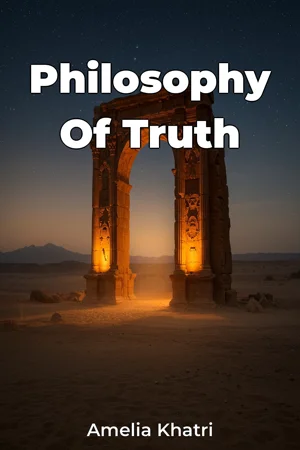
Is truth a fixed star, guiding all civilizations through the ages, or a mutable reflection, shaped by the lens of culture and belief? "Philosophy Of Truth" embarks on a journey through the complex and often contradictory landscape of truth, examining its absolute, relative, and constructed forms across diverse historical and philosophical traditions. This exploration is not merely an academic exercise; understanding the nature of truth is fundamental to how we perceive reality, construct knowledge, and engage with one another in an increasingly interconnected world. This book grapples with three central themes: the quest for absolute truth, the influence of cultural relativism, and the social construction of truth. The pursuit of absolute truth, a cornerstone of Western philosophical thought from Plato to Descartes, seeks universal and unchanging principles that underpin reality. We examine its appeals and inherent limitations. Conversely, cultural relativism posits that truth is always contingent, varying across different societies and historical periods. Understanding cultural relativism is essential for fostering cross-cultural understanding and avoiding ethnocentric biases. Finally, the social construction of truth explores how power structures, social norms, and language shape our understanding of reality, challenging the notion of an objective and independent truth. To provide context, the book delves into the history of epistemology, tracing the evolution of theories of knowledge from ancient Greece to postmodernism. It addresses fundamental questions, such as the nature of justification, the reliability of perception, and the role of reason in acquiring knowledge. Readers will not require prior expertise in philosophy, as key concepts are introduced and explained in an accessible manner. The central argument of "Philosophy Of Truth" is that while the pursuit of absolute truth may be a noble aspiration, a nuanced understanding of both cultural relativism and the social construction of truth is crucial for navigating the complexities of the modern world. By acknowledging the limitations of our own perspectives and appreciating the validity of alternative viewpoints, we can foster more meaningful dialogue and build more inclusive societies. The book unfolds in three major parts. Part one introduces the core concepts of absolute, relative, and constructed truth, examining their historical origins and philosophical underpinnings. Part two delves into specific case studies, exploring how these concepts have played out in different cultural and historical contexts, from ancient civilizations to contemporary social movements. Part three synthesizes these diverse perspectives, proposing a framework for understanding truth as a dynamic and multifaceted phenomenon, highlighting its practical implications for fields such as law, ethics, and politics. The analysis draws upon a wide range of evidence, including primary texts from philosophical and religious traditions, historical accounts of cross-cultural encounters, and contemporary research in social psychology and cognitive science. The book also employs comparative analysis, juxtaposing different philosophical perspectives to reveal their strengths and weaknesses. Interdisciplinary connections enrich the argument. The book engages with sociology to understand how social structures shape beliefs and values, with political science to examine the role of truth in shaping public discourse and policy, and with psychology to explore the cognitive biases that influence our perception of reality. "Philosophy Of Truth" adopts a balanced and nuanced approach, avoiding dogmatic pronouncements and acknowledging the inherent ambiguity of the subject matter. The writing style is accessible and engaging, aiming to stimulate critical thinking and encourage readers to question their own assumptions. The intended audience includes students of philosophy, history, and social sciences, as well as general readers interested in exploring the nature of truth and its implications for contemporary society. The book's value lies in its ability to provide a comprehensive and accessible overview of a complex and multifaceted topic. As a work of non-fiction, "Philosophy Of Truth" adheres to the standards of scholarly rigor, providing clear and accurate information, supporting arguments with evidence, and acknowledging alternative perspectives. While the scope of the book is broad, it focuses specifically on philosophical and historical perspectives on truth, acknowledging that other disciplines, such as science and mathematics, also offer valuable insights. The ideas explored in this book have practical applications in various fields. Understanding the social construction of truth can help us to critically evaluate information and resist manipulation. Appreciating cultural relativism can promote tolerance and understanding in cross-cultural interactions. The book also addresses ongoing debates about the existence of objective truth, the role of power in shaping knowledge, and the limits of human understanding. By providing a balanced and informed perspective on these controversies, "Philosophy Of Truth" aims to contribute to a more nuanced and productive dialogue about the nature of truth in the 21st century.
Is truth a fixed star, guiding all civilizations through the ages, or a mutable reflection, shaped by the lens of culture and belief? "Philosophy Of Truth" embarks on a journey through the complex and often contradictory landscape of truth, examining its absolute, relative, and constructed forms across diverse historical and philosophical traditions. This exploration is not merely an academic exercise; understanding the nature of truth is fundamental to how we perceive reality, construct knowledge, and engage with one another in an increasingly interconnected world. This book grapples with three central themes: the quest for absolute truth, the influence of cultural relativism, and the social construction of truth. The pursuit of absolute truth, a cornerstone of Western philosophical thought from Plato to Descartes, seeks universal and unchanging principles that underpin reality. We examine its appeals and inherent limitations. Conversely, cultural relativism posits that truth is always contingent, varying across different societies and historical periods. Understanding cultural relativism is essential for fostering cross-cultural understanding and avoiding ethnocentric biases. Finally, the social construction of truth explores how power structures, social norms, and language shape our understanding of reality, challenging the notion of an objective and independent truth. To provide context, the book delves into the history of epistemology, tracing the evolution of theories of knowledge from ancient Greece to postmodernism. It addresses fundamental questions, such as the nature of justification, the reliability of perception, and the role of reason in acquiring knowledge. Readers will not require prior expertise in philosophy, as key concepts are introduced and explained in an accessible manner. The central argument of "Philosophy Of Truth" is that while the pursuit of absolute truth may be a noble aspiration, a nuanced understanding of both cultural relativism and the social construction of truth is crucial for navigating the complexities of the modern world. By acknowledging the limitations of our own perspectives and appreciating the validity of alternative viewpoints, we can foster more meaningful dialogue and build more inclusive societies. The book unfolds in three major parts. Part one introduces the core concepts of absolute, relative, and constructed truth, examining their historical origins and philosophical underpinnings. Part two delves into specific case studies, exploring how these concepts have played out in different cultural and historical contexts, from ancient civilizations to contemporary social movements. Part three synthesizes these diverse perspectives, proposing a framework for understanding truth as a dynamic and multifaceted phenomenon, highlighting its practical implications for fields such as law, ethics, and politics. The analysis draws upon a wide range of evidence, including primary texts from philosophical and religious traditions, historical accounts of cross-cultural encounters, and contemporary research in social psychology and cognitive science. The book also employs comparative analysis, juxtaposing different philosophical perspectives to reveal their strengths and weaknesses. Interdisciplinary connections enrich the argument. The book engages with sociology to understand how social structures shape beliefs and values, with political science to examine the role of truth in shaping public discourse and policy, and with psychology to explore the cognitive biases that influence our perception of reality. "Philosophy Of Truth" adopts a balanced and nuanced approach, avoiding dogmatic pronouncements and acknowledging the inherent ambiguity of the subject matter. The writing style is accessible and engaging, aiming to stimulate critical thinking and encourage readers to question their own assumptions. The intended audience includes students of philosophy, history, and social sciences, as well as general readers interested in exploring the nature of truth and its implications for contemporary society. The book's value lies in its ability to provide a comprehensive and accessible overview of a complex and multifaceted topic. As a work of non-fiction, "Philosophy Of Truth" adheres to the standards of scholarly rigor, providing clear and accurate information, supporting arguments with evidence, and acknowledging alternative perspectives. While the scope of the book is broad, it focuses specifically on philosophical and historical perspectives on truth, acknowledging that other disciplines, such as science and mathematics, also offer valuable insights. The ideas explored in this book have practical applications in various fields. Understanding the social construction of truth can help us to critically evaluate information and resist manipulation. Appreciating cultural relativism can promote tolerance and understanding in cross-cultural interactions. The book also addresses ongoing debates about the existence of objective truth, the role of power in shaping knowledge, and the limits of human understanding. By providing a balanced and informed perspective on these controversies, "Philosophy Of Truth" aims to contribute to a more nuanced and productive dialogue about the nature of truth in the 21st century.
"Philosophy Of Truth" explores the multifaceted nature of truth, questioning whether it exists as an unwavering absolute or whether it is shaped by culture and society. It delves into the history of epistemology and considers the pursuit of absolute truth, a concept prominent in Western thought. However, the book also acknowledges the influence of cultural relativism, recognizing that truth can vary across different societies. Understanding these perspectives is crucial for navigating an interconnected world and avoiding biases. The book examines the social construction of truth, revealing how language, power structures, and social norms influence our understanding of reality. It progresses through three sections, first introducing core concepts, then presenting case studies from different cultures and historical periods, and finally, synthesizing these perspectives to propose a framework for understanding truth as a dynamic phenomenon. This approach highlights the practical implications of truth in fields like ethics and political science.
Book Details
ISBN
9788233967956
Publisher
Publifye AS
Your Licenses
You don't own any licenses for this book
Purchase a license below to unlock this book and download the EPUB.
Purchase License
Select a tier to unlock this book
Need bulk licensing?
Contact us for enterprise agreements.