
About This Book
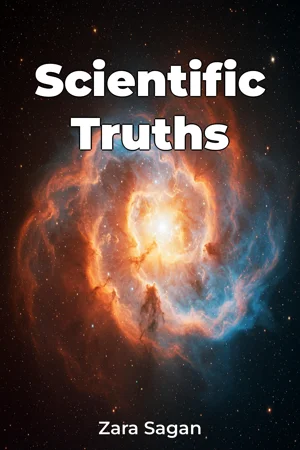
What if everything we hold to be undeniably true is, in fact, a constantly evolving approximation of reality? "Scientific Truths" delves into the dynamic interplay between scientific discovery and our understanding of truth, examining how paradigm shifts in scientific thought challenge long-held beliefs and redefine the boundaries of knowledge. This book explores the core concept that scientific truth is not a fixed entity but rather a moving target, shaped by ongoing research, technological advancements, and evolving theoretical frameworks. We will examine our current understanding of the universe, from the smallest subatomic particles to the largest cosmological structures, and how these views have dramatically transformed over time. Further, we will analyze the philosophical implications of these changes, questioning the nature of reality and the limits of human perception. These topics are important because they underscore the need for intellectual humility and a willingness to revise our understanding of the world in light of new evidence. To fully appreciate the nature of scientific revolutions, we will explore key moments in the history of science, such as the shift from a geocentric to a heliocentric model of the solar system, the development of quantum mechanics, and the theory of general relativity. This historical context highlights the often-contentious process by which new scientific ideas gain acceptance and reshape our understanding of reality. While no specific scientific background is absolutely necessary, a general familiarity with basic scientific principles will enhance the reader's engagement with the material. The central argument of "Scientific Truths" is that embracing the provisional nature of scientific truth is crucial for progress, both within the scientific community and in society as a whole. By acknowledging that our current understanding is incomplete and subject to change, we can foster a more open and adaptable approach to knowledge acquisition and problem-solving. This argument is important because it challenges the notion of science as a source of absolute certainty and promotes a more nuanced understanding of the scientific process. The book's structure will begin by introducing the core concepts of scientific truth, paradigm shifts, and the philosophy of science. The first major section will explore historical examples of scientific revolutions, analyzing the evidence that led to these changes and the resistance they often faced. The second section will delve into contemporary scientific challenges, such as the search for dark matter and dark energy, the quest for a unified theory of physics, and the exploration of consciousness. The final section will discuss the practical implications of embracing the provisional nature of scientific truth, including its impact on education, policy-making, and our ability to address complex global challenges. Throughout the book, evidence will be drawn from a wide range of scientific disciplines, including physics, cosmology, biology, and neuroscience. In addition to published research papers and textbooks, we will also make use of historical documents, interviews with leading scientists, and philosophical treatises to support our arguments. "Scientific Truths" connects to several other fields of study, including history, sociology, and political science. By examining the social and political context in which scientific discoveries are made, we can gain a deeper understanding of the factors that influence the acceptance and dissemination of new ideas. The book also connects to ethics, as it raises questions about the responsible use of scientific knowledge and the potential consequences of technological advancements. This book offers a unique perspective by combining a rigorous analysis of scientific concepts with philosophical insights and historical context. It is written in an accessible and engaging style, making it suitable for a broad audience of readers with an interest in science, philosophy, and the evolution of human knowledge. The intended readership includes students, educators, science enthusiasts, and anyone who is curious about the nature of reality and the scientific process. This book is valuable because it provides a framework for understanding the ever-changing landscape of scientific knowledge and its impact on our lives. The scope of "Scientific Truths" is intentionally broad, covering a wide range of scientific disciplines and philosophical perspectives. However, it does not delve into highly specialized technical details, focusing instead on the overarching themes and implications of scientific discovery. The information presented in this book can be applied practically by readers in a number of ways. By fostering a more critical and open-minded approach to information, it can help readers become more discerning consumers of scientific news and commentary. It can also inspire a greater appreciation for the scientific process and encourage readers to engage with scientific issues in a more informed and constructive manner. Finally, this book addresses ongoing debates in the philosophy of science, such as the realism vs. anti-realism debate and the problem of scientific induction. By presenting different perspectives on these issues, it encourages readers to think critically about the foundations of scientific knowledge and the limits of human understanding.
What if everything we hold to be undeniably true is, in fact, a constantly evolving approximation of reality? "Scientific Truths" delves into the dynamic interplay between scientific discovery and our understanding of truth, examining how paradigm shifts in scientific thought challenge long-held beliefs and redefine the boundaries of knowledge. This book explores the core concept that scientific truth is not a fixed entity but rather a moving target, shaped by ongoing research, technological advancements, and evolving theoretical frameworks. We will examine our current understanding of the universe, from the smallest subatomic particles to the largest cosmological structures, and how these views have dramatically transformed over time. Further, we will analyze the philosophical implications of these changes, questioning the nature of reality and the limits of human perception. These topics are important because they underscore the need for intellectual humility and a willingness to revise our understanding of the world in light of new evidence. To fully appreciate the nature of scientific revolutions, we will explore key moments in the history of science, such as the shift from a geocentric to a heliocentric model of the solar system, the development of quantum mechanics, and the theory of general relativity. This historical context highlights the often-contentious process by which new scientific ideas gain acceptance and reshape our understanding of reality. While no specific scientific background is absolutely necessary, a general familiarity with basic scientific principles will enhance the reader's engagement with the material. The central argument of "Scientific Truths" is that embracing the provisional nature of scientific truth is crucial for progress, both within the scientific community and in society as a whole. By acknowledging that our current understanding is incomplete and subject to change, we can foster a more open and adaptable approach to knowledge acquisition and problem-solving. This argument is important because it challenges the notion of science as a source of absolute certainty and promotes a more nuanced understanding of the scientific process. The book's structure will begin by introducing the core concepts of scientific truth, paradigm shifts, and the philosophy of science. The first major section will explore historical examples of scientific revolutions, analyzing the evidence that led to these changes and the resistance they often faced. The second section will delve into contemporary scientific challenges, such as the search for dark matter and dark energy, the quest for a unified theory of physics, and the exploration of consciousness. The final section will discuss the practical implications of embracing the provisional nature of scientific truth, including its impact on education, policy-making, and our ability to address complex global challenges. Throughout the book, evidence will be drawn from a wide range of scientific disciplines, including physics, cosmology, biology, and neuroscience. In addition to published research papers and textbooks, we will also make use of historical documents, interviews with leading scientists, and philosophical treatises to support our arguments. "Scientific Truths" connects to several other fields of study, including history, sociology, and political science. By examining the social and political context in which scientific discoveries are made, we can gain a deeper understanding of the factors that influence the acceptance and dissemination of new ideas. The book also connects to ethics, as it raises questions about the responsible use of scientific knowledge and the potential consequences of technological advancements. This book offers a unique perspective by combining a rigorous analysis of scientific concepts with philosophical insights and historical context. It is written in an accessible and engaging style, making it suitable for a broad audience of readers with an interest in science, philosophy, and the evolution of human knowledge. The intended readership includes students, educators, science enthusiasts, and anyone who is curious about the nature of reality and the scientific process. This book is valuable because it provides a framework for understanding the ever-changing landscape of scientific knowledge and its impact on our lives. The scope of "Scientific Truths" is intentionally broad, covering a wide range of scientific disciplines and philosophical perspectives. However, it does not delve into highly specialized technical details, focusing instead on the overarching themes and implications of scientific discovery. The information presented in this book can be applied practically by readers in a number of ways. By fostering a more critical and open-minded approach to information, it can help readers become more discerning consumers of scientific news and commentary. It can also inspire a greater appreciation for the scientific process and encourage readers to engage with scientific issues in a more informed and constructive manner. Finally, this book addresses ongoing debates in the philosophy of science, such as the realism vs. anti-realism debate and the problem of scientific induction. By presenting different perspectives on these issues, it encourages readers to think critically about the foundations of scientific knowledge and the limits of human understanding.
"Scientific Truths" explores the evolving nature of knowledge, arguing that scientific truth isn't a fixed point but a constantly shifting landscape. It examines paradigm shifts throughout history, such as the move from a geocentric to a heliocentric solar system, to illustrate how scientific revolutions redefine our understanding of reality. The book underscores the importance of intellectual humility, acknowledging that our current understanding is always incomplete and subject to change. The book delves into contemporary challenges like the mysteries of dark matter and dark energy, connecting scientific concepts with philosophical insights. By exploring the history of science and examining the evolution of knowledge, the book highlights the often-contentious process by which new scientific ideas gain acceptance. This journey progresses across chapters, beginning with core concepts, then moving through historical examples and contemporary scientific challenges, before discussing practical implications. Ultimately, "Scientific Truths" offers a framework for understanding the dynamic interplay between scientific discovery and our perception of reality. It encourages readers to embrace the provisional nature of scientific truth, fostering a more open and adaptable approach to problem-solving and knowledge acquisition, applicable in education, policy-making, and our approach to global challenges.
Book Details
ISBN
9788233967918
Publisher
Publifye AS
Your Licenses
You don't own any licenses for this book
Purchase a license below to unlock this book and download the EPUB.
Purchase License
Select a tier to unlock this book
Need bulk licensing?
Contact us for enterprise agreements.