
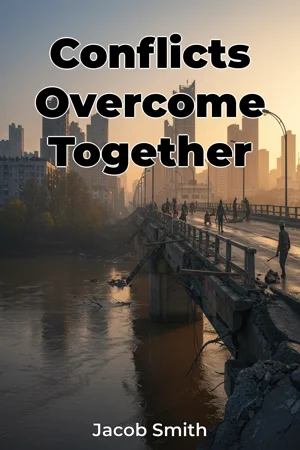
About This Book
How can shared suffering transform enemies into allies? "Conflicts Overcome Together" delves into the unexpected power of collective hardships—illness, natural disasters, economic crises—to bridge divides and foster reconciliation after periods of conflict. This book examines the psychological and social dynamics that underpin these transformations, offering a new perspective on conflict resolution and post-conflict recovery. We will explore two key concepts: the unifying effect of shared vulnerability and the re-evaluation of priorities in the face of existential threats. Shared vulnerability arises when former adversaries face a common danger that transcends pre-existing conflicts, creating a sense of shared fate. This, in turn, leads to a re-evaluation of priorities as survival and recovery take precedence over past grievances. These topics are vital because they challenge conventional wisdom about conflict resolution, which often focuses on addressing the root causes of conflict without fully considering the potential for shared experiences to forge new bonds. The book draws upon historical case studies, sociological research, and psychological studies to support its central argument: that shared hardships can act as catalysts for reconciliation by fostering empathy, shared identity, and a sense of collective purpose. We will look at examples such as communities rebuilding together after devastating natural disasters, collaborations between former warring factions to combat disease outbreaks, and joint efforts to address economic crises that threaten entire regions. "Conflicts Overcome Together" is structured to systematically build this argument. Initially, the psychological mechanisms that underlie empathy and cooperation in crisis situations are introduced. The work then presents detailed case studies illustrating how shared adversity has led to cooperation in diverse settings. The book develops its ideas through examination of (1) the psychological impact of experiencing shared trauma, focusing on how it can foster empathy and reduce prejudice; (2) the sociological factors that promote cooperation in crisis situations, such as the breakdown of social hierarchies and the emergence of new leadership; and (3) the political dynamics that shape post-crisis reconciliation efforts, examining the role of institutions and policies in promoting or hindering cooperation. The culmination shows how these factors intertwine to create opportunities for lasting peace and cooperation. The book concludes by discussing practical strategies for leveraging shared hardships to promote reconciliation in conflict zones. The research presented in this book draws upon diverse sources, including archival records, surveys of affected communities, and interviews with individuals who have participated in post-conflict reconciliation efforts. Unique data sets include longitudinal studies tracking the psychological and social impacts of shared hardships on conflict-affected populations. This book connects to other fields such as disaster management, public health, and political science. Disaster management strategies can be enhanced by understanding how shared experiences can foster cooperation in the aftermath of crises. Public health interventions can benefit from insights into how collective health threats can bridge divides. Political science research can inform policies that promote reconciliation by leveraging the unifying effect of shared hardships. A unique aspect lies in its focus on the positive potential of shared suffering. Rather than solely focusing on the destructive consequences of conflict, it explores how adversity can create opportunities for healing and reconciliation. The writing style balances academic rigor with accessibility, making it suitable for both scholars and general readers interested in conflict resolution and social psychology. The intended audience includes academics, policymakers, conflict resolution practitioners, and anyone interested in understanding the dynamics of conflict and reconciliation. It will be valuable to them by providing new insights into the potential for shared experiences to foster cooperation and build peace. As a work within the genres of psychology and social science, the book adheres to the conventions of evidence-based analysis and rigorous scholarship. It presents a comprehensive review of existing literature, employs sound research methodologies, and offers clear and well-supported conclusions. The scope of the book is limited to exploring the potential for shared hardships to foster reconciliation. It does not address all aspects of conflict resolution or post-conflict recovery. The information can be applied practically by conflict resolution practitioners, policymakers, and community leaders seeking to promote reconciliation in conflict-affected areas. While the book emphasizes the positive potential of shared hardships, it acknowledges that these experiences can also exacerbate existing tensions or create new conflicts. Ongoing debates in the field include the extent to which shared hardships can truly overcome deeply entrenched grievances and the conditions under which cooperation is most likely to emerge.
How can shared suffering transform enemies into allies? "Conflicts Overcome Together" delves into the unexpected power of collective hardships—illness, natural disasters, economic crises—to bridge divides and foster reconciliation after periods of conflict. This book examines the psychological and social dynamics that underpin these transformations, offering a new perspective on conflict resolution and post-conflict recovery. We will explore two key concepts: the unifying effect of shared vulnerability and the re-evaluation of priorities in the face of existential threats. Shared vulnerability arises when former adversaries face a common danger that transcends pre-existing conflicts, creating a sense of shared fate. This, in turn, leads to a re-evaluation of priorities as survival and recovery take precedence over past grievances. These topics are vital because they challenge conventional wisdom about conflict resolution, which often focuses on addressing the root causes of conflict without fully considering the potential for shared experiences to forge new bonds. The book draws upon historical case studies, sociological research, and psychological studies to support its central argument: that shared hardships can act as catalysts for reconciliation by fostering empathy, shared identity, and a sense of collective purpose. We will look at examples such as communities rebuilding together after devastating natural disasters, collaborations between former warring factions to combat disease outbreaks, and joint efforts to address economic crises that threaten entire regions. "Conflicts Overcome Together" is structured to systematically build this argument. Initially, the psychological mechanisms that underlie empathy and cooperation in crisis situations are introduced. The work then presents detailed case studies illustrating how shared adversity has led to cooperation in diverse settings. The book develops its ideas through examination of (1) the psychological impact of experiencing shared trauma, focusing on how it can foster empathy and reduce prejudice; (2) the sociological factors that promote cooperation in crisis situations, such as the breakdown of social hierarchies and the emergence of new leadership; and (3) the political dynamics that shape post-crisis reconciliation efforts, examining the role of institutions and policies in promoting or hindering cooperation. The culmination shows how these factors intertwine to create opportunities for lasting peace and cooperation. The book concludes by discussing practical strategies for leveraging shared hardships to promote reconciliation in conflict zones. The research presented in this book draws upon diverse sources, including archival records, surveys of affected communities, and interviews with individuals who have participated in post-conflict reconciliation efforts. Unique data sets include longitudinal studies tracking the psychological and social impacts of shared hardships on conflict-affected populations. This book connects to other fields such as disaster management, public health, and political science. Disaster management strategies can be enhanced by understanding how shared experiences can foster cooperation in the aftermath of crises. Public health interventions can benefit from insights into how collective health threats can bridge divides. Political science research can inform policies that promote reconciliation by leveraging the unifying effect of shared hardships. A unique aspect lies in its focus on the positive potential of shared suffering. Rather than solely focusing on the destructive consequences of conflict, it explores how adversity can create opportunities for healing and reconciliation. The writing style balances academic rigor with accessibility, making it suitable for both scholars and general readers interested in conflict resolution and social psychology. The intended audience includes academics, policymakers, conflict resolution practitioners, and anyone interested in understanding the dynamics of conflict and reconciliation. It will be valuable to them by providing new insights into the potential for shared experiences to foster cooperation and build peace. As a work within the genres of psychology and social science, the book adheres to the conventions of evidence-based analysis and rigorous scholarship. It presents a comprehensive review of existing literature, employs sound research methodologies, and offers clear and well-supported conclusions. The scope of the book is limited to exploring the potential for shared hardships to foster reconciliation. It does not address all aspects of conflict resolution or post-conflict recovery. The information can be applied practically by conflict resolution practitioners, policymakers, and community leaders seeking to promote reconciliation in conflict-affected areas. While the book emphasizes the positive potential of shared hardships, it acknowledges that these experiences can also exacerbate existing tensions or create new conflicts. Ongoing debates in the field include the extent to which shared hardships can truly overcome deeply entrenched grievances and the conditions under which cooperation is most likely to emerge.
"Conflicts Overcome Together" explores how shared hardships, like natural disasters or economic crises, can unexpectedly foster reconciliation after conflict. It argues that facing a common threat can create shared vulnerability, leading to a re-evaluation of priorities and cooperation between former adversaries. The book highlights the psychological and social dynamics that underpin these transformations, offering a fresh perspective on conflict resolution. Intriguingly, shared suffering can foster empathy and a sense of collective purpose, potentially turning enemies into allies. The book presents its arguments through historical case studies, sociological research, and psychological studies. It examines the psychological impact of shared trauma, sociological factors promoting cooperation, and the political dynamics shaping post-crisis reconciliation. By systematically building its case across chapters, "Conflicts Overcome Together" demonstrates how shared experiences can pave the way for lasting peace, making it a valuable resource for academics, policymakers, and anyone interested in understanding the complexities of conflict resolution and post-conflict recovery.
Book Details
ISBN
9788233967826
Publisher
Publifye AS
Your Licenses
You don't own any licenses for this book
Purchase a license below to unlock this book and download the EPUB.
Purchase License
Select a tier to unlock this book
Need bulk licensing?
Contact us for enterprise agreements.