
About This Book
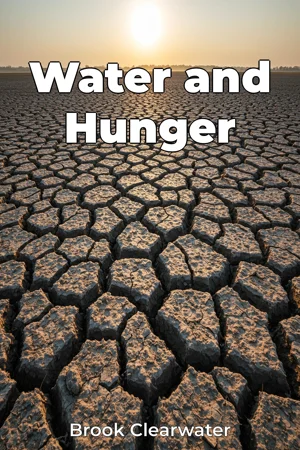
Can the looming specter of water scarcity truly unravel the global food supply? *Water and Hunger* delves into the intricate, often precarious, relationship between dwindling water resources and escalating food shortages, presenting a comprehensive analysis of this critical nexus. This book is essential reading for anyone seeking to understand one of the most pressing challenges facing humanity in the 21st century. This book focuses on climate change, agricultural practices, and socioeconomic factors. It is important because water scarcity is no longer a localized issue; it is a global crisis threatening food security, economic stability, and geopolitical harmony. Understanding the underlying causes and potential solutions is crucial for policymakers, researchers, and concerned citizens alike. To understand the current predicament, this book traces the history of water management, from ancient irrigation systems to modern water policies, revealing how societal development has often come at the expense of sustainable water use. We explore how the Green Revolution, while boosting crop yields, also intensified water demand, creating long-term vulnerabilities. Furthermore, the book examines the social and economic disparities that exacerbate the impact of water scarcity on vulnerable populations. The central argument of *Water and Hunger* is that water scarcity is not merely an environmental problem, but a multifaceted crisis rooted in unsustainable practices, inadequate governance, and socioeconomic inequalities. It posits that addressing this crisis requires an integrated approach that combines technological innovation, policy reform, and community-based solutions. The book begins by introducing the core concepts of water scarcity and food security, defining key terms and outlining the scope of the problem. It then examines specific drought-prone regions around the world, such as the Sahel, the American Southwest, and parts of India and China, analyzing the unique challenges and coping mechanisms in each context. Through case studies, it explores the impact of water scarcity on agricultural productivity, livelihoods, and social stability. The book builds towards a synthesis of these diverse perspectives, culminating in a set of policy recommendations and practical strategies for mitigating the risks of water scarcity and enhancing food security. To support its arguments, *Water and Hunger* draws on a wide range of evidence, including hydrological data, agricultural statistics, socioeconomic surveys, and policy analyses. It incorporates research from leading academic institutions and international organizations, providing a rigorous and data-driven assessment of the problem. Furthermore, the book features original research, incorporating field studies and interviews with farmers, policymakers, and water management experts. The book connects to diverse fields, including environmental science, economics, and political science. It enhances our understanding by integrating insights from each perspective. By considering the economic implications of water scarcity, such as its impact on agricultural markets and international trade, the book offers further insights. The book also examines the political dimensions of water management. *Water and Hunger* adopts a solution-oriented perspective, moving beyond a mere description of the problem to offer practical strategies for addressing it. It emphasizes the importance of integrated water resource management, promoting policies that balance competing demands and ensure equitable access to water. It advocates for investments in water-efficient technologies, such as drip irrigation and drought-resistant crops. Written in an informative style, *Water and Hunger* is intended for a broad audience, including students, researchers, policymakers, and anyone interested in the intersection of water, food, and sustainability. The book's accessible language and clear organization make it an ideal resource for those seeking to understand the complexities of this critical issue. The book's scope is global, covering diverse regions and agricultural systems. However, it acknowledges that the specific challenges and solutions may vary depending on local conditions. It focuses primarily on agricultural water use, while recognizing the importance of other sectors, such as industry and domestic water supply. The information presented in *Water and Hunger* can be applied in various ways. Farmers can use the book's insights to adopt more water-efficient practices and mitigate the risks of drought. Policymakers can use the book's recommendations to develop more effective water management strategies. Researchers can use the book's data and analysis as a foundation for further investigation. *Water and Hunger* also addresses several ongoing debates in the field, such as the role of genetically modified crops in enhancing drought resistance and the effectiveness of market-based instruments in allocating water resources. By presenting different perspectives and evaluating the evidence, the book provides a balanced and nuanced assessment of these complex issues.
Can the looming specter of water scarcity truly unravel the global food supply? *Water and Hunger* delves into the intricate, often precarious, relationship between dwindling water resources and escalating food shortages, presenting a comprehensive analysis of this critical nexus. This book is essential reading for anyone seeking to understand one of the most pressing challenges facing humanity in the 21st century. This book focuses on climate change, agricultural practices, and socioeconomic factors. It is important because water scarcity is no longer a localized issue; it is a global crisis threatening food security, economic stability, and geopolitical harmony. Understanding the underlying causes and potential solutions is crucial for policymakers, researchers, and concerned citizens alike. To understand the current predicament, this book traces the history of water management, from ancient irrigation systems to modern water policies, revealing how societal development has often come at the expense of sustainable water use. We explore how the Green Revolution, while boosting crop yields, also intensified water demand, creating long-term vulnerabilities. Furthermore, the book examines the social and economic disparities that exacerbate the impact of water scarcity on vulnerable populations. The central argument of *Water and Hunger* is that water scarcity is not merely an environmental problem, but a multifaceted crisis rooted in unsustainable practices, inadequate governance, and socioeconomic inequalities. It posits that addressing this crisis requires an integrated approach that combines technological innovation, policy reform, and community-based solutions. The book begins by introducing the core concepts of water scarcity and food security, defining key terms and outlining the scope of the problem. It then examines specific drought-prone regions around the world, such as the Sahel, the American Southwest, and parts of India and China, analyzing the unique challenges and coping mechanisms in each context. Through case studies, it explores the impact of water scarcity on agricultural productivity, livelihoods, and social stability. The book builds towards a synthesis of these diverse perspectives, culminating in a set of policy recommendations and practical strategies for mitigating the risks of water scarcity and enhancing food security. To support its arguments, *Water and Hunger* draws on a wide range of evidence, including hydrological data, agricultural statistics, socioeconomic surveys, and policy analyses. It incorporates research from leading academic institutions and international organizations, providing a rigorous and data-driven assessment of the problem. Furthermore, the book features original research, incorporating field studies and interviews with farmers, policymakers, and water management experts. The book connects to diverse fields, including environmental science, economics, and political science. It enhances our understanding by integrating insights from each perspective. By considering the economic implications of water scarcity, such as its impact on agricultural markets and international trade, the book offers further insights. The book also examines the political dimensions of water management. *Water and Hunger* adopts a solution-oriented perspective, moving beyond a mere description of the problem to offer practical strategies for addressing it. It emphasizes the importance of integrated water resource management, promoting policies that balance competing demands and ensure equitable access to water. It advocates for investments in water-efficient technologies, such as drip irrigation and drought-resistant crops. Written in an informative style, *Water and Hunger* is intended for a broad audience, including students, researchers, policymakers, and anyone interested in the intersection of water, food, and sustainability. The book's accessible language and clear organization make it an ideal resource for those seeking to understand the complexities of this critical issue. The book's scope is global, covering diverse regions and agricultural systems. However, it acknowledges that the specific challenges and solutions may vary depending on local conditions. It focuses primarily on agricultural water use, while recognizing the importance of other sectors, such as industry and domestic water supply. The information presented in *Water and Hunger* can be applied in various ways. Farmers can use the book's insights to adopt more water-efficient practices and mitigate the risks of drought. Policymakers can use the book's recommendations to develop more effective water management strategies. Researchers can use the book's data and analysis as a foundation for further investigation. *Water and Hunger* also addresses several ongoing debates in the field, such as the role of genetically modified crops in enhancing drought resistance and the effectiveness of market-based instruments in allocating water resources. By presenting different perspectives and evaluating the evidence, the book provides a balanced and nuanced assessment of these complex issues.
"Water and Hunger" explores the critical link between increasing water scarcity and global food security, a pressing issue exacerbated by climate change and unsustainable agricultural practices. The book highlights how historical approaches to water management, including the Green Revolution's focus on boosting crop yields, have inadvertently intensified water demand, creating long-term vulnerabilities. It also examines the socioeconomic disparities that disproportionately impact vulnerable populations facing water shortages. The book adopts a comprehensive approach, starting with core concepts and progressing to case studies of drought-prone regions like the Sahel and parts of India and China. By integrating insights from environmental science, economics, and political science, it demonstrates that water scarcity is a multifaceted crisis rooted in unsustainable practices and inadequate governance. Intriguingly, it presents data revealing that some modern solutions, while increasing crop yields, have amplified water demand, which is one of the reasons that sustainable water use is more important than ever. Ultimately, "Water and Hunger" advocates for an integrated approach, emphasizing technological innovation, policy reform, and community-based solutions for sustainable water use. It draws on diverse data sources, including hydrological data and socioeconomic surveys, and offers practical strategies for mitigating the risks of water scarcity and enhancing food security, making it a valuable resource for policymakers, researchers, and anyone interested in environmental sustainability.
Book Details
ISBN
9788233967642
Publisher
Publifye AS
Your Licenses
You don't own any licenses for this book
Purchase a license below to unlock this book and download the EPUB.
Purchase License
Select a tier to unlock this book
Need bulk licensing?
Contact us for enterprise agreements.