
About This Book
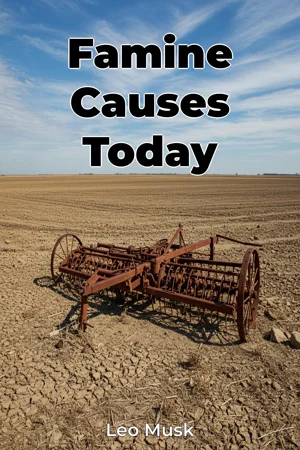
Why, in an era of unprecedented agricultural productivity, do famines still persist? *Famine Causes Today* delves into the multifaceted and often overlooked reasons behind contemporary food crises, moving beyond simplistic narratives of natural disaster to expose the complex interplay of political instability, economic collapse, and extreme weather events. Understanding these root causes is crucial for policymakers, aid organizations, and concerned citizens alike, as effective interventions hinge on accurate diagnoses. This book argues that modern famines are rarely solely the result of food scarcity. Instead, they are typically triggered or exacerbated by human actions and systemic failures. Political instability, often characterized by conflict and weak governance, disrupts food production and distribution networks, diverting resources and creating environments where aid cannot reach those in need. Economic collapse, whether due to market shocks, debt crises, or corruption, impoverishes populations and renders them unable to access available food. Extreme weather, increasingly frequent and intense due to climate change, further strains already fragile systems, causing crop failures and displacement. To understand these complex dynamics, the book begins by providing a historical context of famine, examining past events and evolving understandings of their causes. It then systematically dissects the roles of political instability, economic vulnerability, and environmental change in contemporary food crises. Each factor is explored through detailed case studies, drawing on examples from across the globe. The book further examines how these factors intersect and reinforce each other, creating feedback loops that can prolong and intensify famines. The evidence presented is drawn from a range of sources, including reports from the United Nations (UN), the Food and Agriculture Organization (FAO), and other international organizations. It also incorporates academic research, on-the-ground reporting, and statistical data to provide a comprehensive and nuanced picture of the current famine landscape. *Famine Causes Today* connects directly to several other fields of study, including political science, economics, environmental science, and international development. The book offers insights relevant to scholars and practitioners working on issues of conflict resolution, poverty reduction, climate adaptation, and humanitarian assistance. The book takes a systems-thinking approach, emphasizing the interconnectedness of various factors that contribute to famine. It avoids simplistic explanations and instead seeks to provide a holistic understanding of these complex crises. Written in a clear and accessible style, the book aims to engage a broad audience, including students, policymakers, journalists, and concerned citizens. While grounded in rigorous research, the book avoids jargon and technical language, making it accessible to readers with varying levels of expertise. The target audience includes students and researchers in development studies, political science, and economics, as well as professionals in international aid organizations, government agencies, and NGOs. Readers seeking a comprehensive and up-to-date analysis of the root causes of modern famines will find this book invaluable. This book focuses specifically on the underlying causes of famine, rather than on the immediate responses or humanitarian interventions. While these are important topics, they are beyond the scope of this work, which aims to provide a deeper understanding of the factors that make populations vulnerable to famine in the first place. The information within this book can be applied to improve early warning systems, target aid more effectively, and design policies that address the root causes of food insecurity. It can also inform advocacy efforts aimed at promoting peace, sustainable development, and climate action. The book addresses ongoing debates about the relative importance of different factors contributing to famine. For example, some argue that climate change is the primary driver of food crises, while others emphasize the role of political violence and economic inequality. *Famine Causes Today* acknowledges the validity of these different perspectives but argues that a comprehensive understanding requires consideration of all these factors and their complex interactions.
Why, in an era of unprecedented agricultural productivity, do famines still persist? *Famine Causes Today* delves into the multifaceted and often overlooked reasons behind contemporary food crises, moving beyond simplistic narratives of natural disaster to expose the complex interplay of political instability, economic collapse, and extreme weather events. Understanding these root causes is crucial for policymakers, aid organizations, and concerned citizens alike, as effective interventions hinge on accurate diagnoses. This book argues that modern famines are rarely solely the result of food scarcity. Instead, they are typically triggered or exacerbated by human actions and systemic failures. Political instability, often characterized by conflict and weak governance, disrupts food production and distribution networks, diverting resources and creating environments where aid cannot reach those in need. Economic collapse, whether due to market shocks, debt crises, or corruption, impoverishes populations and renders them unable to access available food. Extreme weather, increasingly frequent and intense due to climate change, further strains already fragile systems, causing crop failures and displacement. To understand these complex dynamics, the book begins by providing a historical context of famine, examining past events and evolving understandings of their causes. It then systematically dissects the roles of political instability, economic vulnerability, and environmental change in contemporary food crises. Each factor is explored through detailed case studies, drawing on examples from across the globe. The book further examines how these factors intersect and reinforce each other, creating feedback loops that can prolong and intensify famines. The evidence presented is drawn from a range of sources, including reports from the United Nations (UN), the Food and Agriculture Organization (FAO), and other international organizations. It also incorporates academic research, on-the-ground reporting, and statistical data to provide a comprehensive and nuanced picture of the current famine landscape. *Famine Causes Today* connects directly to several other fields of study, including political science, economics, environmental science, and international development. The book offers insights relevant to scholars and practitioners working on issues of conflict resolution, poverty reduction, climate adaptation, and humanitarian assistance. The book takes a systems-thinking approach, emphasizing the interconnectedness of various factors that contribute to famine. It avoids simplistic explanations and instead seeks to provide a holistic understanding of these complex crises. Written in a clear and accessible style, the book aims to engage a broad audience, including students, policymakers, journalists, and concerned citizens. While grounded in rigorous research, the book avoids jargon and technical language, making it accessible to readers with varying levels of expertise. The target audience includes students and researchers in development studies, political science, and economics, as well as professionals in international aid organizations, government agencies, and NGOs. Readers seeking a comprehensive and up-to-date analysis of the root causes of modern famines will find this book invaluable. This book focuses specifically on the underlying causes of famine, rather than on the immediate responses or humanitarian interventions. While these are important topics, they are beyond the scope of this work, which aims to provide a deeper understanding of the factors that make populations vulnerable to famine in the first place. The information within this book can be applied to improve early warning systems, target aid more effectively, and design policies that address the root causes of food insecurity. It can also inform advocacy efforts aimed at promoting peace, sustainable development, and climate action. The book addresses ongoing debates about the relative importance of different factors contributing to famine. For example, some argue that climate change is the primary driver of food crises, while others emphasize the role of political violence and economic inequality. *Famine Causes Today* acknowledges the validity of these different perspectives but argues that a comprehensive understanding requires consideration of all these factors and their complex interactions.
"Famine Causes Today" explores the persistent issue of modern famines despite advancements in agriculture. It argues that these crises are rarely solely due to food scarcity, but rather stem from a complex interplay of political instability, economic collapse, and extreme weather events. For instance, political violence disrupts food distribution, while economic downturns impoverish populations, hindering their access to available food. The book emphasizes the need to understand these root causes for effective policy interventions and aid strategies. The book systematically examines the roles of political instability, economic vulnerability, and environmental change in contemporary food crises, using case studies from across the globe. It adopts a systems-thinking approach, highlighting the interconnectedness of these factors. Drawing on reports from organizations like the UN and FAO, it avoids simplistic explanations, instead providing a holistic analysis of complex events. Beginning with a historical context, the book progressively dissects the various elements contributing to modern famines. This approach helps readers understand the evolving nature of food crises and the importance of addressing the underlying issues to achieve lasting food security. The content is presented accessibly, making it valuable for students, policymakers, and anyone interested in current events and economics.
Book Details
ISBN
9788233967635
Publisher
Publifye AS
Your Licenses
You don't own any licenses for this book
Purchase a license below to unlock this book and download the EPUB.
Purchase License
Select a tier to unlock this book
Need bulk licensing?
Contact us for enterprise agreements.