
About This Book
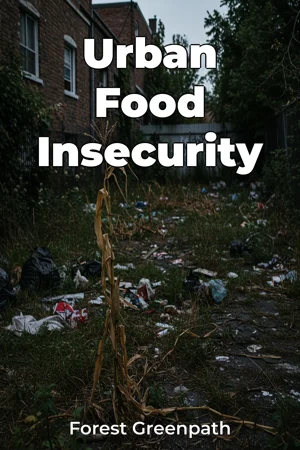
In an era of unprecedented wealth, why does hunger persist in the heart of our major cities? *Urban Food Insecurity* delves into this critical question, examining the complex interplay of factors that contribute to malnutrition and hunger within urban environments. This book focuses on revealing the underlying mechanisms that sustain urban food insecurity, particularly the rise of food deserts and the pervasive impact of economic inequality. These are not isolated issues; they are interconnected challenges that demand a comprehensive understanding. This book argues that urban food insecurity is not simply a matter of individual choices or isolated incidents of poverty but is a systemic issue rooted in economic disparities and spatial inequalities. We explore how historical patterns of segregation, discriminatory housing policies, and uneven economic development have created food deserts – areas where access to affordable and nutritious food is severely limited. Understanding these historical contexts is vital to grasping the present-day realities of food insecurity. The book is structured to provide a clear and compelling narrative. First, we introduce the core concepts of food security, food deserts, and economic inequality, defining these terms and establishing their relevance to urban environments. Second, we examine the creation and perpetuation of food deserts, analyzing how zoning laws, transportation infrastructure, and the location decisions of grocery stores contribute to these spatial disparities. This section includes case studies of several major cities, illustrating the diverse ways in which food deserts manifest and affect local communities. Third, we investigate the role of economic inequality in shaping food access, exploring how low wages, unemployment, and lack of affordable housing exacerbate food insecurity among vulnerable populations. We analyze the impact of these economic factors on dietary choices, health outcomes, and overall well-being. Finally, we explore potential solutions and interventions, examining policy options, community-based initiatives, and innovative approaches to addressing urban food insecurity. The evidence presented in this book draws from a variety of sources, including government data, academic research, and community surveys. We utilize quantitative analysis to map food deserts and assess the correlation between economic indicators and food access. We also incorporate qualitative research, featuring the voices and experiences of individuals and families living in food-insecure neighborhoods. *Urban Food Insecurity* connects to several other fields of study including urban planning, public health, and economics. By integrating perspectives from these disciplines, the book provides a comprehensive and nuanced understanding of the issue. We highlight the ethical dimensions of food insecurity, arguing that access to nutritious food is a fundamental human right. This book is written in an accessible yet rigorous style, making it suitable for a broad audience. It is intended for students, policymakers, community organizers, and anyone interested in understanding and addressing the challenges of urban food insecurity. By shedding light on the root causes and potential solutions to this complex problem, *Urban Food Insecurity* aims to contribute to a more equitable and sustainable food system for all. While the book focuses primarily on the United States, it also draws upon international examples and insights to provide a broader perspective on urban food insecurity. We acknowledge the limitations of our scope and encourage further research on specific regions and populations. The book intentionally avoids prescriptive policy recommendations, instead focusing on providing a framework for understanding the issue and evaluating potential solutions. The information presented in this book can be applied practically by readers in various ways. Policymakers can use the research to inform the design of effective interventions. Community organizers can leverage the insights to advocate for policy changes and support local initiatives. Students and researchers can build upon the findings to conduct further studies and explore new avenues for addressing urban food insecurity. The field of food security is not without its debates. There are ongoing discussions about the most effective strategies for addressing food deserts, about the role of government intervention versus private sector initiatives, and about the importance of individual responsibility versus systemic change. This book engages with these debates, presenting different perspectives and encouraging critical thinking about the complex challenges of urban food insecurity.
In an era of unprecedented wealth, why does hunger persist in the heart of our major cities? *Urban Food Insecurity* delves into this critical question, examining the complex interplay of factors that contribute to malnutrition and hunger within urban environments. This book focuses on revealing the underlying mechanisms that sustain urban food insecurity, particularly the rise of food deserts and the pervasive impact of economic inequality. These are not isolated issues; they are interconnected challenges that demand a comprehensive understanding. This book argues that urban food insecurity is not simply a matter of individual choices or isolated incidents of poverty but is a systemic issue rooted in economic disparities and spatial inequalities. We explore how historical patterns of segregation, discriminatory housing policies, and uneven economic development have created food deserts – areas where access to affordable and nutritious food is severely limited. Understanding these historical contexts is vital to grasping the present-day realities of food insecurity. The book is structured to provide a clear and compelling narrative. First, we introduce the core concepts of food security, food deserts, and economic inequality, defining these terms and establishing their relevance to urban environments. Second, we examine the creation and perpetuation of food deserts, analyzing how zoning laws, transportation infrastructure, and the location decisions of grocery stores contribute to these spatial disparities. This section includes case studies of several major cities, illustrating the diverse ways in which food deserts manifest and affect local communities. Third, we investigate the role of economic inequality in shaping food access, exploring how low wages, unemployment, and lack of affordable housing exacerbate food insecurity among vulnerable populations. We analyze the impact of these economic factors on dietary choices, health outcomes, and overall well-being. Finally, we explore potential solutions and interventions, examining policy options, community-based initiatives, and innovative approaches to addressing urban food insecurity. The evidence presented in this book draws from a variety of sources, including government data, academic research, and community surveys. We utilize quantitative analysis to map food deserts and assess the correlation between economic indicators and food access. We also incorporate qualitative research, featuring the voices and experiences of individuals and families living in food-insecure neighborhoods. *Urban Food Insecurity* connects to several other fields of study including urban planning, public health, and economics. By integrating perspectives from these disciplines, the book provides a comprehensive and nuanced understanding of the issue. We highlight the ethical dimensions of food insecurity, arguing that access to nutritious food is a fundamental human right. This book is written in an accessible yet rigorous style, making it suitable for a broad audience. It is intended for students, policymakers, community organizers, and anyone interested in understanding and addressing the challenges of urban food insecurity. By shedding light on the root causes and potential solutions to this complex problem, *Urban Food Insecurity* aims to contribute to a more equitable and sustainable food system for all. While the book focuses primarily on the United States, it also draws upon international examples and insights to provide a broader perspective on urban food insecurity. We acknowledge the limitations of our scope and encourage further research on specific regions and populations. The book intentionally avoids prescriptive policy recommendations, instead focusing on providing a framework for understanding the issue and evaluating potential solutions. The information presented in this book can be applied practically by readers in various ways. Policymakers can use the research to inform the design of effective interventions. Community organizers can leverage the insights to advocate for policy changes and support local initiatives. Students and researchers can build upon the findings to conduct further studies and explore new avenues for addressing urban food insecurity. The field of food security is not without its debates. There are ongoing discussions about the most effective strategies for addressing food deserts, about the role of government intervention versus private sector initiatives, and about the importance of individual responsibility versus systemic change. This book engages with these debates, presenting different perspectives and encouraging critical thinking about the complex challenges of urban food insecurity.
"Urban Food Insecurity" tackles the pressing issue of hunger amid plenty in our cities, shining a light on how economic inequality and spatial disparities create "food deserts"—areas where access to nutritious food is severely limited. The book argues urban food insecurity is a systemic problem, not just a matter of individual choices. For example, historical segregation and discriminatory housing policies significantly contribute to these food deserts, perpetuating cycles of malnutrition and hunger. The book progresses methodically, first defining core concepts like food security and economic inequality. It then examines how zoning laws and grocery store locations contribute to food deserts, using case studies of major cities to illustrate diverse impacts. Finally, it explores potential solutions, from policy changes to community initiatives, drawing on government data, academic research, and personal stories. This approach provides a comprehensive understanding of the issue, making it valuable for policymakers, community organizers, and anyone interested in creating a more equitable food system.
Book Details
ISBN
9788233967598
Publisher
Publifye AS
Your Licenses
You don't own any licenses for this book
Purchase a license below to unlock this book and download the EPUB.
Purchase License
Select a tier to unlock this book
Need bulk licensing?
Contact us for enterprise agreements.