
About This Book
Have you ever wondered what connects a devastating hurricane to a shimmering mirage in the desert? "Weather Facts" unveils the intricate science behind Earth's dynamic atmosphere, exploring the full spectrum of weather phenomena, from routine daily changes to the most extreme events. This book delves into the core principles of meteorology and climatology to explain the forces that shape our planet’s weather systems and how these systems, in turn, impact our lives. Understanding these processes is vital in a world increasingly affected by climate change and its consequences. We explore three central themes: the fundamental atmospheric processes that govern weather, the science behind severe weather events, and the influence of global climate patterns on regional weather. These topics are crucial because they provide the necessary framework for understanding the complex interactions that drive weather and its variability, allowing us to better predict, prepare for, and ultimately mitigate the risks associated with extreme weather. "Weather Facts" provides a comprehensive overview of atmospheric science, starting with the basics of thermodynamics, atmospheric circulation, and the water cycle. We then move onto the formation and behavior of various weather systems, including fronts, cyclones, and anticyclones. The next section analyzes different types of severe weather, such as hurricanes, tornadoes, blizzards, and droughts, exploring their causes, characteristics, and impacts. Finally, the book examines the influence of global climate patterns, such as El Niño and La Niña, on regional weather conditions. The arguments are supported by peer-reviewed scientific research, meteorological data, and case studies of significant weather events. The book also incorporates insights from climate models and observational data to illustrate the projected impacts of climate change on weather patterns. This book draws connections between atmospheric science and various other disciplines, including geography, environmental science, and even social sciences. For example, the study of weather patterns is essential in understanding climate change impacts on agriculture and water resources. Similarly, the book explores the social and economic consequences of extreme weather events, such as displacement, infrastructure damage, and public health crises. "Weather Facts" offers a direct, fact-based approach, prioritizing clarity and accuracy. The writing style is meant to be accessible, avoiding technical jargon where possible and providing clear explanations of complex concepts. "Weather Facts" is aimed at a broad audience, including students, weather enthusiasts, and anyone seeking a deeper understanding of the science behind weather phenomena. The book is particularly valuable to those interested in climate change and its impacts. As a work of non-fiction, "Weather Facts" aims to provide validated information, presented in a systematic manner. The book's scope covers a wide range of weather phenomena, from the smallest cloud formations to the largest hurricanes. However, it does not delve into the specific details of weather forecasting techniques or climate modeling methodologies. Readers will gain knowledge that can inform their decisions related to preparedness for extreme weather events, understanding climate change impacts, and making responsible environmental choices. The book acknowledges ongoing scientific debates surrounding the attribution of specific weather events to climate change and explores the uncertainties associated with long-term climate projections. These complexities are addressed by presenting multiple perspectives and highlighting areas of ongoing research.
Have you ever wondered what connects a devastating hurricane to a shimmering mirage in the desert? "Weather Facts" unveils the intricate science behind Earth's dynamic atmosphere, exploring the full spectrum of weather phenomena, from routine daily changes to the most extreme events. This book delves into the core principles of meteorology and climatology to explain the forces that shape our planet’s weather systems and how these systems, in turn, impact our lives. Understanding these processes is vital in a world increasingly affected by climate change and its consequences. We explore three central themes: the fundamental atmospheric processes that govern weather, the science behind severe weather events, and the influence of global climate patterns on regional weather. These topics are crucial because they provide the necessary framework for understanding the complex interactions that drive weather and its variability, allowing us to better predict, prepare for, and ultimately mitigate the risks associated with extreme weather. "Weather Facts" provides a comprehensive overview of atmospheric science, starting with the basics of thermodynamics, atmospheric circulation, and the water cycle. We then move onto the formation and behavior of various weather systems, including fronts, cyclones, and anticyclones. The next section analyzes different types of severe weather, such as hurricanes, tornadoes, blizzards, and droughts, exploring their causes, characteristics, and impacts. Finally, the book examines the influence of global climate patterns, such as El Niño and La Niña, on regional weather conditions. The arguments are supported by peer-reviewed scientific research, meteorological data, and case studies of significant weather events. The book also incorporates insights from climate models and observational data to illustrate the projected impacts of climate change on weather patterns. This book draws connections between atmospheric science and various other disciplines, including geography, environmental science, and even social sciences. For example, the study of weather patterns is essential in understanding climate change impacts on agriculture and water resources. Similarly, the book explores the social and economic consequences of extreme weather events, such as displacement, infrastructure damage, and public health crises. "Weather Facts" offers a direct, fact-based approach, prioritizing clarity and accuracy. The writing style is meant to be accessible, avoiding technical jargon where possible and providing clear explanations of complex concepts. "Weather Facts" is aimed at a broad audience, including students, weather enthusiasts, and anyone seeking a deeper understanding of the science behind weather phenomena. The book is particularly valuable to those interested in climate change and its impacts. As a work of non-fiction, "Weather Facts" aims to provide validated information, presented in a systematic manner. The book's scope covers a wide range of weather phenomena, from the smallest cloud formations to the largest hurricanes. However, it does not delve into the specific details of weather forecasting techniques or climate modeling methodologies. Readers will gain knowledge that can inform their decisions related to preparedness for extreme weather events, understanding climate change impacts, and making responsible environmental choices. The book acknowledges ongoing scientific debates surrounding the attribution of specific weather events to climate change and explores the uncertainties associated with long-term climate projections. These complexities are addressed by presenting multiple perspectives and highlighting areas of ongoing research.
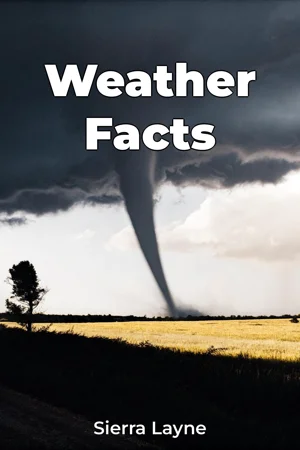
"Weather Facts" explores the fascinating science behind Earth's weather, from daily changes to extreme events. This book delves into atmospheric science, starting with core principles of meteorology and climatology. Readers will discover how weather systems form and evolve, influencing our lives and the environment, particularly in the context of ongoing climate change. Intriguingly, did you know that a single hurricane can release as much energy as several atomic bombs? Or that mirages, often seen in deserts, are caused by the bending of light through layers of air with different temperatures? The book examines severe weather events like hurricanes, tornadoes, blizzards, and droughts, revealing their causes, characteristics, and impacts. It also investigates the role of global climate patterns, such as El Niño and La Niña, on regional weather. By connecting atmospheric science with geography and environmental science, "Weather Facts" offers a broad perspective on how weather affects agriculture, water resources, and society. The book's approach is fact-based and accessible, prioritizing clarity to help readers understand complex concepts and make informed decisions about preparedness and environmental choices.
Book Details
ISBN
9788233967376
Publisher
Publifye AS
Your Licenses
You don't own any licenses for this book
Purchase a license below to unlock this book and download the EPUB.
Purchase License
Select a tier to unlock this book
Need bulk licensing?
Contact us for enterprise agreements.