
About This Book
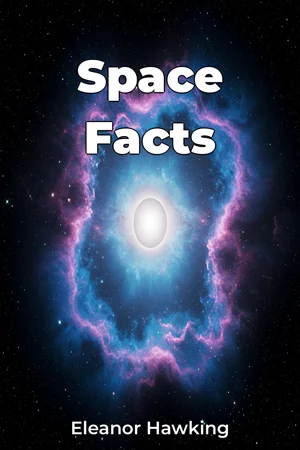
What if everything you thought you knew about the universe was just the tip of the iceberg? "Space Facts" delves into the mind-bending realities of our cosmos, exploring the fundamental laws governing black holes, the vast structures of galaxies, and the enigmatic phenomenon of the expanding universe. These topics are central to understanding our place in the grand cosmic scheme and represent some of the most active areas of research in modern astrophysics and cosmology. The book provides essential context by outlining the historical development of our understanding of space, from early astronomical observations to the groundbreaking theories of Einstein and Hubble. While no prior expertise is needed, a basic familiarity with scientific concepts will enhance the reading experience. The central argument of the book stresses that the universe, while governed by physical laws, continues to present profound mysteries that challenge our current understanding and drive further scientific exploration. "Space Facts" is structured to guide readers on a journey of discovery. It begins by introducing core concepts, followed by detailed explorations of key areas. The initial sections define fundamental concepts such as spacetime, gravity, and the electromagnetic spectrum, providing a solid foundation for understanding more complex topics. Subsequent chapters delve into black holes, examining their formation, properties, and role in galactic evolution. The book further explores galaxies, from our own Milky Way to distant quasars, detailing their structures, dynamics, and the processes that shape them. Finally, the book addresses the accelerating expansion of the universe, considering the evidence for dark energy and the implications for the future of the cosmos. The culmination of the argument emphasizes the interconnectedness of these phenomena and the ongoing quest to develop a unified theory of everything. The book concludes with a discussion of the practical implications of space exploration and research, highlighting advancements in technology and our expanding knowledge of potential resources in space. The book presents evidence and research from peer-reviewed scientific publications, observational data from space telescopes like Hubble and James Webb, and results from ground-based observatories. It also utilizes theoretical models and simulations to illustrate complex concepts. “Space Facts” connects to multiple fields, including physics, mathematics, and computer science. Physics provides the theoretical framework for understanding the laws of nature; mathematics offers the tools for modeling and quantifying cosmic phenomena; and computer science enables simulations and data analysis necessary to explore the vast amount of data gathered from space exploration. This book stands out in its comprehensive yet accessible approach. The writing style aims for clarity and precision, making complex topics understandable without sacrificing scientific accuracy. The target audience includes students, science enthusiasts, and anyone curious about the universe. "Space Facts" offers valuable insights for those seeking to broaden their knowledge of physics and astronomy. As a non-fiction work focused on science, it prioritizes accuracy, clarity, and evidence-based explanations. "Space Facts" intentionally limits its scope to the most well-established and widely accepted theories and observations, acknowledging that certain areas remain speculative. The knowledge gained from the book can be applied to understanding current events in space exploration, critically evaluating scientific claims, and appreciating the fundamental laws that govern our universe. While the book touches on areas with ongoing debates, such as the precise nature of dark energy and the ultimate fate of the universe, these discussions are presented with balanced perspectives, acknowledging the uncertainties and ongoing research.
What if everything you thought you knew about the universe was just the tip of the iceberg? "Space Facts" delves into the mind-bending realities of our cosmos, exploring the fundamental laws governing black holes, the vast structures of galaxies, and the enigmatic phenomenon of the expanding universe. These topics are central to understanding our place in the grand cosmic scheme and represent some of the most active areas of research in modern astrophysics and cosmology. The book provides essential context by outlining the historical development of our understanding of space, from early astronomical observations to the groundbreaking theories of Einstein and Hubble. While no prior expertise is needed, a basic familiarity with scientific concepts will enhance the reading experience. The central argument of the book stresses that the universe, while governed by physical laws, continues to present profound mysteries that challenge our current understanding and drive further scientific exploration. "Space Facts" is structured to guide readers on a journey of discovery. It begins by introducing core concepts, followed by detailed explorations of key areas. The initial sections define fundamental concepts such as spacetime, gravity, and the electromagnetic spectrum, providing a solid foundation for understanding more complex topics. Subsequent chapters delve into black holes, examining their formation, properties, and role in galactic evolution. The book further explores galaxies, from our own Milky Way to distant quasars, detailing their structures, dynamics, and the processes that shape them. Finally, the book addresses the accelerating expansion of the universe, considering the evidence for dark energy and the implications for the future of the cosmos. The culmination of the argument emphasizes the interconnectedness of these phenomena and the ongoing quest to develop a unified theory of everything. The book concludes with a discussion of the practical implications of space exploration and research, highlighting advancements in technology and our expanding knowledge of potential resources in space. The book presents evidence and research from peer-reviewed scientific publications, observational data from space telescopes like Hubble and James Webb, and results from ground-based observatories. It also utilizes theoretical models and simulations to illustrate complex concepts. “Space Facts” connects to multiple fields, including physics, mathematics, and computer science. Physics provides the theoretical framework for understanding the laws of nature; mathematics offers the tools for modeling and quantifying cosmic phenomena; and computer science enables simulations and data analysis necessary to explore the vast amount of data gathered from space exploration. This book stands out in its comprehensive yet accessible approach. The writing style aims for clarity and precision, making complex topics understandable without sacrificing scientific accuracy. The target audience includes students, science enthusiasts, and anyone curious about the universe. "Space Facts" offers valuable insights for those seeking to broaden their knowledge of physics and astronomy. As a non-fiction work focused on science, it prioritizes accuracy, clarity, and evidence-based explanations. "Space Facts" intentionally limits its scope to the most well-established and widely accepted theories and observations, acknowledging that certain areas remain speculative. The knowledge gained from the book can be applied to understanding current events in space exploration, critically evaluating scientific claims, and appreciating the fundamental laws that govern our universe. While the book touches on areas with ongoing debates, such as the precise nature of dark energy and the ultimate fate of the universe, these discussions are presented with balanced perspectives, acknowledging the uncertainties and ongoing research.
"Space Facts" explores the mind-bending realities of our universe, from black holes to galaxies and the accelerating expansion driven by dark energy. This book examines how our understanding of the cosmos has evolved, touching on Einstein's theories and Hubble's observations. It emphasizes that despite our progress, profound mysteries remain, fueling ongoing scientific research and space exploration, while demonstrating the interconnectedness of physics, mathematics, and computer science. The book journeys through core concepts like spacetime and gravity before diving into black holes and galactic structures. It presents evidence from space telescopes like Hubble, integrating peer-reviewed research and theoretical models. "Space Facts" uniquely offers a comprehensive yet accessible approach, making complex topics understandable to students and science enthusiasts alike, without sacrificing scientific accuracy.
Book Details
ISBN
9788233967314
Publisher
Publifye AS
Your Licenses
You don't own any licenses for this book
Purchase a license below to unlock this book and download the EPUB.
Purchase License
Select a tier to unlock this book
Need bulk licensing?
Contact us for enterprise agreements.